









![Mercedes-Benz_eActros_600_(1)[1]](https://d2cohhpa0jt4tw.cloudfront.net/Pictures/274x183/8/1/8/17818_mercedesbenz_eactros_600_11_556244.jpg)





Fagan & Whalley has warned that a lack of grid capacity could become a major barrier to the rollout of electric HGVs, despite the haulier already running two battery-electric trucks.
The Lancashire-based firm currently operates an electric DAF XD on a dedicated automotive contract, covering around 150 miles during a night shift before returning to base to recharge. A second electric DAF XF has also joined the fleet.
Joint MD Sam Fagan said the predictable nature of the automotive operation made it well suited to electrification, but warned that the same technology could not yet be applied to general haulage.
“If you were to put that on general haulage, no, it wouldn’t work whatsoever,” he said.
The company already has charging infrastructure at its depots, including a 150kWh charger at its Coventry operation, but Fagan said significantly increasing the number of electric HGVs would require major investment in additional power.
The cost of installing charging infrastructure was highlighted by Freight Carbon Zero this week, with analysis by transport decarbonisation consultancy Cenex finding that a small haulier introducing a single 44-tonne electric truck could face a bill of around £46,000 for its first depot charger and installation, even where existing electricity supply is sufficient. Where a new grid connection is required, the overall cost could roughly double.
Fagan & Whalley is talking to distribution network operators about the requirements for future depot upgrades, but said the cost and timescale involved in increasing grid capacity could be difficult for a family-owned operator to absorb.
“If you’ve got a huge capital expenditure project to put new power into a depot, it’s hard for an organisation like ours to do that,” Fagan said. “The government needs to do more.”
Fagan said charging infrastructure would continue to develop as more operators adopted electric trucks, with manufacturers, grid operators and charger providers learning as the market expands.
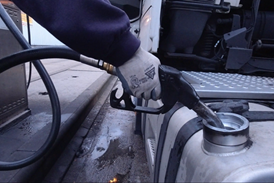
The company is taking a multi-fuel approach to decarbonisation and currently buys HVO for around 25% to 30% of its fuel requirements, although Fagan said its higher cost compared with diesel remained an issue.
He also believes the industry will ultimately adopt lower-emission technologies when they become commercially viable, rather than simply because of regulation.
“Everyone I talk to gives me a different story on the solution but it will appear in front of us,” he said. “And it’ll be a cheaper solution.”
Fagan said customers would also have to play a role in the transition, with Fagan & Whalley already discussing sustainability with customers and whether they are prepared to contribute towards the additional costs involved.
The comments came during a wider interview with Motor Transport about Fagan & Whalley’s growth plans and its approach to a changing road transport market.