










![Mercedes-Benz_eActros_600_(1)[1]](https://d2cohhpa0jt4tw.cloudfront.net/Pictures/274x183/8/1/8/17818_mercedesbenz_eactros_600_11_556244.jpg)




Viewpoint

Three budget and policy ideas to support – and accelerate – EV adoption and charging in the UK
With the ZEV Mandate requiring 33% zero-emission van sales this year and public charging still unevenly distributed, Formula Space’s Ruben Pollard sets out three targeted policy interventions that could unlock faster fleet electrification without open-ended public spending.
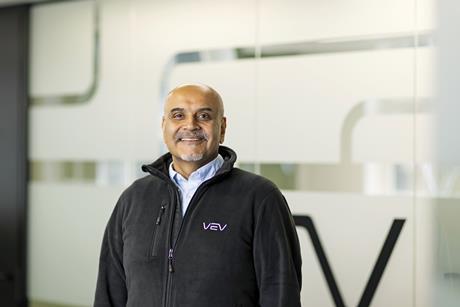
The bigger risk may no longer be electrifying too early. It may be waiting too long
With more than eight in 10 fleet operators reporting shrinking margins and fuel prices up 35% since the outbreak of the US-Iran conflict, VEV CEO Mike Nakrani makes the case that electrification is no longer an environmental question — it is a question of commercial resilience, cost certainty and long-term ...

Fuel duty receipts edge up but long-term decline looms
Fuel duty revenues reached £10.5bn between April and August 2026, up £300,000 year-on-year, offering policymakers a brief window before a fundamental rethink of road-funding taxation becomes unavoidable – but the clock is ticking.

Why fleet electrification must start with the depot
Grant funding can improve the economics of depot electrification, but it cannot compensate for poor design. Mark Duxbury, UK director at iwell, argues operators must start with duty cycles, dwell times and growth plans — not the funding framework.

RHA welcomes HGV decarbonisation pragmatism but warns on funding cuts
There are elements of today’s Conservative proposals on HGV decarbonisation that we at the RHA welcome and which align with positions we have consistently advocated.

Rethinking the energy transition: why HVO deserves a bigger role
Exhibiting at The Commercial Vehicle Show in Birmingham confirmed what we already knew: the industry is facing increasing pressure to reduce carbon emissions.

Why 1.2MW chargers won’t save heavy fleets from grid limits
Dr Nigel Jakeman of Turbo Power Systems argues that peak output ratings are becoming secondary to system intelligence — and that operators who treat charging as part of a broader energy ecosystem will be best placed to succeed.

Electric HGV rollout hindered by infrastructure and utilisation gaps
Electric HGV adoption is being hampered by charging infrastructure shortfalls and a critical ‘utilisation gap’, warns Pall-Ex’s Paul Pegg. Despite trials showing promise in high-density regional routes, limited range, charging times and policy uncertainty continue to challenge the commercial viability of fleet-wide electrification.

Battery swapping returns as grid flexibility tool, not speed fix
The case for battery swapping isn’t speed—it’s what those batteries do between truck visits. With CATL running 305 stations in China and UK trials underway at MIRA, the model is being reframed as energy trading infrastructure that happens to serve trucks. But OEM alignment and station economics remain unresolved.

Why the LCV market is hesitating on electric and what fleet operators should do about it
SMMT data reveals a light commercial vehicle market in transition but not in sync with regulatory timelines. Diesel share has dropped sharply, BEV registrations are up 9.5% year-to-date, but operators face fuel volatility, infrastructure delays and a widening gap to the 24% ZEV mandate target for 2026.

EU’s HGV CO2 credit mechanism delays electric truck transition
Brussels has flattened the emissions trajectory for truck manufacturers through 2029 and allowed surplus credits to offset 2030 targets. Industry warns the move removes urgency from electric development while doing nothing to solve the infrastructure crisis constraining uptake.

UK government Depot Charging Scheme favours those prepared to move quickly
The DfT’s Depot Charging Scheme offers fleets up to 70% funding for electric charging infrastructure, with a £1m cap per organisation. The first-come, first-served window closes 30 June 2026, requiring works completion by March 2027.