






![Mercedes-Benz_eActros_600_(1)[1]](https://d2cohhpa0jt4tw.cloudfront.net/Pictures/274x183/8/1/8/17818_mercedesbenz_eactros_600_11_556244.jpg)





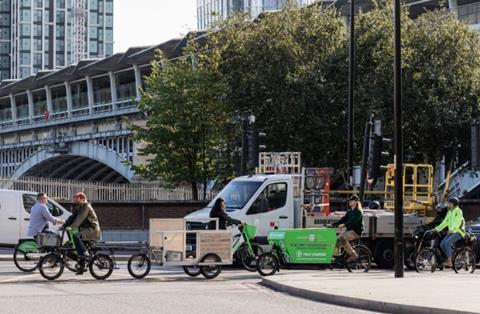
Cargo bikes swept through London this week as part of a demonstration to highlight what a coalition of businesses and organisations said was a “diesel problem” in the capital.
‘The Cruise’, organised by Team London Bridge, Clean Cities, and transport consultancy MP Smarter Travel, said London was falling dangerously behind on cleaning up its van fleets, with the city still dominated by polluting diesel vans and slow progress made towards van electrification.
Transport for London data showed cargo bike use has more than doubled since 2022, up 149% in inner London.
The increase reflects the growing role that cargo bikes are playing on the streets, with businesses using them to transport everything from food and parcels to equipment and goods.
However, the capital also has over 100,000 company-registered diesel vans – the highest since records began.
The group is now calling for a Dutch-style, zero-emission zone for freight to support the switch to zero-emission fleets like cargo bikes and electric vans.
Mark Riley, delivery design manager at Royal Mail, said: “Royal Mail’s electric cargo cycles are helping us make deliveries across London more efficient while reducing emissions and improving air quality.
“They are an important part of our strategy to modernise our fleet and achieve net zero by 2040.”
Zak Bond, campaign manager at Clean Cities, said: “Cargo bikes are already transforming how some businesses make deliveries across London.
“But the capital’s growing diesel van fleet shows that progress in cleaning up urban freight has stalled.
“Policy needs to catch up and create the conditions for cleaner delivery options to scale. A zero emission zone for freight in central London would help phase out the dirtiest vans while giving businesses the certainty and support they need to switch to cleaner deliveries.”