







![Mercedes-Benz_eActros_600_(1)[1]](https://d2cohhpa0jt4tw.cloudfront.net/Pictures/274x183/8/1/8/17818_mercedesbenz_eactros_600_11_556244.jpg)





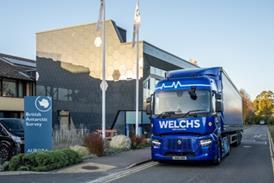
Maritime Transport has rolled out five Renault E-Tech T 4x2 tractor units through the government’s eFREIGHT 2030 consortium, with the company saying they will “work them hard” to understand their performance.
The vehicles form part of its 56-strong eHGV fleet and are being operated through Maritime ZERO, a division of the haulier set up to scrutinise its zero-emission activity.
Initial deployments have included the company’s Wakefield and Avonmouth operations, with the trucks set to move around Maritime’s network as its zero-emission operation develops.
In Wakefield, the E-Techs are being used on first and final mile container movements from Maritime’s inland rail terminal. Containers arriving by rail from deep-sea ports are transferred onto the electric tractor units for onward road delivery.
Chris Buck, EV network manager at Maritime Transport, said: “These new Renault Trucks E-Tech Ts have been put straight to work in our operation. If electric HGVs are going to become a viable alternative to diesel, we need to work them hard and understand exactly where and how they perform best.
“We’re currently using the Renault Trucks on first and final mile work from our rail terminals, where we know the routes, payloads and charging opportunities well.
“As we build our experience and charging network, we’ll continue to look at how we can increase their utilisation across the operation.”
The company said its growing charging network also gave it flexibility over how and where the trucks were operated. The Renaults will predominantly charge overnight at their inland bases, but there are also opportunities to charge during the day when energy is often cheaper.
Buck said: “The more we run the eHGVs, the greater the potential operational and environmental benefit. We want to understand how far we can push them within the applications they are suited to, while continuing to learn where electric trucks can deliver most effectively.
“Reliability has been very good so far, which is one of our most important KPIs. The truck has to perform on a par with, or better than, its diesel counterpart and remain available for work.
“The drivers have taken to them well too,” he added.
“There can be some caution when you introduce new technology or a different manufacturer, but once drivers get into electric trucks and experience them for themselves, that tends to disappear very quickly.