








![Mercedes-Benz_eActros_600_(1)[1]](https://d2cohhpa0jt4tw.cloudfront.net/Pictures/274x183/8/1/8/17818_mercedesbenz_eactros_600_11_556244.jpg)




Exhibiting at The Commercial Vehicle Show in Birmingham confirmed what we already knew: the industry is facing increasing pressure to reduce carbon emissions.

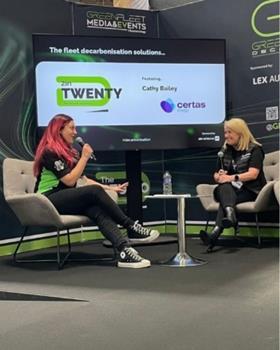
In among an array of EVs and eHGVs, myself and the Certas Energy team were in the GREENFLEET Decarb Hub. This was a zone in the centre of the hall that focused on educating fleet or transport managers around navigating the complexities of decarbonising a commercial fleet.
Within my role at Certas Energy, the UK’s largest independent fuel distributor, I support customers from multiple sectors, who are all facing different challenges on their transition journeys. This is about turning the ambition to decarbonise into real world action.
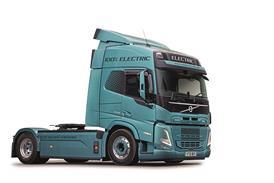
With the current cost of eHGVs being two to three times that of a diesel equivalent, it is unrealistic to assume that all fleets can make this switch, and for some, it is only feasible to tackle it one vehicle at a time.
Electrification is set to shape the long-term future of the industry, but reaching that point will be a gradual process. hydrotreated vegetable oil (HVO) will play a key role in the transition, supporting businesses as they move towards electrification over the coming decade.
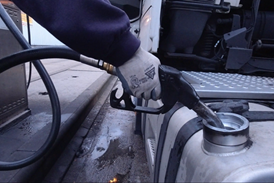
HVO is a drop-in replacement for standard red or white diesel. This means it can be used in existing diesel engines and machinery without the need for costly modifications or significant downtime.
This can be much more appealing to businesses who want to reduce their carbon emissions, but cannot invest in a completely new electric fleet.
HVO is already widely adopted in the transport industry due to the ease of compatibility with existing diesel engines and immediate carbon reduction of up to 90% compared with standard diesel, and uptake as a transitional option is expected to continue until government targets are reviewed and potentially tightened in 2030.
At the show, I spoke to decision makers across different areas of the transport sector who were keen to utilise HVO in their businesses.
Examples include a nationwide construction company who wanted to run the site of a major project on HVO, utilising on-site generators and vehicles.
Another notable example was a regional fire brigade, for whom electric fire engines are currently not an option, and want to start transitioning its fleet away from standard diesel.
These examples reflect a growing demand across essential services for practical ways reduce their carbon emissions.
Certas Energy is a leading supplier of HVO in the UK and we are championing the use of HVO to bridge the gap in the energy transition. We are ultimately supporting our partners in the energy transition.
We have seen our partners benefit from having our ongoing support on their unique carbon reduction journeys, even if this is just one vehicle at a time or one fuel delivery at a time.
Where EVs dominate the conversation around greenhouse gas emissions reduction, the industry needs to recognise that transition is a journey for most businesses and more actionable transition solutions, such as HVO, deserve greater visibility and discussion, particularly at events like the CV Show.
Cathy Bailey, energy transition manager, Certas Energy