








![Mercedes-Benz_eActros_600_(1)[1]](https://d2cohhpa0jt4tw.cloudfront.net/Pictures/274x183/8/1/8/17818_mercedesbenz_eactros_600_11_556244.jpg)





Energy regulator Ofgem has awarded £9.9m from its Strategic Innovation Funding (SIF) pot to a project that would develop technology to ‘deblend’ hydrogen that has been injected into the gas network so it can be used for applications like filling stations in new locations.
The SIF approach sets a series of Innovation Challenges – this round including zero emission transport - and funding is stepped up through alpha and beta phases as they mature.
The “HyNTS Deblending’ for Transport Applications” project led by National Gas was awarded £9.9m of £11m required.
In the application, National Gas said it has been considering the role of the gas networks in the energy transition, and potential use cases. Hydrogen is likely to be blended with natural gas in the network to provide energy to industry, heat and transport users. The HyNTS Deblending project focuses on the deblending of gases from the high-pressure national transmission system (NTS) to enable delivery to transport applications. It said, “Without this technology, refuelling of transportation assets will be limited to the use of locally produced hydrogen, until the gas networks can transport 100% hydrogen. This will limit large scale hydrogen infrastructure availability and therefore the speed of transition for the transport industry.”
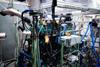
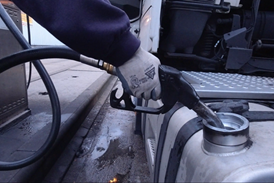
The project has been developed through to a Beta demonstration of gas separation technology, showcasing the full process from taking blended transmission gas, through separation, purification, compression and culminating in a refuelling pump. National Gas said, “Our vision is that in the future a business could apply to connect to the NTS with the sole purpose of extracting the hydrogen for a refuelling station connected to a large-scale road, rail, bus depot or even the marine / aviation sector.”
Ofgem’s Expert Assessors said the project had “clearly identified a net benefit to electricity consumers” – a funding requirement, as the source of SIF funds is customer bills. Ofgem said it had the potential to lower the cost of grid connection, lead to a reduction in the need for network reinforcement and help manage curtailed wind production.
In contrast the “Holistic Hydrogen Approach to Heavy Duty Transport” project beta project was not awarded the £4.8m it sought from a total £5.6m.
The application said reliable and cost-effective roll-out of grid-connected hydrogen production, is necessary to decarbonise the heavy transport sector but the conventional approach is prone to connection delays and prohibitive costs. The H2H Beta project would “develop first-of-a-kind, cross-sector and multi-vector modelling using AI-powered optimisation algorithms to recommend new connection and operational modalities”, it said. “This holistic and quantitative approach will consider benefits and impacts across electricity, hydrogen production and hydrogen heavy-duty transport systems”, with live trials, modelling and stakeholder engagement to develop and implement electrolysis sites.
Ofgem’s Expert Assessors said the application represented a shift away from a rail-specific use case in the Alpha Phase. The shift to a wider heavy-duty transport case was “hurried and without sufficient evidence building and stakeholder engagement”. The application was not fully formed and ready to move into a multi-million-pound, large scale Beta Phase demonstration.