









![Mercedes-Benz_eActros_600_(1)[1]](https://d2cohhpa0jt4tw.cloudfront.net/Pictures/274x183/8/1/8/17818_mercedesbenz_eactros_600_11_556244.jpg)




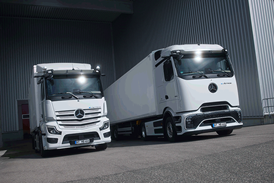
Electric HGV adoption is being hampered by charging infrastructure shortfalls and a critical ‘utilisation gap’, warns Pall-Ex’s Paul Pegg. Despite trials showing promise in high-density regional routes, limited range, charging times and policy uncertainty continue to challenge the commercial viability of fleet-wide electrification.
The transition to electric HGVs represents one of the biggest shifts facing the logistics industry today, with the ambition to decarbonise freight facing complex operational realities.
Here are the dilemmas. How do we manage the utilisation gap, overcome range limitations and create a long-term solution when our logistics network is not yet built for these new demands?
Despite HGVs moving 89% of all freight and 98% of agricultural and food products in the UK, questions remain around the infrastructure needed to support wider adoption. Recent warnings from ChargeUK claim that watering down the ZEV Mandate, a government-back regulation, could halve private sector charging investment, wiping as much as £2 billion off the UK’s infrastructure roll-out.
It’s a problem that creates a dangerous catch-22: operators cannot confidently invest in electric HGVs or the charging infrastructure without a reliable network to depend on. Yet that very network risks being slowed by policy uncertainty.
So, as we mark another Clean Air Day today, how do we realistically make this work?
Tackling the ‘utilisation gap’
At Pall-Ex, we currently operate two electric, 18-tonne vehicles on trial in Essex and Bournemouth; locations that were selected because they offer high drop density, allowing multiple deliveries and collections within relatively compact areas.
It’s a trial that’s highlighted operational challenges around charging and route planning. Something we call the ‘utilisation gap’. And right now, it remains a significant obstacle to this green ambition.
In logistics, profitability depends on maximizing operating hours, but electric HGVs require longer charging periods, reducing time on the road.
We’ve also had to allocate our electric vehicles to carefully designated routes that sit comfortably within their operating range, because—at present—they can’t rely on widespread charging infrastructure.
Our current electric HGVs achieve around 160 to 180 miles on a full charge, while many diesel HGVs will cover as much as 250 miles a day. While that might work well for certain regional operations, limited charging infrastructure and the impact of cold weather on range, remain barriers to wider adoption.
Thanks to the AI-driven technology we have onboard and across the business though, we’ve been able to give our drivers greater control. The tools provide the real-time visibility needed to manage those tighter charging windows and range constraints, enabling our teams to easily adjust schedules and select the highest-density routes, making sure they take the most efficient journey possible.
Together, with the upfront investment in those vehicles, charging infrastructure and electrical upgrades, the commercial reality remains challenging.
While there are significant environmental and long-term maintenance advantages to the transition, both conditions that we’re undoubtedly committed to, we can’t simply flip the switch and see immediate rewards.
Network and depot infrastructure
Even as technology improves, infrastructure remains the biggest hurdle to widespread adoption. The challenge is twofold: preparing depots for electrification and strengthening the wider charging network.
Electric HGVs are proving effective regionally, but national adoption requires significant investment in suitable charging infrastructure. But there are roadblocks to progress that extend far beyond installing chargers.
Upgrading grid connections, securing sufficient power capacity and creating a reliable nationwide network will require long-term planning, industry investment and clear policy direction.
Encouragingly, the UK’s first simulated electric HGV journey along the M1 could provide a blueprint for future planning.
While progress is being made at a national level, operators can act now by investing in their own facilities, as we’ve done at our Essex and Bournemouth sites. Preparing depots for electric fleets requires detailed infrastructure assessments and sufficient grid capacity to meet future demand. It’s a necessary step to take to make the transition a reality.
Looking to the future
The transition to electric HGVs is no longer a question of if, but how quickly the wider ecosystem can evolve to support it.
Technology continues to change at a rapid pace, and shared charging models emerging across Europe demonstrate the potential long-term viability of similar projects here in the UK.
But unlocking widespread adoption will depend on the collaboration of the whole industry, from infrastructure providers and policymakers, to operators balancing environmental ambition with operational reality. Electric vehicles have a valuable role to play, but until the infrastructure catches up, rollout across national logistics networks will remain a long way down the road.
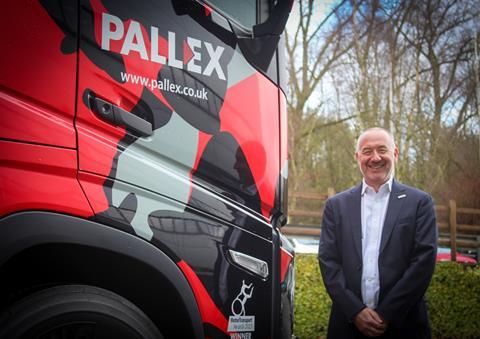
Paul Pegg, MD, Pall-Ex Logistics