








![Mercedes-Benz_eActros_600_(1)[1]](https://d2cohhpa0jt4tw.cloudfront.net/Pictures/274x183/8/1/8/17818_mercedesbenz_eactros_600_11_556244.jpg)





The European Union is doubling down on plans to electrify across the economy, arguing that the change would mean “substantial benefits for the EU economy and citizens”. A new ‘Electrification Action Plan’ includes a raft of measures affecting the freight sector, but it remains to be seen whether they will be enough to enable the industry to meet its targets.
The European Commission says electrifying the economy could boost competitiveness, strengthen energy security and cut costs across the supply chain. But progress has stalled, with electricity accounting for just 23% of final energy use for the past decade.
That compares with more than 30% in China, South Korea and Japan.
Now the Commission wants to push electricity’s share of final energy consumption to 46% by 2040, with the target set to form part of a major energy legislative package due later this year.
The EU says achieving the ambition could cut fossil fuel import costs by up to €260bn a year by 2040, reducing gas imports by more than 70% and crude oil imports by more than 40%. It also claims greater electrification could lower electricity generation costs by around 20%, helping deliver “more affordable electricity tariffs”.
Transport electrification is a key part of the plan, with the Commission highlighting growing electric vehicle sales, which reached 20.7% of new registrations in April.
However, it admits progress in the heavy vehicle sector remains slower.
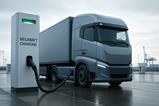
The Action Plan states that “progress is still required, notably in the battery electric heavy-duty vehicles (e-HDV) sector”, with the EU aiming to create the conditions needed for 40% of its truck fleet to be powered by batteries by 2040.
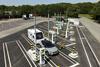
That will require a major expansion of charging infrastructure, including publicly accessible HGV charging sites and depot charging facilities.
The Commission says one of the biggest barriers is uncertainty for operators and investors. While Europe’s electric HGV fleet is growing, it admits that scaling up deployment requires closing infrastructure gaps and providing greater confidence that investment will be supported.
Funding is available through the Alternative Fuels Infrastructure Facility, while member states can also use regional funds to support charging projects. However, the Commission concedes that “additional financial support is needed”.
More support for eHGV rollout
The Action Plan sets out a series of measures aimed at accelerating electric heavy vehicle adoption, including:
- Reviewing the Clean Vehicles Directive by Q4 2027 to assess targets and potentially strengthen public procurement requirements for zero-emission vehicles.
- Publishing recommendations on fiscal and non-fiscal incentives for zero-emission vehicles by Q4 2026.
- Reviewing the Alternative Fuels Infrastructure Regulation (AFIR) in 2026 to accelerate charging infrastructure rollout, including for eHGVs, while ensuring no region is left behind.
- Updating technical standards for public and private charging points to improve interoperability and enable bi-directional charging.
- Supporting a coordinated European rollout of eHGV charging infrastructure as part of a wider supply chain approach during 2026.
- Expanding the e-HDV Clean Transport Corridors initiative across additional TEN-T routes and developing a European financial tool to reduce investment risks for charging infrastructure.
- Working with member states and industry to identify remaining barriers to zero-emission HGV deployment, including demand incentives and support frameworks linked to the 2030 CO₂ targets for heavy vehicles.
- Encouraging member states to use renewable energy credit mechanisms to support investment in charging infrastructure, including depot charging.
Smart charging push
The Commission is also planning measures covering all electric vehicles, including heavy trucks.
These include launching regulatory sandboxes and pilot projects to support new vehicle-to-grid (V2G) business models, promoting smart charging through electricity supply contracts linked to EVs, and introducing V2G requirements for new vehicles entering the EU market from 2030.
The aim is to ensure future electric vehicles can interact more effectively with the electricity system, helping manage demand and maximise renewable energy use.
Wider energy reforms
The Action Plan also includes broader measures designed to support electrification across the economy, including freight.
The Commission plans to review EU legislation to make long-term cross-border electricity contracts easier, potentially allowing companies operating electric HGVs internationally to access more innovative energy supply and billing models.
By Q2 2027, it also plans to introduce a map-based tool to help industries and investors identify suitable locations for energy investment, including future charging facilities for electric heavy vehicles.
The message from Brussels is clear: electrifying transport will require far more than replacing diesel trucks with batteries. The infrastructure, electricity supply and investment framework must be built alongside the vehicles themselves.