











![Mercedes-Benz_eActros_600_(1)[1]](https://d2cohhpa0jt4tw.cloudfront.net/Pictures/274x183/8/1/8/17818_mercedesbenz_eactros_600_11_556244.jpg)




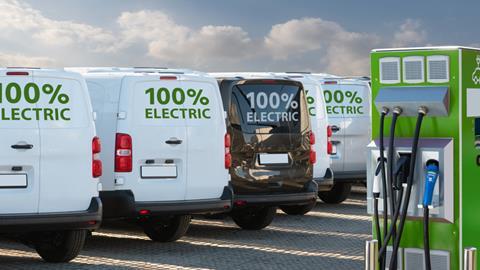

The government is considering significant changes to the UK’s Zero Emission Vehicle (ZEV) Mandate, in a move that could have major implications for the commercial vehicle sector and the transition to zero-emission vans.
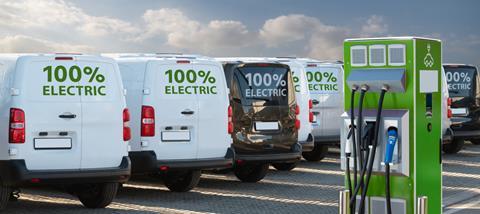
Following sustained lobbying from vehicle manufacturers and trade unions, ministers are reportedly weighing proposals to reduce the proportion of new electric vehicles manufacturers must sell by 2030. While much of the debate has focused on passenger cars, any changes to the mandate would also affect van makers and the fleets that are expected to drive much of the UK’s road transport decarbonisation.
The current ZEV Mandate requires manufacturers to steadily increase sales of zero-emission vehicles, culminating in targets of 80% of new car sales and 70% of new van sales by 2030. Reports suggest the government could lower the car target to between 50% and 70%, while allowing hybrids to account for a greater share of the market.
The planned 2030 ban on the sale of new pure petrol and diesel cars would remain in place, while the 2035 deadline for ending hybrid sales is also expected to stay unchanged.
The move would represent a significant shift from the current ZEV Mandate trajectory and could have important implications for fleet electrification strategies, charging infrastructure investment and the pace of commercial vehicle decarbonisation.
Reports suggest Prime Minister Keir Starmer has backed a review of the policy amid concerns that existing targets are placing excessive pressure on manufacturers at a time when EV demand remains below mandated levels.
Carmakers have argued that they have been forced to offer substantial discounts on electric vehicles to meet compliance requirements.
The proposed changes have divided the industry. Unite has welcomed the news, arguing it would help protect UK automotive jobs and manufacturing investment.
Unite general secretary Sharon Graham called the move “a huge victory” adding: “The consultation must be swiftly concluded and its findings quickly implemented to provide the sector and workers with much needed certainty.”
SMMT has long argued for a dilution of the mandate. Managing director Mike Hawes said: “It’s clear that the assumptions underpinning the mandate no longer hold.
“It was designed for a market with stronger demand, greater stability and cheaper energy – not the market we have today.
“An urgent review of the ZEV Mandate is therefore essential. This is not about weakening ambition, but restoring credibility. Regulation must reflect real-world conditions.
“The prize remains significant: secure global leadership, unlock investment, sustain high-value jobs and decarbonise road transport. But success requires a realistic pathway – where policy, provision, infrastructure and demand move in lock step.”
While much of the public debate centres on passenger cars, the van market is widely regarded as one of the most important battlegrounds in transport decarbonisation. Commercial vehicles account for a significant share of road transport emissions and are expected to play a crucial role in helping businesses meet net-zero targets. Any relaxation of the ZEV Mandate could therefore have knock-on effects for fleet electrification strategies, charging infrastructure investment and the pace of emissions reductions across the logistics sector.
However, EV manufacturers, charging infrastructure providers and environmental groups have warned that weakening the mandate could undermine investor confidence and slow the transition to zero-emission transport.
Critics argue that the policy has provided long-term certainty for businesses investing in fleets, vehicle production, charging networks and related infrastructure.
Matthew Walters, Ayvens UK head of consultancy services, said fleet operators need government policies to be stable, so they can confidently plan their fleet investments.
“Fleet operators plan in cycles of three to five years,” he said. “When businesses make fleet policy decisions today, they’re effectively making a decision about what their fleet will look like in 2028 to 2030. That requires a stable policy environment, one where businesses have sufficient visibility of future policy direction.
“We understand why the government is responding to industry pressure. Manufacturers have been carrying a significant financial burden under the current mandate, and the lack of consumer demand for EVs at the pace of the targets was always going to create challenges.
He added: “For fleet operators, the key issue is not whether policy evolves in response to market conditions, but whether there is enough clarity and lead time to plan effectively around any changes.
“There is no one-size-fits-all approach to fleet electrification. The right vehicle depends on operational requirements, infrastructure availability and total cost of ownership, and those factors vary enormously across different sectors and use cases. Fleets are not resisting the transition; they need the confidence to commit to it.
”What the industry needs now is clarity and sufficient lead time. Operators can adapt to change, including changes driven by market realities, but they need to know what they’re adapting to. The sooner there is a confirmed framework, the sooner businesses can make informed investment decisions.”
ChargeUK chief executive Vicky Read condemned any plans to water down the ZEV Mandate. She said: “That the Prime Minister is considering weakening the key policy underpinning the £385bn economic opportunity from transport electrification is astonishing.
“Weakening the ZEV Mandate for a third time would not only slam the brakes on infrastructure rollout and send the entire transition into a tailspin. It would bring Britain’s reputation as a market worth investing in into disrepute.
“The charging sector has ploughed billions into putting chargers in the ground on the basis of this policy, ahead of profitability. It is expected to support 71,000 jobs by 2035, and we will not see the 334,000 it could provide the foundation for across the automotive sector as it electrifies without the mandate staying as it is.
“This government said it would not flip flop like the previous did. To move the goalposts again would be exactly that — an act of self-harm denying the country a forward facing, economically prosperous industry leaving us behind the rest of the world.”
Simon Smith, Voltempo chief executive, said the move to weaken the mandate would ignore growing consumer demand: “Watering down the ZEV mandate is a concession to the slowest movers in the industry, not a reflection of what drivers want.
“People aren’t buying electric cars because regulation tells them to. They’re buying them because they save money every month and shield households from oil price swings. That logic doesn’t weaken because a target does. The economics are doing the heavy lifting now, not the policy.”
Jon Lawes, Novuna Vehicle Solutions managing director warned that watering down the mandate was not enough and called for government to tackle the underlying problems the market and consumers face in transitioning to electric vehicles.
He said: “The biggest barrier has never been a lack of ambition – it’s been policy uncertainty.
“Manufacturers plan years ahead and cannot be expected to invest millions when the rules keep changing. Either we’re committed to the transition to electric vehicles, or we’re not.
“EV demand remains highly sensitive to affordability and wider pressure on household budgets, which is why fleet buyers and salary sacrifice schemes continue to do much of the heavy lifting.
“If EV targets are to remain credible, they must be backed by reliable charging infrastructure, long-term policy certainty and measures that make switching affordable for more drivers.”
The government has yet to confirm any specific revisions, although ministers have previously committed to reviewing the operation of the ZEV Mandate. Earlier this year, the government reiterated its support for the transition to zero-emission vehicles while acknowledging that the policy framework would be reviewed.
The ZEV Mandate currently requires 33% of new car sales in 2026 to be zero-emission, with targets rising annually to 80% by 2030 and 100% by 2035. Manufacturers that fail to meet the targets can face financial penalties, although a range of flexibilities and credit-trading mechanisms are available