








![Mercedes-Benz_eActros_600_(1)[1]](https://d2cohhpa0jt4tw.cloudfront.net/Pictures/274x183/8/1/8/17818_mercedesbenz_eactros_600_11_556244.jpg)




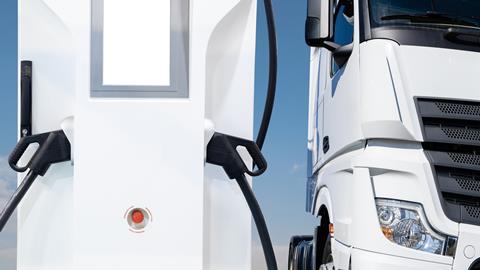

Government plans to accelerate the transition to zero-emission HGVs would cut freight costs and shield the UK economy from volatile diesel prices, according to new analysis by the Green Alliance.
The study argues that continued dependence on diesel-powered trucks leaves the UK vulnerable to oil price shocks, while a shift to battery-electric HGVs would ultimately reduce transport costs and have only a negligible effect on inflation.
The government is currently consulting on options for a zero-emission HGV framework designed to phase out sales of new diesel lorries by 2040.
Measures under discussion include CO2 standards for new vehicles, a manufacturer sales mandate similar to the car and van ZEV mandate, and potential requirements for large fleet operators to increase the proportion of zero-emission trucks in their fleets.
A second consultation on the preferred option is expected in the autumn. If introduced, the regulations would gradually tighten annual targets ahead of the planned phase-out dates for new diesel trucks under and over 26 tonnes in 2035 and 2040 respectively.
Supporters of the move argue that regulation is necessary because diesel HGVs account for 17% of domestic transport CO2 emissions, while also contributing significantly to roadside nitrogen dioxide and particulate pollution.
However, critics have warned that the higher upfront costs of electric trucks and depot charging infrastructure could increase inflation by raising haulage costs.
The analysis disputes those concerns. Modelling carried out between 2027 and 2040 suggests that a zero-emission HGV mandate would actually be “disinflationary” over the longer term.
Researchers estimate the policy would reduce the cost of transporting freight by HGV by 6.9% cumulatively between 2027 and 2040, while reducing overall consumer inflation by 0.09%.
Although there would be a small inflationary impact in the early years of transition, peaking at just 0.008% for consumer inflation and 0.7% for HGV freight costs between 2027 and 2032, the report says this would quickly reverse once electric trucks reach total cost of ownership parity with diesel vehicles.
That parity point is expected around 2032, after which electric HGVs are forecast to become cheaper to own and operate than diesel equivalents.
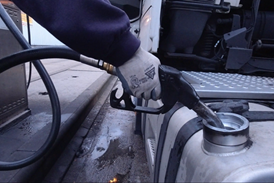
The report contrasts this with the recent spike in diesel prices. Pump prices rose by 35% between April 2025 and April 2026 following the latest oil price shock.
Researchers estimate this could increase HGV operating costs by between 1.8% and 13% in 2026 alone, depending on future diesel price scenarios, leading to a rise in consumer prices of between 0.02% and 0.17%.
Under the highest diesel price scenario, involving further geopolitical instability and another oil shock in 2029, the inflationary impact would be up to 74 times greater than the largest annual increase associated with a zero-emission HGV mandate.
The report concludes that reliance on fossil fuels is likely to be more inflationary than policies designed to accelerate the uptake of electric trucks.
It states: “The results of our analysis reaffirm the need for a transition to zero emission electric HGVs.
“We recommend that the government introduces a mandate on manufacturers to progressively increase sales of zero emissions HGVs to meet the 2035 and 2040 phase out dates for sales of polluting diesel lorries, under and above 26 tonnes respectively.
“This should be complimented with continued support for businesses to meet the upfront costs of investing in zero emission lorries and charging infrastructure.
“Further action to reduce the cost of electricity could also help to incentivise the switch to cleaner, quieter, electric trucks and bring forward the date when they cost less than diesel HGVs to own and operate.”