






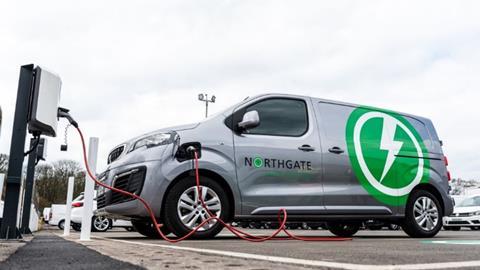

Flagging electric van sales may force the government to revisit the Zero Emissions Vehicle (ZEV) mandate for vans as early as next year, fleet software specialist Fleetcheck is warning.
The mandate is a legally binding policy introduced by the government in January 2024. The credit-based system requires manufacturers to increase total sales of EVs each year or face financial penalties.
It requires that 10% of new van sales must be fully electric in 2024, rising to 16% in 2025, 24% in 2026, 34% in 2027, 46% in 2028, 58% in 2029, and 70% in 2030.
With electric van sales continuing to stall, the government recently revised the ZEV mandate to allow for the continued sale of petrol, diesel, hybrid, and plug-in hybrid vans until 2035, extending the deadline for the complete transition to zero-emission vehicles.
However, Peter Golding, Fleetcheck MD, warned this week that further revision to the mandate may be needed as early as next year.
He explained: “The zero emissions target for the van market this year is 16%, but even the best sales month we have seen so far has not exceeded 10%. There would have to be a decisive shift through Q2 to Q4 to hit the government’s target and there is no sign such a change is coming.
“For 2026, the target increases to 24% and again, it’s almost impossible to conceive that the market is going to gain the necessary momentum to get anywhere near that figure.
“The potential shortfall fines to manufacturers are now £15,000 per unit but the government insists that these will not need to be paid because of inbuilt flexibilities, including recent changes to allow trading off car versus van sales, but that’s just storing up further pressures for the future. It’s an exercise in can kicking, not a solution.”
Golding said that by revising the ZEV Mandate once, the government has demonstrated that it will act to balance the health of the motor industry against its environmental policies.
“It’s clearly a positive that the government has listened and made some changes to the ZEV mandate regulations but it also establishes a principle that they will make modifications to protect manufacturers and the wider sector. Having done this once, it seems probable they would do it again.
“By next year, it seems likely that it will become clear the gap between the real van market and ZEV Mandate projections are unbridgeable, and that further action will have to be taken.
“The underlying fault line which, to be fair, is one the government inherited, is that the ZEV Mandate is supply-side based, when what the electric van market needs is a boost to demand.”
Additionally, Golding added, there were some signs that zero emissions projects in general were potentially going to become a more prominent political issue.
“While I’d underline that FleetCheck as an organisation is in favour of working towards net zero, there are some moves to make the entire subject of zero emissions much more contentious. Certainly, this is something that Nigel Farage is talking about now and he is very good at placing pressure on government policy.
“It may be that, in a year or so, a further relaxation of the ZEV mandate could be something that this Labour administration perceives as not just sound industrial policy for the motor industry, but also something that has political value.”