





![Mercedes-Benz_eActros_600_(1)[1]](https://d2cohhpa0jt4tw.cloudfront.net/Pictures/274x183/8/1/8/17818_mercedesbenz_eactros_600_11_556244.jpg)





News that Vauxhall is cancelling the launch of its new hydrogen panel van is a “major blow” for fleet adoption of the fuel in the UK, FleetCheck said this week.
The news follows parent company Stellantis’ announcement last week that it is cancelling its hydrogen fuel cell development programme, due to “limited availability of hydrogen refueling infrastructure, high capital requirements, and the need for stronger consumer purchasing incentives”.
Announcing the group’s decision, Jean-Philippe Imparato, Stellantis chief operating officer for enlarged Europe, said: “The hydrogen market remains a niche segment, with no prospects of mid-term economic sustainability.
“We must make clear and responsible choices to ensure our competitiveness and meet the expectations of our customers with our electric and hybrid passenger and light commercial vehicles offensive.”
Peter Golding, chief executive at the fleet software specialist Fleetcheck, lamented Stellantis’ decision this week, arguing that Vauxhall’s new hydrogen panel van would have provided the best available chance for operators to assess the viability of hydrogen in real world conditions.
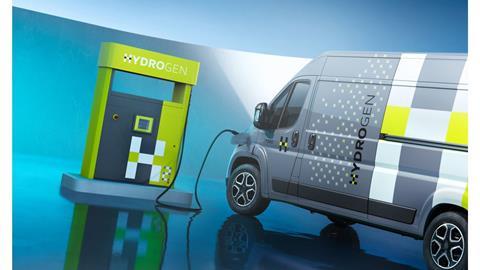
Vauxhall launched UK customer trials of the Vivaro Hydrogen van, which has a range of 249 miles, late last year, ahead of the launch of the Movano Hydrogen van (pictured), which had been slated to take place this year.
The Movano Hydrogen boasted a range of 311 miles and had a starting price of £66,450. Both models promised a refuelling time of no more than five minutes.
Golding said: “We have been arguing for some time that hydrogen has a potentially important part to play in the future of zero emissions vehicles, especially in the light commercial sector where electrification is proving difficult for many businesses.
“The Vauxhall van promised a very real opportunity for that to happen and the news their parent company Stellantis has decided to halt all production plans until at least the end of the decade is a major blow. We believed the UK launch was imminent.”
He said the reasons cited by Stellantis were all understandable, but this remained a disappointing moment.
“We talk to operators every day who would like to electrify their van fleet but are hitting issues with range, payload and charging times.
“The promise of hydrogen is that it offers zero emissions without any of these compromises, and the Vauxhall proposition was the opportunity to try this in the form of a familiar vehicle from a major manufacturer.
“Yes, significant hurdles would’ve remained, the biggest of which was the almost complete absence of a refuelling infrastructure. However, with no van, there is no way forward.”
Stellantis’ decision follows a recent announcement from BMW that its new hydrogen car would not be coming to the UK because of the lack of fuelling facilities.
Golding said: “In making that announcement, BMW called on the UK government to match the EU’s ambition for a hydrogen filling station every 120 kilometres but that level of commitment hasn’t stopped Stellantis cancelling their van across the whole Europe.
“That’s a sad fact and you can’t help but feel could weigh on future political thinking about hydrogen.
“While some truck and bus options remain, it feels as though in car and van terms, the hydrogen project is in decline and even effectively dormant for the foreseeable future.”