



![Mercedes-Benz_eActros_600_(1)[1]](https://d2cohhpa0jt4tw.cloudfront.net/Pictures/274x183/8/1/8/17818_mercedesbenz_eactros_600_11_556244.jpg)




The Department for Energy Security and Net Zero (DESNZ) has begun a consultation on the case for blending hydrogen into the existing gas network.
The government says that until there is a dedicated hydrogen network, injecting it into the methane (ie natural gas) network may be a “strategic enabler” that ensures hydrogen producers have an ‘offtaker of last resort’ for their product.
Currently there are very strict limits on hydrogen levels in the natural gas network and blending hydrogen and methane, which have different energy content and physical properties, raises issues including billing for gas users, who pay according to energy content.
The consultation, which closes on 19 September, is part of a far-reaching programme of government development and support for hydrogen in the UK, summarised in a new Hydrogen Update to the Market from DESNZ. In the Update, DESNZ reiterated the government view that “Hydrogen and its derivatives will have an important, complementary role to play in decarbonising heavier transport applications where the potential for electrification is more limited or uncertain and the availability of biofuels is constrained. This is particularly the case for uses with longer ranges, rapid refuelling requirements or greater energy density needs.” It expects battery electric will be the dominant technology for cars, vans and buses.
The Update promised a revamped UK Hydrogen Strategy, to be published in the autumn, “designed to fast-track delivery”.
The Update said the Low Carbon Contracts Company has signed Low Carbon Hydrogen Agreements with 10 of the 11 projects in Hydrogen Allocation Round 1, DESNZ’s hydrogen support scheme. It said, “We expect all of these projects to become operational between 2025 and April 2028, kickstarting the UK’s green hydrogen production at scale.” They will receive £2bn over 15 years in revenue support from the Hydrogen Production Business Model and over £90m in capital expenditure support via the Net Zero Hydrogen Fund.
In April DESNZ announced 27 projects on the shortlist for HAR 2, for which it said, “Our aim is to achieve lower average hydrogen production costs than seen in HAR1.” It also reiterated a commitment to future Hydrogen Allocation Rounds, with an aim to launch HAR3 by 2026 and HAR4 from 2028. HAR 3 and 4 would have a different approach, now being developed, “to support end uses such as low carbon hydrogen for dispatchable power and hard-to-electrify industrial and transport sectors”, and development of the first regional hydrogen network.
The Update promised a response to a recent Call for Evidence on the Renewable Transport Fuel Obligation, including the “small but growing amounts” of hydrogen and advanced fuels that qualify for a higher level of support than traditional biofuels.
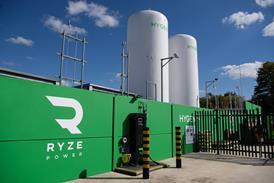
It highlighted the Tees Valley Hydrogen Transport Hub, which brings together hydrogen refuelling infrastructure and demand for transport applications. The demonstration, running until March 20206, includes “new publicly accessible refuelling infrastructure, demonstrating the commercial viability of hydrogen in transport”.