






![Mercedes-Benz_eActros_600_(1)[1]](https://d2cohhpa0jt4tw.cloudfront.net/Pictures/274x183/8/1/8/17818_mercedesbenz_eactros_600_11_556244.jpg)




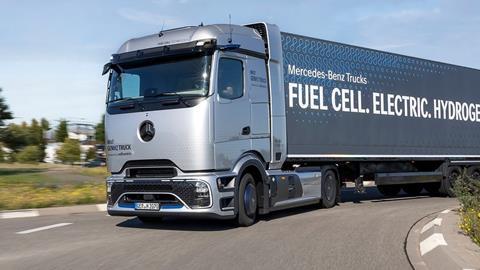

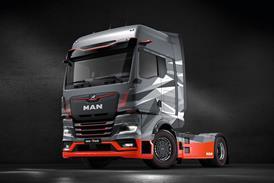
Daimler Truck is to manufacture 100 Mercedes-Benz NextGenH2 hydrogen-powered trucks which will be delivered to customers from the end of this year.
The small series production run, which follows a successful prototype trial, will take place at the Mercedes-Benz plant in Wörth.
It will see an upgraded verson of the prototype truck roll off the production line, capable of covering over 1,000 kilometers on a single tank filling at full load, thanks to the BZA150 fuel cell which converts hydrogen into electrical energy on board.
Announcing the roll out of the NextGenH2 Truck, Daimler Truck said key upgrades include proven series components from the battery-electric Mercedes-Benz eActros 600. These include the latest generation of the integrated e-axle, the aerodynamically optimized ProCabin, the modern Multimedia Cockpit Interactive 2, and safety and assistance systems based on the current E/E architecture.
Daimler Truck has opted for liquid hydrogen over hydrogen gas to power the truck. At -253 degrees Celsius, liquid hydrogen has a significantly higher energy density compared to hydrogen gas, allowing more hydrogen to be stored. Daimler Truck said this can substantially increase range and deliver a performance comparable to conventional diesel trucks.
The capacity of the two liquid hydrogen tanks has been increased compared to the first generation of the Mercedes-Benz GenH2 Truck, so that a total of up to 85 kg of hydrogen can now be filled.
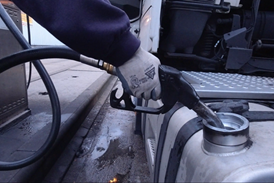
Refueling is possible from both sides as both tanks are connected. Using the sLH2 refueling standard developed by Daimler Truck and Linde, the truck can be filled with liquid hydrogen within 10–15 minutes.
In addition, the manufacturer added, transporting liquid hydrogen requires less logistical effort, and liquid hydrogen tanks offer cost and weight advantages over gaseous high-pressure tanks, enabling higher payloads.
The BZA150 fuel cell from Cellcentric, which is a joint venture between Daimler Truck and Volvo Group, remains the heart of the NextGenH2 Truck’s drive system. Two fuel cell units operate as a twin system with a total system output of 300 kW (150 kW each) and are integrated in the engine compartment beneath the cab to save space.
Daimler Truck said years of intensive testing have proven the hydrogen-powered drive concept to be reliable and efficient in real-world conditions. It points to early customer trials with the Mercedes-Benz GenH2 Truck, where hydrogen consumption, for example, averaged between 5.6 kg/100 km and 8 kg/100 km, with gross combined vehicle weights ranging between 16 and 34 tonnes.
The Mercedes-Benz NextGenH2 Truck also harnesses tried and tested components from Mercedes-Benz Trucks’ series production vehicles. This includes the ProCabin — which is already offered in the Mercedes-Benz Actros L and the battery-electric eActros 600 - now featured for the first time in a fuel cell truck. As a result, the NextGenH2 Truck benefits from a 9% improvement in the drag coefficient, compared to the previous cab.
The manufacturer added that the Mercedes-Benz NextGenH2 Truck will deliver a high-level driving experience, on par with its battery-electric counterpart, the eActros 600, with the truck delivering up to 340 kW in Economy Mode and up to 370 kW in Power Mode, even in demanding driving situations, such as steep gradients or high payloads.
The high-voltage battery developed by Daimler Truck has an installed capacity of 101 kWh. The lithium-iron-phosphate (LFP) battery serves as a buffer for the fuel cell and stores energy during recuperation. The NextGenH2 Truck also uses the same in-house-developed electric drive axle used in the eActros 600, with a 4-speed transmission, including two reverse gears.
Daimler Truck said these components enable highly efficient energy recuperation when driving downhill or during braking, feeding regenerated electricity directly back into the buffer battery, extending overall range and improving consumption.
The high-voltage components and the latest E/E architecture are also carried over from the Mercedes-Benz eActros 600, including advanced safety systems such as Active Brake Assist 6, Front Guard Assist, and Active Sideguard Assist 2, as well as compliance with current cybersecurity standards.
Daimler Truck said customer trials of the Mercedes-Benz GenH2 Truck have provided valuable feedback for its development team, directly influencing improvements in the NextGenH2 Truck.
Thanks to a space-saving arrangement of components in the Tech Tower behind the cab, this area is now more compact. As a result, the wheelbase has been shortened by 150 mm compared to the previous model to 4,000 mm, to make it compatible with a wide range of trailers and trailer combinations.
The Tech Tower also houses a new boil-off management system that meets all regulatory requirements for handling hydrogen, including parking the vehicle in enclosed spaces. An integrated cooling system ensures consistently stable operating conditions even at very high ambient temperatures or demanding terrain.
A new sensor system to detect hydrogen leakage now allows overnight stays in the truck’s two standard beds fitted in the cab. Additionally, a newly designed side panel with integrated crash elements provides improved protection of the liquid hydrogen tanks in the event of an accident.
Achim Puchert, Mercedes-Benz Trucks chief executive, said: “In addition to battery-electric solutions, hydrogen-based drives are crucial for the sustainable transformation of our industry.
“With the NextGenH2 Truck, we are taking the next technological step in fuel cell trucks. Together with our customers, we aim to introduce the small series with high range and near production-ready technology into daily transport operations from the end of 2026.”