

For decarbonising HGV fleets, both electrification and hydrogen fuel present viable pathways to achieving zero emissions. The suitability of each depends on factors like fleet size, range requirements, and operating conditions.
When comparing the two, hydrogen vehicles tend to offer longer ranges—particularly for distances exceeding 250km. They perform efficiently across a broader temperature range and refuel significantly faster than battery-electric vehicles, which can take hours to recharge.
The emergence of heavy-duty trucks is on the horizon, with commercial launches expected later this decade. HGV operators planning to decarbonise their fleets in the future can leverage insights from bus operators who have already begun fleet conversions. Hydrogen fuel cell buses, readily available today, are actively being deployed across the UK and EU, showcasing their practicality and potential.
So, what’s right for your fleet? Hydrogen, electrification or both?
Both hydrogen-powered and battery-electric vehicles can achieve zero tailpipe emissions when their energy sources are entirely renewable. Although both types of vehicles rely on electric technologies, they differ in energy storage methods: hydrogen vehicles use a fuel cell to convert the stored energy which is hydrogen, while electric vehicles store energy in a battery.
Other considerations
Hydrogen vehicles are particularly advantageous for extended ranges exceeding 250km, providing about 1.5 times the range of battery-electric vehicles. Additionally, hydrogen vehicles perform efficiently across a broader temperature range (-30°C to 45°C), making them suitable for areas with significant seasonal temperature variations, whereas battery-electric vehicles operate optimally between 15°C and 30°C.
Space and weight efficiency also favour hydrogen-powered options. They can store energy more compactly, allowing hydrogen buses to carry more than 50% additional energy and accommodate over 15% more passengers compared to similar battery-electric buses. Refuelling speed further enhances hydrogen’s appeal, with refuelling taking only 8-10 minutes compared to the one to five hours required for recharging battery-electric buses.

It’s also worth noting that stored energy in hydrogen vehicles provides more density and thus provides a similar experience to traditional fossil fuels. A similar level of energy in a battery electric vehicle would require larger batteries and therefore more space and weight. This is a key consideration for HGVs when total gross vehicle weight is key to profitability and reducing payload amounts can reduce revenue. Hydrogen fuel cell buses are also faster to refuel, with a refuelling time of less 8-10 minutes, compared to the 1 to 5 hours it can take to charge a battery electric bus.
Operators need to carefully evaluate all relevant factors before determining the best solution for their fleet. In many cases, the ideal approach may involve a combination of hydrogen fuel cell and battery-electric vehicles rather than solely choosing one option. For those who decide that hydrogen aligns with their needs, the next critical step is identifying the most suitable hydrogen supply model for their operations.
Air Products has been safely involved in more than 250 hydrogen fuelling projects in over 20 countries worldwide, so we understand the options operators face and the importance of making any investment viable. It’s critical for operators to seek advice from experts around its decarbonisation requirements, whether that is full fleet or find a partial conversion solution, and to understand how the decisions they make now will play out in the long-term.
Making a sustainable choice
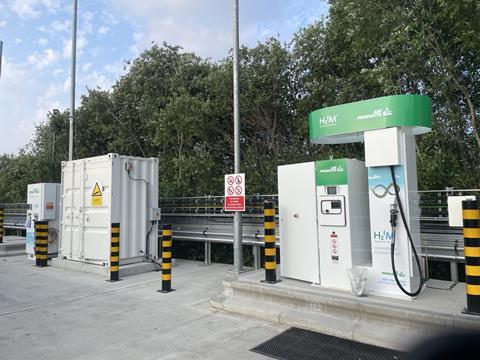
For transport operators, having access to reliable, safe hydrogen refuelling stations (HRS) is critical. Until a reliable hydrogen refuelling station network has been built across major road networks, hydrogen vehicles are suitable for operators who can operate in situ back to base refuelling models for their fleet such as local bus operators or depot-based operations. Hydrogen refuelling stations can be built based on proven technology including gaseous or liquid hydrogen.
Most of the hydrogen refuelling stations in operation today use gaseous hydrogen as the source and they offer a good solution for fleets with up to 400kg to 500kg per day. Gaseous hydrogen is dispensed at either 350 or 700 bar. It is delivered to the refuelling station via tube trailer with each trailer transporting on average 500kg to 1,400kg of hydrogen varying between suppliers.
A liquid hydrogen refuelling station is a cost-effective and scalable solution for fleets of 20 to 150 vehicles. Liquid hydrogen stations equally dispense through the industry standard 350 or 700 bar systems. However, the energy density of liquid hydrogen is substantially higher and each delivery to the station equates to 3,500kg of hydrogen reducing the amount of hydrogen deliveries to the station to ensure reliable supply. Equally, the amount of hydrogen stored on site can be considerably larger, requiring fewer deliveries overall.
Critically, liquid hydrogen stations also have a smaller footprint compared to gaseous, taking up less space on an operator’s forecourt and it costs no more to install than a gaseous system.
A ‘one-size-fits-all’ approach isn’t always the best solution, which is why we provide different modes of supply to fit our customers’ requirements. These can be tailored to different demands, based on what is most suitable for an operator, regardless of their fleet size.
Liquid hydrogen refuelling
As an example, we have worked closely with Metrobus, part of The Go-Ahead Group, to advise on the best option for their fleet GB Kite Hydroliner buses, supplied by Wrightbus, based on their business’ needs, size of fleet, growth plans and the geographic area in which they are operating.
Several factors contributed to their decision to move to liquid hydrogen. Metrobus runs a few routes on a 24-hour, 365 days per year schedule in the Crawley and Gatwick area. The company has a goal to convert the entire fleet to emission-free buses. Considering fleet size, daily range, refuelling speed as well as infrastructure availability and requirements, hydrogen offered the best solution. To future proof the refuelling solution, Air Products recommended a liquid hydrogen station which will enable Metrobus to fuel its entire fleet in future. Today, 54 hydrogen buses are operated from and fuelled at one site with many operating over 400km a day, well beyond the range of a conventional battery bus. The certified green hydrogen provided by Air Products ensures that Metrobus can meet their decarbonisation targets.
It’s critical for operators to make these decarbonisation decisions in an informed way, and safe in the knowledge that they are opting for a fuel and supply mode that will serve commercial requirements not just in the short to medium term, but long into the future.
As the world’s largest hydrogen supplier, we have the expertise and solutions to ensure that fleet operators can make these decisions with full confidence in reliability of supply. For those operators focused on achieving zero-emission operations, our message is simply this: act now but think long-term.