


![Mercedes-Benz_eActros_600_(1)[1]](https://d2cohhpa0jt4tw.cloudfront.net/Pictures/274x183/8/1/8/17818_mercedesbenz_eactros_600_11_556244.jpg)


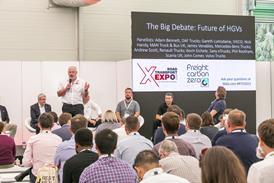
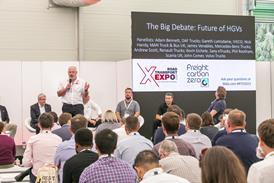

A hydrogen-fuelled truck has entered service in the Netherlands after gaining Europe’s first ADR certification for hazardous chemical transport.
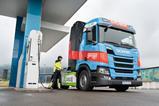
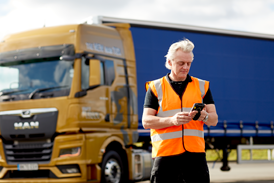
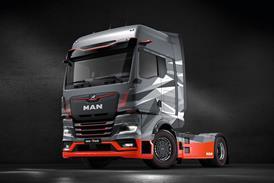
The MAN hTGX hydrogen-powered vehicle, has been deployed by Belgian chemical tanker operator Vervaeke in a pilot with Dutch salt and chemicals producer Nobian. Launched in February 2026, the project will see the truck used in ADR-classified chemical logistics in the Rotterdam region.
The term “hydrogen truck” may suggest a fuel-cell vehicle, but in this case, the technology is different. The MAN hTGX uses a hydrogen combustion engine, burning hydrogen in an adapted internal combustion engine rather than using a fuel cell to generate electricity.
That distinction matters because MAN is positioning the hTGX as a specialist option rather than a mainstream rival to battery-electric trucks. Stefan Schall of MAN says it is designed for “special applications for which eTrucks are not so well suited, or where charging infrastructure is insufficient”. In tanker work, MAN argues that the lack of battery packs helps preserve payload and configurability, while fast refuelling suits demanding operating patterns.
Operationally, the truck will run on routes around Rotterdam as part of a three-year pilot. It is expected to cover around 100,000km a year carrying ADR-classified chemical products, including caustic soda and hydrochloric acid, replacing a diesel truck in liquid bulk operations.
The vehicle has been put into service by Vervaeke in cooperation with Nobian, and the truck purchase was supported by the Dutch SWiM hydrogen mobility subsidy scheme.
According to MAN, the hTGX uses the manufacturer’s H45 hydrogen combustion engine, derived from its D38 diesel platform. The truck delivers 520hp, 2,500Nm of torque, stores 56kg of compressed hydrogen at 700 bar, can be refuelled in less than 15 minutes, and offers a range of up to 600km.
For ADR tanker work, the vehicle’s configuration matters as much as the powertrain. The truck was supplied by Leeuwen Trucks & Vans and is fitted with a single-tyre steered trailing axle and an adjustable fifth wheel. It is about 2,300kg lighter than a comparable battery-electric tractor, which could be an important advantage in payload-sensitive chemical transport.
Nobian says replacing one diesel truck with the hydrogen vehicle could reduce emissions by 88.5 tonnes of CO2 per 100,000km.