



![Mercedes-Benz_eActros_600_(1)[1]](https://d2cohhpa0jt4tw.cloudfront.net/Pictures/274x183/8/1/8/17818_mercedesbenz_eactros_600_11_556244.jpg)



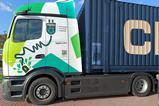
Toyota Motor Europe has introduced five hydrogen fuel cell lorries into its European logistics operations, collaborating with VDL Groep and four transport partners to establish zero-tailpipe-emission routes between Belgium, France, Germany, and the Netherlands.
The trucks are based on the DAF CF Battery Electric Truck glider – a chassis delivered without a driveline but with a cab – and have been fitted with Toyota’s second-generation fuel cell modules. Each vehicle uses two Gen 2.2 modules, delivering a combined power of 160kW. VDL Groep carried out the fuel cell integration and assembled the trucks for homologation.
The 40-tonne fuel cell trucks are now operating on daily routes linking Toyota’s European Parts Centre in Diest, Belgium, with facilities in Lille (France), Cologne (Germany), and Rotterdam and Weesp (Netherlands). Logistics partners Vos Transport Group, CEVA Logistics, Groupe CAT and Yusen Logistics are responsible for operating the vehicles, with performance continuously evaluated by Toyota as part of its zero-emission freight trials.
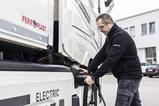
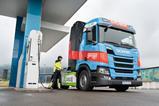
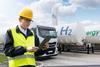
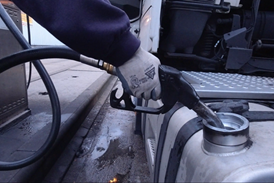
Each lorry has a real-world range of up to 400km (approx. 250 miles) on a full tank, which typically contains around 36kg of hydrogen. Refuelling takes place at public hydrogen stations across Belgium, Germany and the Netherlands.
Toyota says the cost of a full refuelling is approximately €360 (about £307), based on a €10/kg hydrogen price at Belgian stations. The company noted that maintenance costs are expected to be comparable to diesel trucks, with upkeep focused on standard components such as the ion exchanger cartridge, air filters and coolant.
Thanks to the use of a smaller battery than Toyota’s full battery electric version, the fuel cell trucks can carry up to 29.2 tonnes in the trailer while maintaining zero tailpipe emissions. This makes them broadly competitive with diesel vehicles in terms of payload and performance.
According to Thiebault Paquet, vice president R&D at Toyota Motor Europe, the initiative supports Toyota’s goal to reach carbon neutrality in its logistics operations by 2040 and aims to contribute to the growth of the hydrogen economy in line with the EU’s Alternative Fuels Infrastructure Regulation (AFIR).
“Together with our logistics providers, we aim to gather learnings from the daily operation of our first hydrogen-powered logistics fleet and further improve the vehicles and operational processes,” Paquet said.