









![Mercedes-Benz_eActros_600_(1)[1]](https://d2cohhpa0jt4tw.cloudfront.net/Pictures/274x183/8/1/8/17818_mercedesbenz_eactros_600_11_556244.jpg)





An urgent review of the UK’s transition to zero emission vehicles must be carried out before net zero targets collapse amid an increasingly uncertain world, the industry has warned.
With uptake of electric vans last year only just over half of the proportion demanded by legislation and even bigger obstacles facing HGV operators, the SMMT said the country’s transition pathway had been built on assumptions that had proven to be overly-optimistic.
It said the industry had bridged the gap between ambition and demand with unprecedented levels of discounting but these subsidies would become unsustainable and undeliverable by the end of 2027 when even tougher targets are introduced for vans and cars.
“Natural market demand will not deliver the doubling in new car market share in two years, never mind the quadrupling of electric van market share, needed to achieve these targets,” the SMMT said.
It added that global events had undermined transition assumptions, with battery costs now 30% higher than anticipated, stubbornly high raw material costs and UK energy prices soaring.
“The challenges are even greater for commercial vehicles.
“While almost two thirds of new van models are now available as zero emission, uptake in 2025 was 9.6%, barely half of the 16% required by regulation.
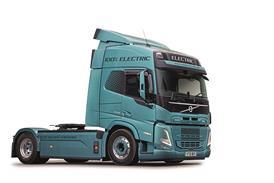
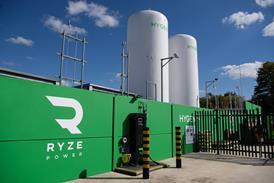
“For heavy goods vehicles, adoption is only just beginning – just 1.4% of the market in 2025 – reflecting the sector’s diverse operating requirements, high upfront costs and the scale of charging and refuelling infrastructure still needed.”
The SMMT said a strategic review of the transition path could assess whether the pathway remained realistic and was aligned with economic growth.
Mike Hawes, SMMT CE, said: “The UK’s EV transition pathway was conceived with the best of intentions – but the assumptions behind it have proved over-ambitious.
“A landscape which once looked solid has turned out to be quicksand. Recognising the world of 2026 is not the one envisaged five years ago is not a retreat from ambition; it is a necessary step to achieving it.”
In January, new Voltempo chief executive Simon Smith admitted HGV fleets were holding off on electrification because high energy costs, standing charges, and underused infrastructure were eroding margins.
“You can have all the targets you want, but if the market isn’t ready, you’re forcing people to buy something that doesn’t yet make sense commercially,” he told Motor Transport.