








![Mercedes-Benz_eActros_600_(1)[1]](https://d2cohhpa0jt4tw.cloudfront.net/Pictures/274x183/8/1/8/17818_mercedesbenz_eactros_600_11_556244.jpg)





IKEA has put a 44-tonne electric truck into regular long-distance service in Italy to examine how heavy freight operations can be sustained largely through depot-based charging rather than relying on extensive public fast-charging infrastructure.
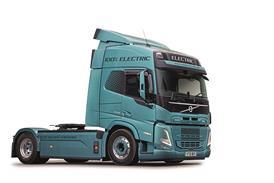
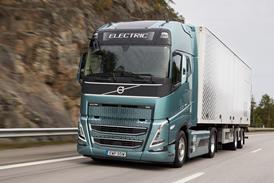
The project brings together Volvo Trucks, Italian logistics provider Codognotto and Inter IKEA Group, and centres on a single Volvo FH Aero Electric. The vehicle operates on three defined routes in northern Italy: Portobuffolé–Piacenza, Piacenza–Corsico and Piacenza–Padua, transporting IKEA furniture and furnishings between suppliers, distribution centres and stores.
The electric tractor runs at a gross vehicle weight of 44 tonnes and is equipped with a 540 kWh battery. According to Volvo Trucks Italia, it is scheduled to operate around 252 days per year, covering approximately 500 kilometres per day across the three routes. The truck is integrated into Codognotto’s existing logistics flows, with routes planned to reduce empty kilometres and unnecessary stops by combining inbound and outbound movements within the limits of electric operation.
Codognotto said the initial deployment has been used to build operational experience in a live retail logistics environment, particularly around charging times, energy consumption and vehicle planning. Even when starting the day with a fully charged vehicle, the truck cannot complete a full operating day without intermediate recharging, so daytime “top-up” charging sessions must be planned to ensure service continuity.
Vehicle planning is further shaped by IKEA’s retail delivery model. According to Codognotto, store deliveries are typically carried out at night, outside opening hours, while loading operations at warehouses and distribution centres take place during the day, requiring charging requirements to be integrated alongside customer delivery windows and warehouse operations.
Charging is structured around a mix of depot-based AC charging and DC fast charging during operations. An AC wallbox installed at a Codognotto warehouse serves as the vehicle’s base charging point, while DC fast charging is also used in day-to-day service to support the planned operating range.
Codognotto said the operation required a different planning approach compared with diesel trucks.
“The shorter range compared to traditional vehicles requires far more accurate route planning, minimising empty kilometres and optimising stops. Longer charging times compared to diesel refuelling force us to rethink operational schedules,” said Matteo Codognotto, supply chain director at Codognotto Group.
Volvo Trucks not only supplied the charging wallbox but also supported the charging setup in cooperation with infrastructure partner Fleet220. The manufacturer said its involvement extended beyond vehicle delivery.
“We were in the cab for the whole day and supported the driver in the research, planning and charging of the vehicle with public and private charging.”
Based on the experience gained so far, Codognotto and IKEA are analysing the extension of electric operations to additional national routes, potentially international ones, with the aim of deploying two or three additional electric vehicles by the end of the year, subject to operational performance and infrastructure readiness.