







![Mercedes-Benz_eActros_600_(1)[1]](https://d2cohhpa0jt4tw.cloudfront.net/Pictures/274x183/8/1/8/17818_mercedesbenz_eactros_600_11_556244.jpg)




From April, businesses will be able to earn revenue by using extra power at times when the system is oversupplied. This is a new addition to the National Energy System Operator’s (NESO’s) Demand Flexibility Service (DFS), which already pays businesses to turn down the power they use for short periods to help manage electricity supplies.

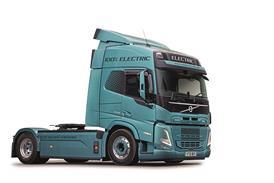
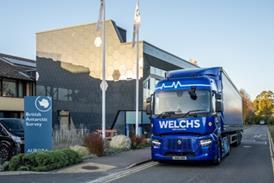
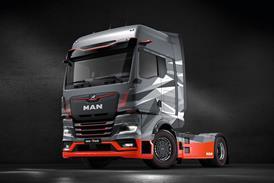
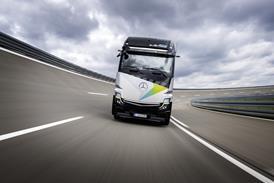
Electric vehicle fleets are seen as potential flexibility providers – even without ‘vehicle to grid’ options - because charging can be interrupted for periods of 30 minutes and upwards. But so are businesses who can vary other demands (such as air conditioning or heating) or who have on-site resources such as batteries.
Why is this cheaper?
The DFS helps reduce the overall cost of running the system – and can pay back to participating businesses – because of the characteristics of the generating capacity NESO calls on to meet varying demand through the day.
It calls on gas-fired power stations to meet peaks in demand when cheaper sources (ie renewables) are fully employed. But while demand peaks may be as short as half an hour, gas-fired stations require four hours to warm up and be in readiness to engage for the period – burning costly gas all the time. On occasion, NESO may ask extra gas plants to warm up but not call on them if an expensive peak does not materialise. Instead, using DFS, NESO asks businesses how much they will charge to reduce their demand briefly. Typically those businesses who respond have flexible demand (eg air conditioning or vehicle charging) and can be paid less than gas operators.
The new ‘demand turn-up’ service answers a different need. Sometimes the slow response of gas turbines is useful to the system, because they provide ‘inertia’, keeping frequency and voltage within limits. At times of very low demand NESO pays cheap renewables to stop generating, keeping gas on the system to provide that service. Again, DFS can step in, if paying flexible businesses to use extra power is cheaper than paying, for example, wind farms to switch off.
Either option may be available to companies that have on-site batteries, PV and other technologies. For example, demand can be ‘turned up’ by companies who generally use or export power from PV arrays, if the solar power is diverted (eg to charge on-site batteries or heat storage) and the business uses grid power instead.
Joining in
The ‘bidirectional’ option should be available from April, subject to approval from the regulator, Ofgem, and from that time businesses will be able to earn revenue by flexing their electricity use up or down.
Businesses can participate by engaging directly with NESO (if they have capability to manage their own delivery, data and settlement processes) or through a registered provider.
NESO has also reduced the minimum flexibility that must be provided, so smaller businesses, who can vary their use by as little 100MkW, can bid in. Participants also have more choice about how to take part. They can submit their own expected baseline for the next day against which they will raise or lower usage, rather than using the existing methodology if they prefer.
A decision from Ofgem on whether the service can go ahead is due on 30 March and the service is expected to go live on 14 April. NESO says: “Early preparation will help ensure your business is ready to benefit from the first events.”