








![Mercedes-Benz_eActros_600_(1)[1]](https://d2cohhpa0jt4tw.cloudfront.net/Pictures/274x183/8/1/8/17818_mercedesbenz_eactros_600_11_556244.jpg)





Daimler Truck has launched a semi-public depot charging network for electric trucks, testing whether fleet operators can make better use of their charging infrastructure by opening up spare capacity to other users.
The initiative, branded TruckCharge, is designed to improve utilisation at depots and increase charging availability for heavy-duty electric vehicles, without relying solely on public motorway charging.
Under the semi-public model, companies retain ownership and control of their charging infrastructure but can make chargers available to external fleets when they are not required for in-house operations. Depot operators decide when chargers are opened, who can access them and how they are priced, while external users can search for, book and pay for charging slots in advance via a central digital platform.
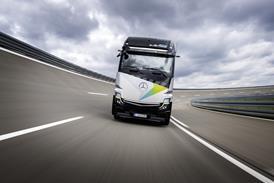
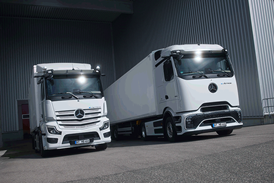
The concept is already being tested in Germany, where pilot sites are live at logistics operators Wessels in North Rhine-Westphalia and Diez Logistics in Baden-Württemberg. According to Daimler Truck, the Diez site operates chargers rated at 150 kW and 400 kW, with Mercedes-Benz eActros 600 trucks already using the infrastructure. Daimler Truck confirmed that it partners with Alpitronic on charging hardware, while the software platform is compatible with other charger manufacturers.
From an economic perspective, the semi-public approach is aimed at addressing low utilisation of capital-intensive depot charging infrastructure during the early stages of fleet electrification. By allowing third-party fleets to charge outside peak hours, depot owners may be able to offset part of their investment while increasing overall charging availability.
Operational and technical implementation of the TruckCharge network is handled by Spirii, an e-mobility software provider owned by Edenred. Spirii supplies the charge point management system, booking and billing functions, and the e-mobility service platform connecting depot operators, fleet managers and drivers.
Daimler Truck positions TruckCharge as a complement to public charging infrastructure such as Milence, the motorway-focused joint venture between Daimler Truck, the Traton Group and the Volvo Group. While Milence targets long-haul corridor operations, the semi-public depot model is aimed at regional, return-to-base and dedicated-route fleets, where charging is typically anchored around depots.
Alexander Müller, head of zero emission vehicle business solutions at Mercedes-Benz Trucks, said the model is intended to make better use of existing infrastructure rather than require fleets to build standalone capacity.
“We combine the advantages of our own charging infrastructure with the opportunity to use it more efficiently while increasing availability for the industry,” Müller said.
Daimler Truck plans to roll out the semi-public TruckCharge model in Germany and Austria in the first quarter of 2026, with additional European markets to follow. The company has confirmed that the UK is included, with an introduction planned for 2026.