


![Mercedes-Benz_eActros_600_(1)[1]](https://d2cohhpa0jt4tw.cloudfront.net/Pictures/274x183/8/1/8/17818_mercedesbenz_eactros_600_11_556244.jpg)


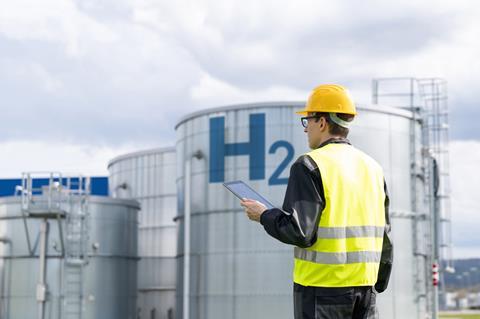
A Net Zero Technology Outlook from the Government Office for Science has named steelmaking and chemicals as the most likely roles for hydrogen in future industries, suggesting it would only find niche uses in the transport sector.
The exercise is intended to set out a ‘best estimate’ of the technology mix needed in key emitting sectors to reach net zero by 2050, and identifies the research, development and demonstration (RD&D) needed to get there. The Outlook is based on interviews and a peer review exercise involving 45 experts from the research community as well as policy leads from relevant government departments in 2024. It incorporated material from established scenario modelling, policy documents, industry reports and literature.
The report covers the industry, heat and buildings, agriculture, power and transport (surface transport, maritime and aviation) sectors. For each, it assessed the current technology and its technology certainty level (TCL, which reflects current confidence that a technology will be in the 2050 mix) and technology market readiness level (TMRL). It included ‘wildcard’ technologies that are highly uncertain but potentially important.
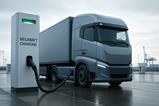
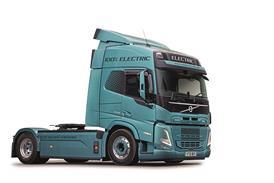
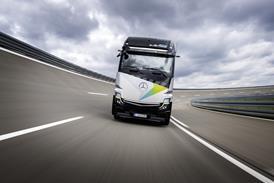
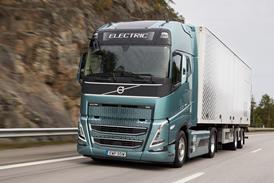
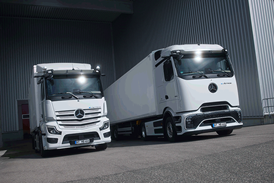
The transport sector currently accounts for 29% of all greenhouse gas emissions. The GOS found that in heavy goods vehicles (HGVs), buses and coaches, the main solutions for 2050 are likely to be battery electrification, “with niche use of hydrogen fuel cells” as an option where electrification is not possible. Battery electric (along with overhead electrification) was also considered to be a solution for rail, on “thin routes and branch lines”.
Across the surface transport sector, the Outlook also highlighted improved vehicle design and consideration of the vehicle’s end-of-life, such as electric vehicle (EV) battery recycling and reuse, as important to decarbonisation.
It found that the TCL for this pathway was rated between Medium (ie, confidence that the technology solutions will be part of final mix, with some optionality in technology pathway, and some uncertainty over final technology mix) and High (clear technology pathway and high consensus over the final technology mix). TMRL was also rated between Medium (between demonstration and early-stage scale-up) and High (technologies have entered the market and are in deployment phase, but there may be barriers to market scale-up and technology adoption).
The report suggested two ‘wildcards’ that could alter the expected technologies - EV battery swapping and electric road systems – but both were within the electrification pathway.
Along with industrial and chemical uses, hydrogen would be used in electrification, providing flexibility and dispatchable power.
The GOS’s role is to put “science advice at the heart of decision-making” but its publications are “not a statement of government policy”.