




![Mercedes-Benz_eActros_600_(1)[1]](https://d2cohhpa0jt4tw.cloudfront.net/Pictures/274x183/8/1/8/17818_mercedesbenz_eactros_600_11_556244.jpg)





The immediate energy crisis due to the fall in Middle East oil and gas shipments, and the long term need to reduce fossil fuel use, have given a boost to researchers looking for alternative fuels.
Some are close to market. Recently Abundia Global Impact Group announced it would start to produce diesel and aviation fuel, along with chemical feedstocks, from plastic waste at three North American facilities. Abundia’s plastics facilities will use municipal plastic waste and post-industrial plastics as feedstock, using Topsoe’s HydroFlex® technology to produce renewable fuels it says are are fully compatible with modern combustion engines and existing fuel infrastructure and can be safely blended with conventional fuels.
The first of the three facilities will be located in Baytown, Texas, and each facility is expected to produce 1,500 barrels of renewable fuels per day when fully operational. Final investment decision for the Baytown site is expected by the end of 2026, with operations anticipated to begin in 2029.
Henrik Rasmussen, Managing Director of Topsoe Americas said: “Topsoe’s technologies and solutions enable the conversion of liquified plastic waste into fuels. These exciting projects represent an important step in demonstrating new use cases for plastic waste.” The world produces about 353 million tonnes of plastic waste each year, according to the OECD’s Global Plastics Outlook, of which only around 9% is currently recycled.
Other developments could help make it easier to access non-fossil fuels. In Brittany, Sublime Energie recently opened “Charlie,” a project to demonstrate that biogas could be liquified directly where the gas is produced. Biomethane converted into bioLNG can be used for heavy-duty mobility, with a side product of bioCO₂, which replaces fossil CO₂ across a range of agricultural and industrial applications.
A patented process liquefies biogas directly on the farm. It is then transported to centralized facilities, where cryogenic distillation separates and upgrades it into bioLNG as an alternative to diesel for heavy transport. The “Charlie” demonstrator integrating all the technological building blocks on a single site under real operating conditions.
The company said, “For the first time, on-farm anaerobic digestion can produce a renewable fuel without relying on gas grid infrastructure”, giving potential market access to farms that are too far from gas grids to allow them to inject biogas. The company estimates that 26 TWh of biomethane potential is untapped in France due to lack of access to gas networks.
The next project, “Delta,” will connect around ten farms to a commercial-scale shared processing hub in Côtes-d’Armor due to be commissioned by 2028.
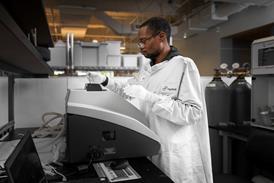
Finally, researchers at The University of Manchester have claimed ‘proof of concept’ in a research paper considering whether microbial communities from hot springs could be harnessed to convert industrial CO2 emissions from industrial processes such as steel and cement production into useful organic compounds. The study, published in Environmental Microbiome, suggests these bioactive compounds are an untapped resource that could have applications in pharmaceuticals, agriculture, food, cosmetics, bioremediation and biofuels.
The team found that microbiomes inhabiting terrestrial hot springs are naturally adapted to conditions that closely resemble industrial waste streams, which have high temperatures, elevated concentrations of CO2, and chemically challenging environments. The researchers suggest that these communities could form the foundation of new biotechnologies designed to operate under industrial conditions without the need for light or energy-intensive cooling processes.
Corresponding author, Professor Sophie Nixon, said: “This study highlights that nature has already evolved solutions for converting CO2 under extreme conditions, and that these natural solutions are there for us to harness.” She added, “This is a proof of concept, and we are now actively working with these communities in the laboratory to develop scalable, cost-effective systems that can contribute to Net Zero.”