










![Mercedes-Benz_eActros_600_(1)[1]](https://d2cohhpa0jt4tw.cloudfront.net/Pictures/274x183/8/1/8/17818_mercedesbenz_eactros_600_11_556244.jpg)





Electricity consumers, both business and domestic, are likely to be paid to use extra power at certain times this summer to help manage a surplus of renewables, the National Energy System Operator (NESO) has said, in its annual Summer Outlook report.
So-called Demand Turn-Up is needed because of fast-growing renewables capacity, which encompasses both large transmission-connected solar and wind farms and installations as small as those installed on a domestic or commercial building.
NESO flagged up the need to use Demand Turn-Up in its Operability Strategy report, published in March. It said that so-called ‘behind-the-meter assets’ such as rooftop solar “provide recognised value for consumers”. However, the GB transmission network is seeing record demand for short periods, such as when solar power is high.
As well as balancing supply and demand NESO has to keep the system within a number of other parameters including voltage and frequency, second by second and low transmission demand presents “operability challenges”. NESO has to have flexible generation to ensure grid balance and downward margins. One option is to pay inflexible generators to discard power and also pay flexible generators to start up. It is cheaper and more flexible to call on customers to use more in those periods and raise demand levels.
Charging batteries and pumping in so-called pumped storage hydro plants can help add to demand and numbers of these types of asset are increasing. But this summer NESO thinks new records will be set for demand lows. It says “increased consumer led flexibility is necessary to manage periods of low transmission demand”.
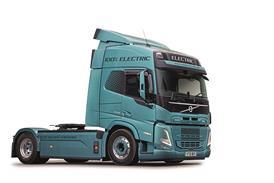
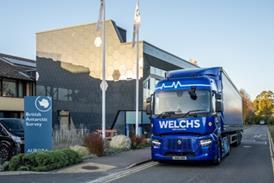
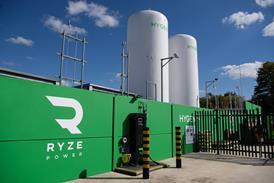
As well as charging batteries, including electric car batteries, businesses could react by turning up air conditioning and consumers by using appliances. Eventually a fleet of electric HGVs would be a target customer for NESO to ask for a demand increase. But although the option may be used for on-site load, the nascent electric heavy haulage industry will find it difficult to access the option to charge its vehicles. Periods when Demand Turn-Up is most likely to be on offer are likely to be a few hours around peak solar generation in the middle of the day, and there is no guarantee it will coincide with periods when the HGVs will be charging. Nor will it be guaranteed from day to day as it will depend on weather conditions – although there will be some predictability.
But in the future this type of variability is expected to be more common and as the number of eHGVs and the number of charging hubs grows, the opportunities for overlapping benefit will increase.