













![Mercedes-Benz_eActros_600_(1)[1]](https://d2cohhpa0jt4tw.cloudfront.net/Pictures/274x183/8/1/8/17818_mercedesbenz_eactros_600_11_556244.jpg)






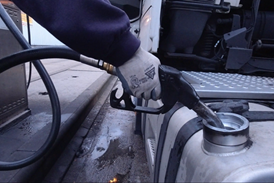
Boiler manufacturer Baxi has significantly reduced its HGV fleet’s CO2 emissions by switiching from diesel to hydrotreated vegetable oil (HVO), the company has reported.
Baxi began the transition from diesel to HVO in 2024 and has continued the journey into 2026. Its shift to HVO has made for an immediate reduction in monthly emissions.
HGV emissions reduced from 260 tCO₂e in 2024 to 163 tCO₂e in 2025 - a 37.3% decrease.
With the transition to 100% HVO fuel across the fleet this year, the company is expecting a further 98% reduction, bringing total HGV emissions down to approximately 3.5 tCO₂e.
To support the measure, Baxi has also changed how it plans HGV routes to avoid unnecessary journeys, increase efficiency and minimise total distance travelled.This includes optimising vehicle loads, ensuring trucks are fully utilised to minimise trips and improve overall fuel efficiency.
The company has also introduced regular driver training to promote efficient driving techniques, embed eco-friendly behaviours and improve awareness of fuel-saving practices.
Baxi added that, crucially, the core business needs fulfilled by Baxi’s HGVs have continued uninterrupted by the change in fuel.
The strategy is part of Baxi’s journey towards becoming carbon neutral in all operations by 2030. This has seen energy efficiency become a guiding principle for Baxi’s manufacturing, product developments and logistics.
Dennis Reed, Baxi transport operations manager, said: “We’re really pleased with how successful and cost-effective the switch to HVO has been.
“We’re seeing better miles per gallon now, meaning that HVO is letting us go further while keeping emissions for the fleet at a bare minimum.
“It’s also proving to be consistently better for the vehicles with no significant changes needed to maintenance.”
Baxi said the move to HVO shows how transitional fuels can play a critical role in reducing emissions and protecting the environment now, while the company explores longer-term solutions, such as fleet electrification and alternative drivetrains.
Chloe Bottomley, Baxi environment, health and safety advisor, said: “The adoption of HVO in place of traditional diesel fuels is a huge step forward that will be followed by further sustainable developments.
“As a heritage manufacturer of heating and hot water solutions, celebrating our 160th anniversary this year, we have a responsibility to help homes and businesses move towards cleaner technologies such as heat pumps and heat networks and continue to innovate to drive the energy transition. It naturally follows that we must also transform the way we operate.
“The move to HVO is just one example of how we are making similar strides in our own internal processes and resourcing to reduce the carbon intensity of our operations.”