







Successful energy transition strategies are built around a comprehensive understanding of customers’ needs, a commitment to building on relationships and empowering businesses to take small but practical, commercially viable steps that align with their goals in every sense.
Many people still perceive Britain’s great energy transition as a breathless race towards a single destination, or a transformation that must be conquered overnight.
On the contrary, the country’s decarbonisation journey is being driven by innumerable unique journeys shaped by the evolving needs of different industries, and by customers and operations with vastly different targets and ambitions.
Every sector is different, from its operations to its offering. The hundreds of thousands of businesses operating within each sector is more unique still. It would be foolish to assume there’s a universal blueprint for decarbonisation, and yet this misconception persists.
Consider transport and logistics operators, for example. What works brilliantly for a huge, national fleet may be completely unattainable for a regional haulier. What makes perfect commercial or operational sense for a construction contractor may not even be a consideration for a business operating within the agricultural space.
No two transition journeys look the same. While many assume the businesses making the most dramatic or costly changes are the ones making the greatest progress, this isn’t necessarily the case.
In my experience, the businesses tackling decarbonisation successfully are those taking small, practical and achievable steps that align with their commercial goals, helping to drive the business forward.
For many years, a significant aspect of my role revolved around education and awareness. As recently as three years ago, conversations about decarbonisation often began with me explaining the fundamentals of lower-carbon alternatives.
Today, the majority of decision makers I sit down with have a sufficient understanding of the need to reduce their emissions, and the benefits of doing so, when I meet them for the first time.
Their journey to net zero is no longer governed by the question of whether action should be taken. Instead, their decisions revolve around which route is best to take, and at what pace.
This shift is reflected in the conversations we now have about lower-carbon fuel alternatives, such as Hydrotreated Vegetable Oil (HVO). Three years ago, many businesses were encountering HVO for the first time, and discussions often focused on understanding what the fuel actually was, and how it could support decarbonisation objectives.
Today, awareness is considerably higher, with many organisations already assessing where HVO could fit within their wider transition plans.
Any change can feel risky for a business. Why ‘fix’ something that has worked perfectly for your business for decades? The businesses taking steps to decarbonise, however small, are the businesses reaping the rewards of their perceived risks.
Often, the cost for those who don’t commit to decarbonisation is far greater than those who step into the unknown and forge their unique path to sustainable success.
The most successful transition strategies begin with a comprehensive understanding of what a business is trying to achieve. Are they taking action to respond to evolving customer requirements? Are they preparing now, to ensure they’re in the strongest position they can be when future tender opportunities arise? Are they working to achieve non-negotiable sustainability targets? Are they determined to enhance efficiency within their operations?
Without truly understanding the key motivational drivers behind a business’ desire to decarbonise, it would be impossible to recommend the appropriate solution.
This customer-first approach is becoming increasingly important as sustainability carries greater weight throughout supply chains. Sustainability is no longer viewed through the lens of compliance or corporate responsibility in isolation. For many operators, it has become a competitive differentiator.
In many cases, it can be a secret weapon when it comes to winning new contracts.
Procurement requirements are evolving, with tender processes increasingly demanding businesses to demonstrate how they are taking steps to reduce emissions. Customers are scrutinising the sustainability credentials of their suppliers more than ever before and, in some sectors, businesses that fail to show meaningful progress risk narrowing the opportunities available to them.
This is where one of the biggest misconceptions about decarbonisation can emerge. All too often, I see energy transition decisions being viewed exclusively through the perspective of its financial implications. While cost will, understandably, be an incredibly important factor for businesses, focusing only on the price difference between traditional and lower-carbon alternatives like HVO can be a detrimental move for businesses.
Sustainability credentials are becoming an integral part of commercial success. In many cases, the potential value of winning contracts, strengthening customer relationships and supporting long-term business growth can far outweigh the additional investment required to begin reducing emissions.
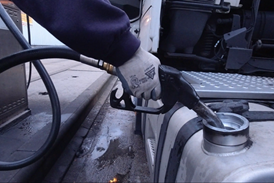
This by no means suggests businesses need to transform overnight. One of the most effective strategies we facilitate at Certas Energy is phased implementation. For example, some transport operators may not quite be ready to transition an entire fleet immediately. Instead, they begin by transitioning a handful of vehicles that are dedicated to a specific contract over to HVO to meet customer requirements. This allows them to gain experience, meet sustainability objectives and demonstrate meaningful progress without disrupting their wider operations.
These smaller steps are often overlooked, but they are significant. Decarbonisation does not have to be an all-or-nothing, overnight decision. Incremental progress can, and will, deliver measurable results.
This principle extends far beyond transport, into sectors such as construction and agriculture, where operational challenges can be very different.
Construction businesses often work across multiple sites, each with its own requirements and constraints. Here, sustainability decisions are frequently influenced by the needs of customers and project stakeholders.
Lower-carbon fuels can help organisations reduce emissions, while offering additional benefits in areas such as environmental risk management. For example, renewable fuels such as HVO are biodegradable, meaning organisations can support both their decarbonisation objectives and broader environmental management requirements.
Agriculture presents another challenge altogether, with farmers operating in an environment in which margins are often remarkably tight, and investment decisions carry significant weight. Accessibility, infrastructure and cost can all impact the pace of the transition for farmers.
While some businesses are exploring HVO as part of their decarbonisation strategy, others may find alternative lower-carbon fuel solutions better suited to their operational requirements, depending on factors such as availability, infrastructure and fuel usage patterns.
Many agricultural businesses are exploring ways to reduce their environmental impact through a combination of solutions, from alternative fuels through to renewable energy generation, such as solar panels.
These unique experiences reinforce an important message; successful energy transition strategies are rarely about finding the ‘perfect’ solution – no such thing exists.
They are about finding the right solution for that business at that particular moment in time.
This is why collaboration, and building on our relationships with customers as an energy transition partner is so important. Those on their transition journey, whatever stage they may be at, need trusted partners who truly understand their operations, recognise the pressures they face, and can effectively help to identify realistic and sustainable routes forward.
Every industry, and each business within it, begins the journey at a different place and at a different pace. They each have different priorities, and face different constraints. The role of any trusted supplier should be to help simplify the process, reduce complexity and provide practical solutions that reflect their realities.
Britain’s energy transition will not be driven by one breakthrough technology, or one defining moment. Instead, it will be delivered one vehicle at a time, one contract at a time, one business decision at a time.
Whether that means introducing HVO to part of a fleet, investing in renewable energy solutions such as solar, or identifying efficiencies elsewhere in an operation, practical progress is already happening wherever you look, and that is precisely what a successful energy transition looks like.
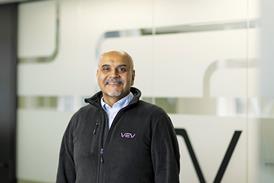
Cathy Bailey, energy transition manager, Certas Energy