















Europe is in danger of making a serious, strategic error. One that, if not corrected, will damage our economies, weaken our national security and leave us poorer for generations. We risk missing out on driving and maximising the benefits of the electric revolution, the key industrial opportunity of the early 21st century to our societies and our economies.
During COP31, the question is no longer simply whether we decarbonise, but how quickly we can turn the transition into an economic and industrial advantage.
While the world is building batteries, solar and electric vehicles, leading nations are tying themselves in knots in fruitless political disputes over a net-zero culture war. Too many spend too much time arguing about whether electric vehicles and solar are “woke”, or fit comfortably within a set menu of views, and not enough asking collectively: “how do we win the next industrial race?”
As a global logistics business leader, I see where our customers are investing. That global trade is moving to the net zero economy, and electrification is building the momentum that counts.
In the first half of 2026, China’s electric vehicle revolution has reduced its diesel consumption by an estimated 1.5 million barrels of oil a day, mainly from electrifying transport. China has consciously driven electrification forward at pace, through both private sector innovation and long-term public investment. Its lead is the result of sustained industrial policy, state support and investment over decades, not simply an earlier recognition of the opportunity. The results of that choice are now visible. China has deployed around 240,000 electric HGVs in 2025, with estimates now putting 500,000 on its roads as of August 2026. The country expects to see at least 1.6 million electric HGVs on the road by 2030, part of a long-term vision. Europe is expected to have only around 300,000–400,000 electric trucks in the same timeframe.
Meanwhile, Ethiopia banned fossil-car imports in 2024 to reduce its dependence on imported fuel – EVs now account for 60% of new sales. In 2025, it expanded this ban to cover HGVs. Ethiopia’s energy mix is 90% renewable – electrification also makes strong economic sense.
As nations electrify their transport, solar use has exploded. Chinese solar exports doubled between February and March 2026 to a record 68 GW, with exports to Africa rising 176% and shipments to Asia doubling in a single month. Countries most exposed to fossil-fuel shocks have decided they will no longer be held hostage to volatile prices and have embraced a renewable revolution. Even Texas, hardly famous as a bastion of liberal politics, can generate 75% – 85% of its energy from wind, solar and nuclear.
If China, Ethiopia and Texas can do it, why can’t we?
While they accelerate, we delay. While political debate is easily distracted by values-based arguments over policy, our reliance on gas remains the major cause of rocketing prices.
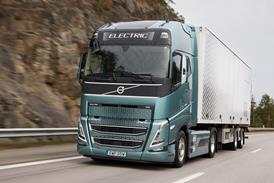
The question shouldn’t be whether we should electrify, but how quickly and cheaply we can do it, and whether Europe is willing to compete to win. DP World’s own operations demonstrate that the technology works; we are already operating electric HGVs at comparable cost to diesel vehicles through careful utilisation, smart charging and a combination of grid and solar power. The constraint is increasingly policy, infrastructure and the speed at which we can deploy it.
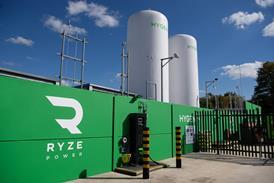
We can start by focusing our energy on the proven technologies set to dominate transport in the coming years. We remain distracted by alternatives to electrification, like hydrogen, CNG and ammonia that are expensive, less efficient, or lack the practicality of electrification. Our transport sector – including smaller businesses – needs to be given certainty about which technology to invest in.
We suffer delays to installations of charging stations, caused by archaic grids and planning rules. In the UK, our rules on heavy vehicle carrier weights are outdated. No matter how many times this is raised with the government, no action is taken. Even the EU has already addressed this.
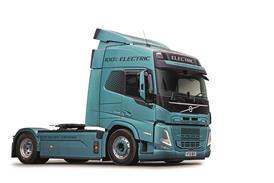
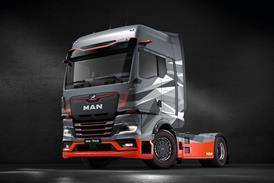
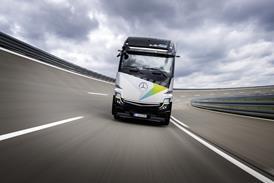
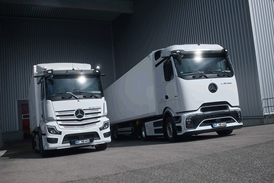
EVs are mechanically simpler, with a fraction of the moving components of a combustion engine. They are more efficient, converting 80% to 90% of their energy into motion, compared with 40% to 50% for the best diesel engines. The old argument about battery life is also disappearing. MAN rates the batteries in its eTGX for an effective useful life of up to 1.6 million kilometres, or 13 years use. The Mercedes eActros 600 is expected to retain more than 80% battery capacity after 1.2m kms. Battery durability is not the limiting factor critics claim it is.
Don’t be fooled by naysayers who argue the transition is costing more than keeping the fossil fuel system. Clean energy will offer both businesses and consumers protection and relief from fossil fuel prices that are rising and are vulnerable to disruptive events. Of course there are complex improvements to infrastructure to manage and finance in the transition. Our energy grids need to be upgraded to have higher capacity, improve resilience and manage flexible energy production. Whether it is a coal power plant or a wind turbine, we still need to modernise our grid.
The global industrial race isn’t waiting for us. The electrical-industrial revolution is one of the great economic opportunities of the 21st century.
It’s time to stop worrying about electrification and start winning with it.
Nicholas Mazzei, vice president, sustainability – Europe, DP World