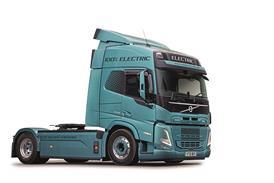


In recent years, we have seen increased discussion in both industry and government circles about what the dominant net-zero solution will be for heavy goods vehicles: battery electric or hydrogen fuel cell electric. Another possibility is it will be a homogenous mix of these technologies, however experience suggests that this is an economically sub-optimal solution and an unlikely outcome, with one solution more likely to dominate just as diesel has for the last 100 years.
Ultimately both technologies offer a feasible pathway to net zero emission road freight, assuming the carbon intensity of the electricity grid also tends towards zero in the same timeframe, and the Hydrogen is “clean” hydrogen (for clarity this means the hydrogen is produced via electrolysis using 100% renewable energy). There are of course significant barriers to overcome for either of these solutions.
Commercial application at scale is dependent on the effective development and adoption of charging/re-fuelling infrastructure, as well as the acquisition of completely new vehicles at what is currently a significant price premium. This feels particularly challenging in these times of increased austerity and ongoing geopolitical instability.
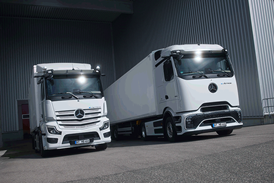
Of the two technologies, battery electric vehicles are increasingly looking like the de facto solution given the higher maturity of the technology and the inherent inefficiencies and hence the costs associated with the production of true clean hydrogen. We should, however, not ignore the embodied carbon inherent in the production of large battery packs and limited recycling capabilities at present, as well as the additional weight penalty imposed on some vehicles by these batteries.
This is a small consideration relative to the total in-use emission savings relative to diesel though, and this margin is increasing with each passing year. In addition, there remains a significant opportunity for the industry to optimise its transport operations and charging infrastructure such that not all HGVs require 500+ kWh battery packs.
Dynamic charging solutions such as Electric Road Systems offer another attractive possibility to substantially reduce the necessary battery sizes needed for future eHGVs and actively recharge vehicles while they are on the roads.
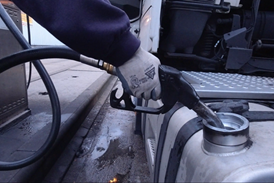
There is, however, an impactful mid-term or “transition” solution that has already shown significant results – and one that even the European Union (EU) admits holds the key to achieving climate goals. This is the use of renewable fuels such as waste-oil derived hydro-treated vegetable oil (HVO100) and biomethane (bio-CNG and bio-LNG).
Both of these fuels can reduce greenhouse gas and particulate emissions by up to 90% relative to diesel, while HVO has the added benefit of being a “drop-in” solution compatible with existing diesel vehicles. Mainland Europe, where HVO is actively manufactured, has already benefitted from faster adoption and application of this fuel with sales growing significantly over the last six months.
However, we do need to remember that it is not only the technology itself that is holding back climate positive freight developments. It is also the willingness of shippers to help cover the increased costs associated with new fuels, new assets, and new infrastructure. Zeus recently conducted a study of 310 large shippers (with revenues over £1bn) across UK and Europe and found that nearly a third were not willing to pay a premium for zero-emission freight, while those that were willing to pay were only willing to pay a small premium of no more than 10%.
Any new technology relies on collaboration, coordination, and most importantly, the willpower to create change to deliver strong and effective results. The creation of bodies such as the Sustainable Freight Buyers Alliance and the Global Logistics Emissions Council, who helped deliver the latest ISO 14083 on universal reporting of freight emissions, are important steps in the right direction. But, if we are to truly reach our net-zero and decarbonisation targets quickly, we all need to recognise that we have a part to play and a small price to pay.
Get involved in the decarbonisation conversation and comment below (scroll to the bottom of the page). We are keen to hear your thoughts and feedback


![Mercedes-Benz_eActros_600_(1)[1]](https://d2cohhpa0jt4tw.cloudfront.net/Pictures/274x183/8/1/8/17818_mercedesbenz_eactros_600_11_556244.jpg)