





![Mercedes-Benz_eActros_600_(1)[1]](https://d2cohhpa0jt4tw.cloudfront.net/Pictures/274x183/8/1/8/17818_mercedesbenz_eactros_600_11_556244.jpg)





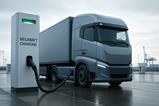
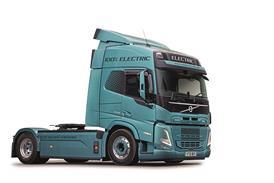
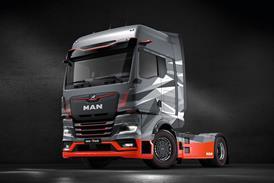
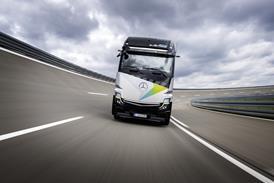
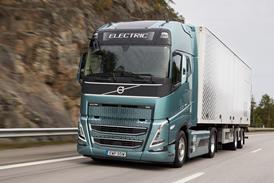
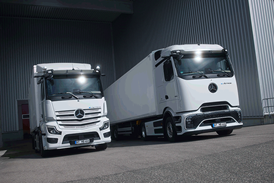
Batteries are the more attractive future for low-carbon HGVs, rather than hydrogen vehicles, the National Energy System Operator (NESO) indicated in an annual ‘forward look’ at the country’s energy future. What is more, it said, hydrogen use in other heavy transport sectors, such as buses, has declined recently.
NESO’s ‘Future Energy Scenarios’ is an annual modelling exercise that sets out four different futures for the country’s energy sources and use, according to which pathway is taken to meet our Net Zero obligation.
Some conditions apply across all scenarios, and NESO says, “road transport is the largest emissions sector today” with the greatest potential to drive emissions reductions by 2030.
It says, “Electrification is the main solution for road transport in our pathways”, with hydrogen potentially playing “a role in larger HGVs”. It sees that opportunity arising in the 2040s, but says that “uncertainty remains” over the availability of hydrogen outside the initial industrial clusters. However, it assumed that a nationwide high-power charging infrastructure for HGVs, buses and coaches could be deployed, with faster grid connections for en-route charging hubs for large and commercial vehicles.
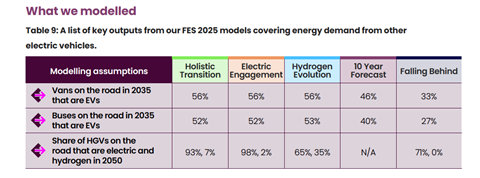
“Currently, there are limited low carbon HGVs on the road, but developments in the vehicles and chargers alongside growing orders show the potential,” it said. “Vans and heavy goods vehicles (HGV) are starting to decarbonise, gradually following the car market”, believing that “the ZEV mandate for vans has created policy certainty for industry” so that 52% of all new van models were battery EVs at the start of 2025.
Buses are decarbonising faster than other transport sectors: “Although the number of registered hydrogen buses and coaches on the road is decreasing, as access and cost of hydrogen remain a challenge for transport, electrification of this sector is progressing well as the technology develops.”
When it consulted stakeholders about the transport sector it found that, “most stakeholders expressed a preference for battery HGVs over hydrogen”. In response to the stakeholder feedback it reduced the contribution of hydrogen in HGVs across its pathways and also increased the number of diesel HGVs in one scenario, ‘Falling Behind’, that does not meet Net Zero targets.
Even in the ‘Hydrogen Evolution’ pathway, which assumes fast progress for hydrogen in industry and heat and widespread access to a national hydrogen network, it forsees that “hydrogen is used for some heavy goods vehicles, but electric vehicle uptake is strong”.