
















![Mercedes-Benz_eActros_600_(1)[1]](https://d2cohhpa0jt4tw.cloudfront.net/Pictures/274x183/8/1/8/17818_mercedesbenz_eactros_600_11_556244.jpg)




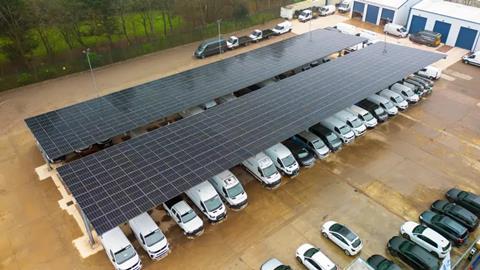

While more than half of fleet operators say their depots are suitable for EV charging, only a little more than quarter have chargers installed on their sites, according to a whitepaper released by Dawsongroup Vans
The whitepaper Charging Ahead is based on the results of the company’s EV Readiness survey of fleet operators across the UK.
It found that 53% of respondents believed their premises to be suitable for EV charging infrastructure. However only 27% have chargers installed on site, while 47% remain unsure of their suitability.
When asked about the most critical factor in selecting an EV, 42% of fleet managers identified driving range as the top priority. When broken down by fleet size this concern is even greater with smaller fleets report a greater impact from driving range limitations.
The whitepaper said that a main concern for businesses operating with fewer vehicles was that each EV must cover more ground and handle diverse routes without frequent charging interruptions,making range confidence essential for maintaining operational efficiency.
Sarah Gray, Dawsongroup Vans head of ZEV strategy and development, said: “For smaller fleets, every vehicle is a workhorse. If one can’t deliver the expected range, it disrupts the entire operation.”
To mitigate this risk, the whitepaper advises businesses to make sure they select the right EV for their operational needs by running trial periods to test real world range performance, to help fleet managers make informed decisions and avoid taking on electric vans that do not meet the demands of the business.
Charging speed also emerged as another critical factor for time sensitive commercial fleets that are often run on tight schedules, requiring rapid turnarounds, the whitepaper revealed.
Unlike consumer EVs, fleet operations are highly time-sensitive, with vehicles often running on tight schedules and requiring rapid turnaround to maintain productivity. Slow charging can lead to extended downtime, disrupting delivery windows, service commitments, and overall operational efficiency.
Simon Ridley, Dawsongroup Vans managing director, said: “Faster charging keeps vehicles on the road. For high-frequency fleets or space-constrained depots, that means better utilisation, fewer operational bottlenecks, and simpler scheduling—ultimately driving higher revenue and efficiency.
“Rapid charging isn’t just about speed; it’s about flexibility and control. Opportunity charging during breaks enables longer routes without delays, and while the infrastructure requires upfront investment, the lifecycle savings from reduced downtime and improved efficiency far outweigh the costs.”
As battery technology advances, the ability to charge at higher power levels will become a standard expectation for fleet operators, the paper notes, advising operators to invest upfront in fast-charging infrastructure to ensure fleets can scale efficiently, meet sustainability targets, and remain competitive.
The survey also found that 41% of companies have their vehicles parked on site overnight, making on-site charging highly practical, which begs the question, why is site charging not being implemented faster?
Ridley explained: “Many businesses underestimate the complexity of installation. From assessing electrical capacity to managing costs and planning for future scalability. It’s not just about buying chargers; it’s about integrating them into the business model.”
To overcome these challenges, businesses should start with incremental steps, the white paper advises. It suggests using temporary or mobile charging solutions while long-term infrastructure plans are developed.
It also advises conducting a site assessment to understand power availability and future demand, adding: “By combining short-term flexibility with long-term planning, businesses can ensure their EV charging strategy aligns with operational needs and growth objectives.”
Lamech Solomon, Logistics UK head of decarbonisation, commented: “The findings of this whitepaper show how important charging infrastructure, speed and installation are to fleet operators, who cannot afford disruption to their day-to-day operations.
“Greater integration of charging infrastructure, whether that’s through public chargepoints or installing them on site at an operator’s depot, will significantly help adoption.”