


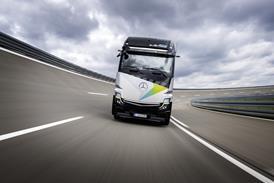
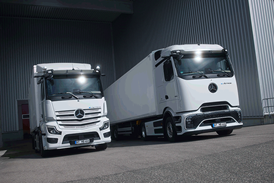
Following the Mercedes-Benz eActros 600 launch at the end of last year, UK customers have started taking delivery of the new model. The brand’s flagship truck is already proving to be a significant part of its sustainability strategy. James Venables, head of future sustainability at Daimler Truck UK spoke with Freight Carbon Zero about the OEM’s zero emission journey.

jamesvenablesheadoffuturesustainabilitydaimlertruckuk

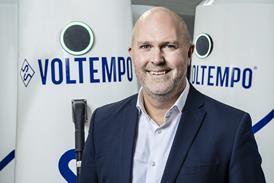
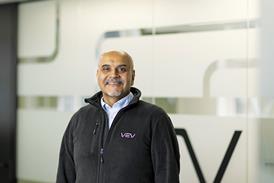
“The eActros 600 has been a game changer for us in terms of customer appetite,” Venables, pictured, says. “We’ve got as many orders in the book that will be registered this year as the entire BEV market for trucks last year in the UK with over 200 customer orders.”

Electric trucks are one of three technologies Daimler Truck is planning to focus on. “One, of course, is diesel and making diesel fit for Euro 7 and beyond. When it comes to zero emission we’re focusing on battery electric and hydrogen. Previously when we talked about hydrogen we were just talking about hydrogen fuel cells but we are also evaluating hydrogen internal combustion as another technology,” Venables says.

While he anticipates hydrogen fuel cell trucks will offer the best efficiency and total cost of ownership (TCO) compared to hydrogen internal combustion, specific applications like construction could be better suited to hydrogen engines, something Daimler is already exploring with the Unimog.

“When it comes to the use cases we’re targeting at the minute, it’s the ones that make most sense from an operator’s perspective where the TCO is closest to diesel,” Venables says. Currently, these are operations where the vehicles cover around 140,000 to 180,000km annually. “Depending on the customer’s electricity price, we can get quite close and in some cases better TCO than diesel.”

jamesvenablesheadoffuturesustainabilitydaimlertruckuk2

Charging infrastructure and software

Running at 40 tonnes in average temperatures of around 20°C, the eActros 600 is said to be capable of at least 500km on a single charge. “500km is the minimum you can expect at 40 tonnes but some operators are getting closer to 600km at that weight,” Venables says.

Although many of the operators deploying eHGVs are working on back to base models, those with national networks are leveraging charging at multiple sites to open up tramping possibilities.

In Europe, Daimler’s TruckCharge brand has launched a semi-public charging network, allowing depots to offer their charging facilities to other fleets. Something similar is in the works for the UK. “At the minute, the reservable aspect is still in development,” Venables says. “There’s no industry standard around what that looks like, so there needs to be some alignment there.”

In the meantime, smart charging software at depots is thought to be the best way to manage the delivery and cost of electricity, drawing more power at cheaper times and ensuring the right trucks are charged in time for their next shift. Venables adds, “I think smart charging is super important, as is anything that can drive down the cost of an electric truck and that’s one thing that could help.”

Battery chemistry and longevity

While brand new trucks are showing potential to exceed range expectations, some operators are still concerned about the long term performance of truck batteries. Venables says, “With the eActros 600 we offer a six-year, 720,000km warranty with the battery. If it drops below 80% state of health within that time, then we will replace the batteries.

“That said, the reason that we’ve gone for lithium iron phosphate (LFP) technology over nickel manganese cobalt (NMC) like some of our competitors is for a better cell aging profile and megawatt charging system (MCS) charging doesn’t have a detrimental impact when it comes to cell aging.”

Like its diesel range, the eActros 600 has a 10 year, 1.2 million kilometre design life. By this point in the truck’s life, the company anticipates battery state of health will be 85% or more depending on various environmental factors.

“I think operators can be confident that the trucks they buy today will certainly be able to do the same job throughout their first life of five years and into a second life,” Venables adds. “The second life aspect is very important to us and we will have to manage the life cycle of these trucks probably in a different way than we do for diesel today.”

Unlike standard LFP batteries supplied by CATL, Daimler Trucks has worked with the battery manufacturer to develop its own battery chemistry. Produced on a separate production line, the cells have been optimised specifically for truck applications, targeted at longevity.

Reshaping ownership models for eHGVs

In light of remaining uncertainties, many of which can only be resolved with time, residual values for eHGVs are a bit of a guessing game. So far, we’ve seen a difficult second hand market develop for electric LCVs which are struggling to generate demand for first life applications let alone second life.

“No one knows what the future holds for residual values, it’s difficult for any OEM to predict,” Venables says. “We are working on our second-life programme to optimise future residual values.”

To tackle some of the wider issues around commercial vehicle electrification, Venables says, “an important aspect of my job has become lobbying government departments and ministers. The market needs to be stimulated by some government intervention to create an appetite from an operator’s perspective. That doesn’t necessarily need to be through incentives for BEV trucks, there are other ways to improve the business case for operators running BEV trucks.”

“If we look at other markets in Europe where they are introducing legislation favouring operators who are running battery electric trucks, either road tolling, for example, in Switzerland or zero emission only zones in cities in the Netherlands, these schemes have been highly effective. As it stands at the minute, there’s still a big onus on the truck OEMs to push trucks into operator hands. We believe the government needs to address operator demand as well as the supply.”

Ultimately, if the government can address the cost of electricity to give operators significant TCO savings, the purchase of an eHGV becomes a smart financial decision provided the infrastructure and routes are in place to suit the job.

majorcontractformercedes-benztrucks-amazondeliversorderofmorethan140eactros600fortheuk2

Until a second hand market matures and scales of economy start to bring the upfront purchase price of eHGVs down, things like residual value insurance and support from finance companies to spread the risk are expected to be key factors to help deliver affordable contract hire agreements for eHGVs. “When it comes to ownership models, everybody talks about truck-as-a-service but when you ask 10 different people what truck-as-a-service means, you’ll probably get 10 different answers as to the component parts and how it works,” Venables explains.

“Truck-as-a-service is something that we want to offer, and will offer, but we need all the component parts to be established first.” As well as the vehicle itself, this as-a-service model will need accessible charging infrastructure supported by associated management software and a dealer network upskilled in the service and maintenance of eHGVs.

What’s next for Daimler Truck?

“The plan is to have a global powertrain platform for zero emission technologies,” Venables says. However, due to the political landscape in the US, some of Daimler’s projects have been put on hold including a global battery platform and global e-axle platform. “But when it comes to Europe, we’re full steam ahead,” he adds.

Over the next five years, the focus will remain on electric trucks with more models expected to be launched in the coming years to fill gaps in the product lineup, notably construction and low frame vehicles. After 2030, production hydrogen fuel cell electric trucks will be on the cards for long distance applications and, unless UK legislation changes, this will be the only hydrogen powertrain available here.

By next year, we can expect to see more electric Mercedes-Benz trucks on the road in the UK within and outside of the ZEHID project. Mercedes-Benz is supplying vehicles to Amazon through Electric Freightway, and Maritime and Gregory Distribution in the ZEN Freight consortium.

Discussing his hopes for the ZEHID project, Venables says, “It’ll be interesting to see, in very tightly controlled circumstances with an abundance of data, how those trucks operate and compare against diesel. What I’d really like to see is it proving the business case can work and that then accelerating demand in the market.”

As customer deliveries for the new eActros 600 continue, Venables adds, “I’m most looking forward to seeing our trucks in customer hands and getting the sort of feedback we have already which is customers are super enthusiastic about the trucks and drivers love them.

“In many cases we have drivers saying they don’t want to get back in a diesel truck once they’ve been in an eActros 600. That sort of thing gives me real energy to see these forward-thinking operators as pioneers when it comes to sustainability. I want to see that snowball and encourage some of the other operators that are currently looking at electrification from a distance to start evaluating the concept.”