





![Mercedes-Benz_eActros_600_(1)[1]](https://d2cohhpa0jt4tw.cloudfront.net/Pictures/274x183/8/1/8/17818_mercedesbenz_eactros_600_11_556244.jpg)





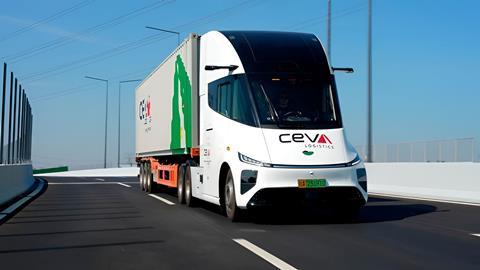
As the Middle East conflict pushes up diesel costs, CEVA Logistics has run a Windrose battery-electric truck across the 5,000 km Chinese leg of a live freight lane to Kazakhstan, handing the cargo to a diesel tractor only for the final stretch.
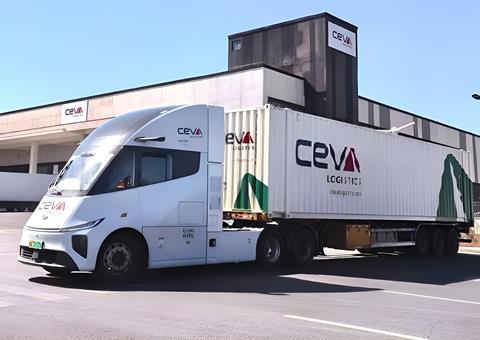
The full Shenzhen to Almaty run covered nearly 6,000 km in eight days, with the electric truck completing the China section in 4.5 days. According to CEVA, the shipment carried 5.3 tonnes of cargo and cut CO2 emissions by 46% compared with a diesel equivalent.
The truck charged via the public network, making nine stops during the China leg. According to Windrose CEO Wen Han, fuel costs on the electric leg came in 65% below diesel on the same route.
The pilot did not run fully electric end to end. The cargo switched to diesel at Alashankou because Windrose does not yet have a Kazakh plate, not because of range or charging, Han said. Homologation is expected this year, and the lane is planned as a recurring Asia-Europe route.
That claim lands at a moment when diesel exposure is in sharp focus. A recent Transport & Environment briefing argues that trucks are especially vulnerable to oil price shocks because they account for 19% of EU road transport oil demand while making up only 2% of vehicles on the road.
The briefing assumes diesel prices remain around €2 per litre, roughly 25% above the 2025 baseline, while non-household electricity prices rise by 26% to €287/MWh. Even under that higher-electricity scenario, it says an average diesel truck in Germany would face monthly energy costs of €4,850, versus €3,100 for an electric truck. On the EU average, the comparison is €4,410 for diesel against €2,990 for electric.
T&E says the energy-cost increase for the average EU diesel haulier is 1.5 times higher than for an electric operator, while in Germany the diesel premium is 2.65 times higher. On energy costs alone, it estimates that an e-truck in Germany would still be 36% cheaper to operate, or €1,760 a month less.
Windrose is reinforcing that case on the purchase side too. In a LinkedIn post published last week, Han said the company had cut pricing from €250,000 to €195,000 per truck for orders of up to 100 units, linking the move directly to the oil crisis and saying the aim was to accelerate electric truck adoption and move more quickly towards diesel parity.