





![Mercedes-Benz_eActros_600_(1)[1]](https://d2cohhpa0jt4tw.cloudfront.net/Pictures/274x183/8/1/8/17818_mercedesbenz_eactros_600_11_556244.jpg)

All Motor Transport articles in (FCZ) Web Issue – Page 2
-
 FCZ Article
Maritime Transport sees rail as key part of decarbonisation plan
Maritime Transport is set to be one of the most influential fleets in the UK as the logistics industry moves to reduce emissions. The company is part of three of the four ZEHID consortiums: eFREIGHT 2030, Electric Freightway and ZEN Freight. To understand Maritime’s position on decarbonisation and its involvement ...
-
 FCZ Article
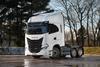
Iveco offers multiple routes for fleets’ decarbonisation journey
Continuing its open minded approach to decarbonisation, Iveco is committed to offering multiple fuel solutions to help operators find the right powertrains to work for their business. To get an update on where Iveco is with its product line up and future decarbonisation plans, Freight Carbon Zero ...
-
 FCZ Article
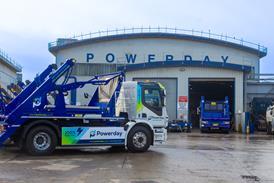
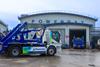
The long road to decarbonising waste transportation
One of the biggest challenges in decarbonising the waste management sector is reducing emissions from transport, particularly the transition of HGV fleets to low-carbon alternatives. While the exact solution remains uncertain, one thing is clear: change is inevitable, and we must seize the opportunity to make progress.
-
 FCZ Article
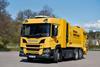
Could hydrogen have a role in road freight decarbonisation?
While eHGVs are slowly being rolled out across the UK logistics network, with more to come over the next year as part of the ZEHID programme, some operators will be wondering which low or zero emission options will be available next.
-
 FCZ Article
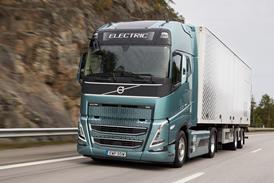
The next charge: What’s happening in battery tech
Battery technology is developing rapidly, but is it evolving fast enough to meet the demands of the heavy-duty truck sector? Staffan Lundgren, senior advisor, propulsion and energy conversion technology at Volvo Trucks, takes a look at the promises, the pitfalls, and what it really means for fleet operators.
-
 FCZ Article
eFREIGHT 2030 seeks the tipping point to start mass rollout of eHGVs
Freight Carbon Zero caught up with Michael Boxwell, Group CEO at Voltempo, the company heading up the eFREIGHT 2030 ZEHID consortium, to find out about progress and plans for this year and beyond.
-
 FCZ Article
Viability of battery electric trucks could be transformed by smarter interaction with the grid
‘If the wheels aren’t turning, she ain’t earning’ has been the mantra for hauliers through the decades. But using battery electric vehicles to provide services to the electricity grid could turn that on its head. Freight Carbon Zero in association with FTI Consulting and New Power Info held a roundtable ...
-
 FCZ Article
Project Jolt aims to enter the real world of battery electric HGVs
A private self-funded consortium including at least 12 truck operators of all sizes and four OEMs has formally launched Project Jolt, which is intended to “establish whether electric road freight transport can become commercially viable”. The consortium is led by Prof David Cebon, head of the Centre ...
-
 FCZ Article
The upcoming zero-emission HGV revolution
The UK’s push for net zero is entering a critical phase. While early efforts have focused on decarbonising sectors like energy and personal transport, attention has now turned to commercial transport - one of the hardest industries to abate. HGVs play an essential role in keeping supply ...
-

-
 FCZ Article
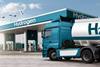
Hydrogen a preferred option for rural Wales and South West England
A Welsh Government consultation on its future hydrogen policy has set out its “preferred policy” to maximise the potential for hydrogen in Wales. A statement in the Senedd in 2022 recognised that hydrogen, if sustainably manufactured and deployed, may provide one of the few ways to decarbonise ...
-
 FCZ Article
Privately-funded consortium to look at viability of electric 44-tonne trucks
Industry and academia are joining forces to launch Project Jolt, a privately-funded demonstration programme to establish whether electric road freight transport, and in particular 44 tonne, electric trucks (eHGVs), can become commercially viable. Top weight trucks account for 5% of the UK’s greenhouse gases and are among ...
-
 FCZ Article
A “hugely pivotal” year for DAF’s electric trucks
To find out more about DAF’s EV strategy, Freight Carbon Zero interviewed the manufacturer’s EV and Connected Services Director for the UK, Louis Jones. Jones joined DAF in June 2024 from Scania where he was the Transformation Lead for Electric Charging. In his new role, Jones focuses ...
-
 FCZ Article
Dynamic road charging - the engineering will vs the political won’t?
Sometimes an imperfect solution is required in dealing with an imperfect situation. In my last article, Prof David Cebon, director of the Centre for Sustainable Road Freight, argued that many European countries are actively considering dynamic charging (sometimes known as electric road systems or ERS) and only ...
-
-
 FCZ Article
Oxfordshire awards refuelling site contract for hydrogen fire tender
Oxfordshire County Council has awarded an £825,500 contract for Hydrogen refuelling infrastructure to Hungerford-based Fuel Cell Systems. The infrastructure is part of the Hydrogen Fuel-Cell Range Extended Fire Engine Prototype (Hyer Power) project, which is developing a prototype fire engine. The hydrogen production and refuelling rig will ...
-
 FCZ Article
V1G v V2G and the vicious circle on vehicle charging
Companies talking about the interaction between battery electric vehicles and the electricity grid often talk about V1G and V2G interactions. What do these bits of jargon mean, and what are the implications for fleet operators? Both refer to more complex interactions than simply connecting the battery vehicle ...
-
 FCZ Article
ZEN and the art of comparing batteries and hydrogen vehicles
Freight Carbon Zero caught up with Angus Webb, CEO of Dynamon and project lead for ZENFreight to discuss progress for the only multi-fuel consortium in the ZEHID programme.
-
 MT Article
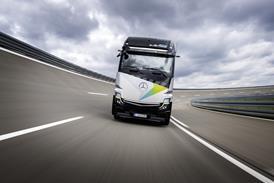
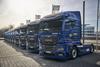
DACHSER subsidiary adds 12 eActros 600 trucks to German and Austrian long-haul fleet
Brummer Logistik, a subsidiary of DACHSER, has taken delivery of 12 Mercedes-Benz eActros 600 battery-electric trucks. The trucks, which have a range of around 500km, will be used for food transport across Germany and Austria. The trucks were delivered in mid-December 2024, shortly after Mercedes-Benz Trucks began ...
-
 FCZ Article
Dynamic on-road charging may be the only way to achieve zero-emission cost parity
No matter whom you might hear it from, if the technology succeeds at all at mass roll-out, hydrogen is at least a decade behind battery electric technology.