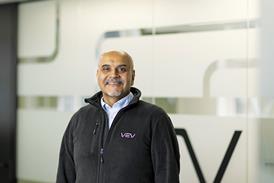
Joe Hurst, Nestlé transport sustainability lead for the UK and Ireland, tells FCZ about the company’s experience of running a low carbon fleet

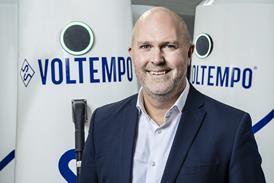
joehurst_810629Crop

Joe Hurst

Nestlé UK runs a fleet of 17 HGVs and three years ago it decided to replace its diesel vehicles with low-carbon options. The fleet operates on and between four of Nestlé’s 17 UK manufacturing and distribution sites.

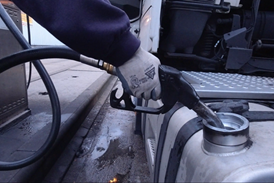
Hurst explains: “In 2022 we had a fleet of 15 diesel HGVs and we decided we wanted to transition to a fleet that had no diesel and push it towards those lower carbon solutions. In February 2022 we transitioned 11 of those units to bioLNG. We kept four diesel trucks, but last year switched them to HVO, so they are running on much cleaner fuel.

“We expanded the fleet to 17 units with two new electric HGVs, so we have a nice mixed fleet which gives us a feel for what is out there in the market.”

The company doesn’t use CNG, which it says would have lot of similarities with LNG in terms of operational implications. It also decided against hydrogen. Of that option, Hurst says: “In terms of applications I don’t think it will take off as quickly as the likes of EV or bioenergy or HVO, but there may be a place for it. We don’t have a standpoint as a business, but we don’t have an interest in it at the moment.”

He describes the fleet change as “a whirlwind”, adding “we’ve been on a very sharp learning curve that has taught us a lot about the pros and cons of each type”.

The right fuel for the job

Hurst says bioLNG is “very specialised, so it comes with its own opportunities but there are impacts from an operational point of view”.

The benefit is an immediate carbon reduction, which he says is quite easy to demonstrate.

“But from a refuelling perspective, we need to refuel in quite bespoke locations, which can prove challenging when we are trying to work in our customer deliveries or operational times,” Hurst says. “Our scheduling team has come up with some strategies that allows our drivers to refuel on route, for example, or refuel at certain partners.”

He contrasts that with diesel, where “that’s not necessarily something you ever have to think about. There’s diesel everywhere, so you never have to think that you only have so much range left. We have definitely had to plan further ahead and bring the scheduling team with us. We have maintained a lot of our internal KPIs and customer-centric KPIs with the trucks. So they have been a success but definitely a lot of hard work has gone into it”.

In the short term the company is planning to base a bioLNG vehicle at its East Midlands site and is considering how the East Midlands looks as a fleet operations corridor.

There are open access bioLNG refuelling stations around the UK such as Gasrec’s site at DIRFT and although the options are limited the company has been able to shape its operations around them.

Hurst says: “We also have some refuelling partners who have a fleet and have been on the same journey as us, to share resource”.Asked about expanding availability, he says: “As an industry it is something that needs wider consideration, in terms of where are these hubs popping up, but at the moment they are adequate. If we were looking to expand, we would do it in an area where there is existing infrastructure. We wouldn’t base it around future plans but around current reality.”

For the four vehicles using HVO it has been “a very easy transition”, he says. The vehicles have the same range as when running on diesel, “and there are solutions around the UK that mean we can be more flexible”. Hurst is “keen to see how it develops as it’s becoming more and more obvious what a good solution it is”.

Sustainability standards

The main focus has been on making sure all the sourced fuel meets Nestlé’s sustainability standards. Hurst says “we have a couple of mechanisms that give us assurances around sustainability” from suppliers and adds “we do very little on the road refuelling – at fuel stations you are not necessarily guaranteed the sustainability credentials. We hold a lot of fuel so we can be clear on that”.

The bulk stock of fuel held on site means there is low risk of a short-term issue in supply of the right quality. When asked whether the company has secured its supply in the long term, if the user base grows, Hurst would not comment on Nestlé’s long-term contracts. He says: “There will always be concerns around people jumping on the bandwagon later than us and does it affect demand.” He is keen to stress that the company would not compromise its sustainable credentials.

The two new battery electric vehicles have been the biggest move away from diesel. Hurst says: “As with LNG, we have had to be very conscious of planning the vehicles of any restriction. Our units are 4x2 not 6x2, so we have to consider axle weight very closely and the payload that we are carrying. That presents some hurdles, but we are very conscious of what they are and have been able to plan around them.

“We have a lot of movements across the UK in any week so we have something of a luxury in that we can cherry-pick the route and the payload and routes that work really well on EV. Other operators on a tighter duty cycle may not have that liberty.”

He says after two years “they are starting to prove themselves as a real asset to the fleet. They need more attention but we are getting closer to pushing them to the maximum they can do. They require a lot of focus but there is definitely a place for them”.

Getting adventurous with range

The company found that at first there was a tendency to “get back to base with a very comfortable battery percentage. As we move on we are being more adventurous”.

An important unlocking factor is that Nestlé has its own charging points at its York, Tutbury in south Derbyshire, Halifax and East Midlands sites, which were installed without joining queues to connect, because of the size of the existing network connections.

“We’ll often do legs between those points and charge there. Having that charging network has been key to making sure we can keep those eHGVs on the road all day or as close to all day as possible,” says Hurst. That is also helped by the company’s back to base operations. Hurst says: “If the charging network stepped up in other areas I am sure we would see our EVs expanded to those as well.”

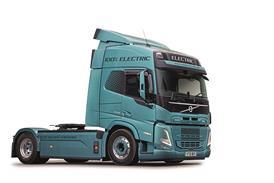
volvofmelectrcshutterstock_2511560927_493893

He says the company expected to charge on-site initially because “similar to LNG we have been very clear about what is in or not in our control when we have implemented these EVs. It would be great to see the industry develop and put chargers in elsewhere, but ultimately we have to be responsible for charging these EVs so we have to do it in a framework we are comfortable with until we see what else develops”.

In future, Hurst expects to see more targeted partnerships rather than public chargers, “so if we have partners who have the ability to share charging resource I think it would unlock the industry further. Turning up, dropping a load, charging as you are loading and then leaving, and vice versa, allowing them to use our infrastructure. We will probably see a lot more takeoff in that area before we see vast charging hubs across the UK”.

Nestlé is participating in Project Jolt, which includes Cambridge and Heriot Watt universities, and one of the project streams is looking at shared infrastructure and a platform that would allow charging slots to be booked at sites. Hurst says: “It’s not just letting anyone use your charger, it is having real accountability. A lot of chargers are in operational environments, which can be risky environments, so it is about having a chain of custody. Who’s turning up, what do they want, and are they familiar with the site?”He says that collaboration will give people a lot more options, “and naturally that should come through in the corridors that matter, ie in the targeted freight corridors, that is where we will see the biggest uplift and by proxy the biggest availability of chargers. I think that will push things on”.

He says that “there is a lot of people wanting to expand into zero emission HGVs, but we are conscious of SMMT sales figures for 2024 when eHGVs were just 0.5% of the market – 215 registrations out of 45,000.

“With those targeted partners we can make a real difference in the short term and it also gives us the feeling we are on the same journey”.

eHGV experience

The eHGVs’ drivers and route planners have been fundamental to the programme, Hurst says: “That has allowed us to unlock EVs as a useable asset. It is the driver that is responsible for the operation of that unit. They need to be comfortable. A big learning has been keeping the drivers central to the process.” That includes explaining why they are being asked to move to EV.

The vehicles were tested initially with lead drivers, “but everyone has to be familiar with these as an asset, because the reality is that you may be planned in”. Allowing drivers to test them makes a difference. Hurst says: “Like any new bit of kit there is a degree of cynicism to start, but now we have a really enthusiastic pool of drivers who understand that there are benefits to them that you wouldn’t get through LNG – it’s a lot quieter, and very responsive from a driving point of view”.

He adds: “We are in a good feedback loop with the drivers now who are coming to us with suggestions. They are real partners – more than driving, helping us plan to be more efficient. They may say, ‘I did this yesterday on HVO that I could have done using an EV, so maybe plan in an EV next time’.”

nestleyorkshutterstock_2593114067_746519

Nestlé has an in-house transport planning system supplemented with a tool from Volvo and it phased in routes with feedback from drivers. Some experience has been shared with Nestlé overseas, but the UK is unique in having a fleet and manually planning routes, which “gives us lots of operational understanding”.

Longer term it is looking at the future of the fleet. When asked whether the company will continue to run a mixed fleet or pick one fuel, Hurst says that “depends on how technology develops”. For now the mix is needed. For example, a route to Girvan in Scotland from York is too far for bioLNG because there are no refuelling options in Scotland or EV, so HVO is the only viable option. “If battery technology moved on and you had a 900km range battery then we can be more targeted and have one type of fleet,” Hurst suggests.

But for now, it is the mix that works.


The fleet make up

Gas trucks – 11 running on bioLNG (Volvo FH 6x2 44 tonnes)

Diesel trucks - four running on HVO (Volvo FH 6x2 44 tonnes)

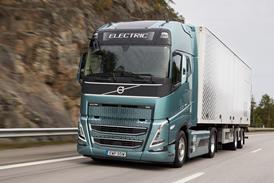
BEVs - two (Volvo FM Electric 4x2 42 tonne)

Battery chargers

York: 1 x 240kw, 2 x 43kw

East Midlands: 1 x 240kw

Tutbury: 1 x 43kw

Halifax: 1 x 43kw