








![Mercedes-Benz_eActros_600_(1)[1]](https://d2cohhpa0jt4tw.cloudfront.net/Pictures/274x183/8/1/8/17818_mercedesbenz_eactros_600_11_556244.jpg)




Early adopters of eHGVs share their top DOs and DON’Ts
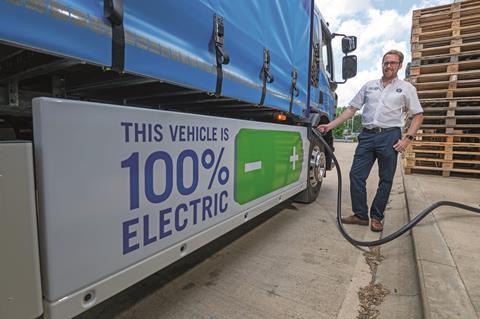
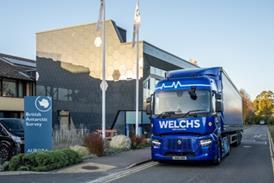
Name Chris Welch
Job title Managing Director
Company Welch Group
How many trucks over 7.5 tonnes are on your fleet? 70
How many are battery electric? 3
When did you get your first BEV? June 2023
Why did you get your first BEV?
At Welch’s, we’ve always seen ourselves as a business that looks forward, not back, one of the reasons we’re still here after 90 years. The decision to invest in our first battery-electric truck wasn’t just about being first or ticking a sustainability box — it was about proving what was possible. We wanted to understand the reality of running zero-emission vehicles in day-to-day haulage operations: what worked, what didn’t, where the pinch points really were.
For us, it was about being part of shaping the industry’s transition, rather than waiting on the sidelines for the “perfect” solution that may never come. Very much with the attitude, “you’ve got to be in it, to win it!”
What are your top three DOs for getting your first BEV?
1. Do start small but real. Put a vehicle to work on routes you can actually service today with the infrastructure you have, so you get meaningful data and driver feedback.
2. Do engage early with your energy provider. The truck is only half the story — charging infrastructure, grid capacity, and electricity pricing are what will make or break your operation.
3. Do bring your drivers and planners on the journey. Their buy-in is critical. We found that once drivers got behind the wheel, they became the biggest advocates.
What are the top three DON’Ts for getting your first BEV?
1. Don’t assume it’s a like-for-like swap with diesel. Range, payload, and charging time all need careful planning — otherwise you’ll set the vehicle up to fail.
2. Don’t underestimate the infrastructure lead times. Getting charging installed can take months, even years, depending on your site and DNO, so plan ahead.
3. Don’t focus purely on the cost per mile. Look at the bigger picture: customer expectations, regulatory changes, ESG commitments, the life expectancy of these new age vehicles and the learning value for your team.

Name Justin Laney
Job title General Manager - Fleet
Company John Lewis Partnership
How many trucks over 7.5 tonnes are on your fleet? 600
How many are battery electric? 2
When did you get your first BEV? April 2024
Why did you get your first BEV?
To better understand TCO and productivity implications
What are your top three DOs for getting your first BEV?
1. Get involved early, there is no substitute for real world experience
2. Have a plan for how the truck will be operated and charged and how good data will be gathered and training delivered
3. Work the trucks hard
What are the top three DON’Ts for getting your first BEV?
1. Do it without a clear goal of what you want to achieve. Too many demo trucks sit unused in a corner of the yard.
2. Expect it to operate just like a diesel truck
3. Assume you always need to charge it to 100%

Name: Annette Nemethova
Job title: Group sustainability lead
Name: Dan Clay
Job title: Director of fleet and procurement
Company: Gregory Group
How many trucks over 7.5 tonnes are on your fleet? 963 HGVs over 7.5 tonnes and five at 7.5 tonnes
How many are battery electric? 11. As part of our ongoing electrification efforts, this number will increase to 20 by the end of 2025, with a further addition bringing the total to 21 at the beginning of 2026.
When did you get your first BEV? 2020
Why did you get your first BEV?
We acted on a shared sustainability ambition with one of our food and drink customers, BrewDog.
To demonstrate our proactive approach to decarbonisation and the adoption of low-carbon technologies, we introduced a 19-tonne Electra battery electric truck into our fleet, allowing us to gain valuable practical insights and learnings.
Since then, we have incorporated eleven more battery electric rigid and artic HGVs into our fleet and installed charging infrastructure at eleven sites, accelerating our organisation’s electrification and decarbonisation journey. These efforts support progress toward our 2030 SBTi-validated emissions reduction targets and our overarching net zero goal for 2038.
As Scope 1 emissions from our transport activities are considered Scope 3 emissions for our customers, we are working closely with them to deploy these vehicles in ways that are operationally effective while contributing to both our own and our customers’ sustainability objectives.
Beyond carbon reduction, BEVs also support broader environmental goals by eliminating tailpipe emissions, thereby reducing air pollution, and lowering noise levels.
Battery electric vehicles help us drive the transition to a more sustainable future, one where both nature and people can thrive.
What are your top three DOs for getting your first BEV?
1. Develop understanding of where electric vehicles can be effectively utilised, taking into account factors such as range, availability of charging infrastructure, routing requirements, and payload capacity. This ensures that deployment aligns with operational needs and maximises efficiency.
2. Assess the dealer support network to ensure adequate coverage for servicing and maintenance. Consider geographical reach, availability of trained technicians, and expected response times, as these factors are critical to maintaining vehicle uptime and operational reliability.
3. Secure internal buy-in by actively engaging the business, particularly drivers, through initiatives such as demonstrations, hands-on trials, and open discussions. Building familiarity and confidence in the vehicles is essential to successful adoption and long-term operational integration.
What are the top three DONTs for getting your first BEV?
1. Don’t delay infrastructure planning. Start early on assessing and preparing your charging infrastructure. Grid upgrades, DNO response times, increasing power availability, and legal processes can take significantly longer than expected. Underestimating these timelines can delay deployment and increase costs.
2. Don’t be overly risk averse. While caution is important, being too risk-averse can stall progress. Embracing innovation requires a willingness to trial new technologies, learn from early experiences, and adapt. A pilot approach with clear evaluation criteria can help manage risk while still moving forward.
3. Don’t overlook the importance of researching vehicle specifications. Battery chemistry, range, and weight can vary significantly between models and manufacturers. To make the right choice, invest time in understanding these differences and consult internal stakeholders to ensure the vehicle meets operational needs.