









![Mercedes-Benz_eActros_600_(1)[1]](https://d2cohhpa0jt4tw.cloudfront.net/Pictures/274x183/8/1/8/17818_mercedesbenz_eactros_600_11_556244.jpg)

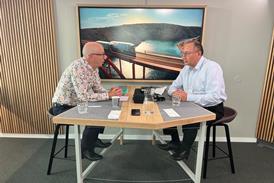



There is plenty of capacity in the distribution networks for new connections to power eHGV chargers, according to Florentine Road, flexibility product lead at UK Power Networks.
At a meeting on freight electrification hosted by energy industry group EnergyUK, Road also said early engagement with distribution network operators (DNOs) could cut the cost of making connections.
DNOs own and operate distribution networks, which are the A, B and minor ‘roads’ of the electricity network. Unlike the transmission network (ie the industry’s ‘motorways’), the far more extensive distribution network “is not running out of capacity any time soon”, said Road. At UK Power Networks, the DNO that covers London, and East and Southeast England, she said peak demand is 14GW and at peak time there is only 60% utilisation of assets, so capacity is “not a problem at all”.
In the meeting, which EnergyUK held to follow up on its “Powering the Clean Industries of the Future” report on electrifying freight, Road gave an insight into how DNO actions are tightly governed by the fact that as monopolies, DNOs’ actions are regulated by Ofgem. She said that once an applicant ‘presses the button’ on an application for a new connection, the DNO has to review the cheapest way to provide exactly the capacity asked for and send the quote. At that stage it is not allowed to engage further, such as asking whether the applicant has considered ‘smart’ charging, timing optimisation, ramped additions, etc, because the DNO is required to respond to the customer’s request – even if it is prohibitively expensive.
The answer, Road said, “is a lot of pre-application support one to one”. Her advice was to begin discussions early with the distribution network operator (DNO) if you need a connection. The DNO will work with companies at this earlier stage, to see what would be the most suitable application to make, “so when they do hit the submit button, they get the right size of works suitable to their needs”.
She also explained that the cost of capacity is not linear and the work required to upgrade, increases at specific thresholds, but “we can really smooth the curve by understanding the plans, especially for bigger companies”. The experience is that only part of the fleet will electrify initially, so understanding when how electrification will progress will allow the DNO to optimise the time when it has to start works to allow the upgrades.
She added, “We have a dedicated team of people who can work with companies, especially if they are trying to electrify sites across multiple locations at the same time and work with them on the plan,” but even for companies with one site the DNO can help optimise the process.
She also pleaded for early information from companies considering electrification, so DNOs could include it in their annual work on future scenarios (looking at different way uses of the network could evolve long term) and nearer-term planning.
Although the network had capacity, the DNO would plan upgrades around “where exactly is electricity needed, when and how much”, especially with other new loads arising such as data centres. She said UKPN “looks at all the technologies and what needs they have, because they have different operating and charging requirements”, such as different peak times, which meant less pressure on the wires.
Another view of grid connection developments came from Georgina Morris-Rowbottom, policy and public affairs lead at Zenobe, which provides various battery services. The company’s main zero emission fleet work has been in electric buses, but it is also expanding into HGVs.
Among Zenobe’s business models is one where it owns and optimises the battery in a heavy duty vehicle, while fleet operator owns the vehicle. It is also working on new depot models, such as one in Australia where Zenobe will own and operate a private offsite charging hub for Woolworths (as lead client) while will be opened to other users.
Morris-Rowbottom said, “Depot charging plays a really big role and many logistics operators will rely on chargers installed at their own depots or hubs. That works especially well for smaller trucker operations with a ‘back to base’ model.” She said the urgent need to expand the charging network was for capital: “although government is investing there is a need for public private partnerships to bring more investment in …. Players like Zenobe can act as balance sheet and provide access to capital.”
Her advice to fleet operators was “Electrify what you can today, while we wait for the expansion of on-road charging”, and use clever power procurement, such as managing connection size, timing vehicle charging and using flexibility, to minimise charging costs.