






![Mercedes-Benz_eActros_600_(1)[1]](https://d2cohhpa0jt4tw.cloudfront.net/Pictures/274x183/8/1/8/17818_mercedesbenz_eactros_600_11_556244.jpg)




DSV has put a battery-electric truck into daily service on the Brenner corridor, one of Europe’s most important and most constrained Alpine freight routes.
The Brenner corridor is one of the main freight corridors through the Alps, linking southern Germany and Austria with northern Italy. Pressure on the route has increased since traffic on the Lueg Bridge on the A13 Brenner motorway was cut to one lane in each direction from 1 January 2025, with bridge replacement works now underway.
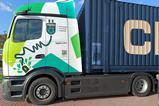
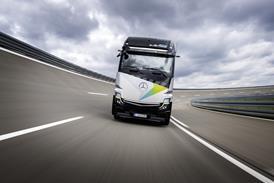
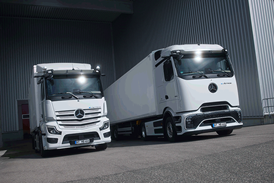
DSV said the Mercedes-Benz eActros entered service at its Neufahrn site in summer 2025 and was tested on the Brenner route from September 2025 before moving into daily operation. It is now being used in night-time groupage transport, with DSV saying the setup supports a 24-hour system transit time on the corridor.
The operational case is shaped by Tyrol’s restrictions. On the corridor, heavy goods vehicles face night-time restrictions on relevant sections of the route, while electric trucks benefit from exemptions that diesel vehicles do not.
The service runs between Neufahrn near Munich and Sterzing in South Tyrol, where DSV has moved from pilot into regular daily operation. The eActros 600 has a stated range of 500 km; enough, under the operating conditions DSV describes, to complete the 490 km round trip without an intermediate charge stop. The route’s Alpine profile works in the truck’s favour: substantial elevation change means meaningful energy recovery through regenerative braking on the descents.
The vehicle runs as a swap-body truck in groupage transport, with a payload of around 22 tonnes and continuous output of 400 kW.
Charging takes place at Neufahrn using a high-power charging station backed by an 835 kWp rooftop photovoltaic system and a battery storage unit of more than 800 kWh. According to DSV, electricity generated during the day is stored for overnight charging, matching the truck’s operating pattern.
In a statement to Freight Carbon Zero, DSV said the route has become more viable for battery-electric freight because charging conditions along the wider corridor have improved:
“Charging infrastructure along the Munich–Bolzano corridor has improved significantly over the past year, enabling reliable planning for intermediate charging where required. Night-time operation also provides clear advantages: traffic levels are lower, and diesel trucks face restrictions in parts of Tyrol during these hours. Both factors reduce congestion, help stabilise energy consumption, and contribute to more predictable range performance.”