









![Mercedes-Benz_eActros_600_(1)[1]](https://d2cohhpa0jt4tw.cloudfront.net/Pictures/274x183/8/1/8/17818_mercedesbenz_eactros_600_11_556244.jpg)





The government is consulting on how to phase out diesel HGV sales by 2035 for vehicles up to 26 tonnes and by 2040 for all weight classes. Industry expert Jamie Sands warns success depends on solving infrastructure and energy challenges, not just vehicle regulations. Trinity Francis reports.
Operators are being invited to respond to a new government consultation on how the industry should transition to zero emission HGVs. Until 17 March 2026, fleets can have their say on how they think the transition should go.
Outlining the government’s current approach to phasing out diesel HGVs, in the ministerial foreword, decarboniation minister Keir Mather MP said: “We are firmly committed to accelerating the transition to clean technologies and to setting a path to phase out the sale of all new non-zero emission heavy goods vehicles up to and including 26 tonnes by 2035, and all new non-zero emission heavy goods vehicles by 2040.
“This consultation begins the discussion around how we may design a regulation to enable these phase out dates. We will work to develop a clear roadmap to transition our road freight sector to zero-emissions, maintain our competitiveness, boost jobs and growth and to ultimately lower the costs for the logistics sector and consumers.”
Three proposals are presented in the consultation. The first explores the idea of increased manufacturer CO2 emissions targets much like the European framework. If implemented, this approach would set an end date for the sale of non zero emission trucks, something the EU has yet to do.
The second option looks at a ZEV Mandate much like the trajectory for cars and vans where manufacturers have to steadily increase the proportion of zero emission HGVs sold. The consultation suggests that manufacturers could incur penalties for non-compliance but could also be afforded flexibility to balance over- and under-compliance.
Option three proposes the largest fleet operators have targets set to increase the proportion of zero emission HGVs on their fleets. The idea behind this is to protect SMEs who may not have the same buying power.

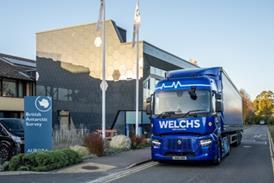
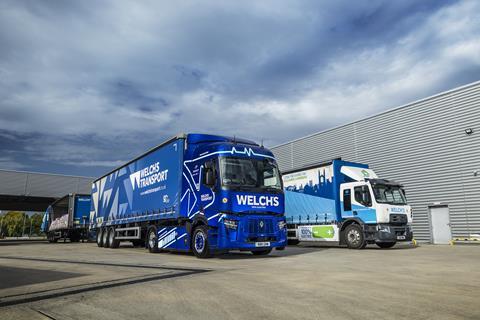
From a policy perspective, picking one of these three options would be a neat way to legislate, however, we all know the realities of transport are far more complicated. Jamie Sands, head of solutions at the Welch Group (pictured), said: “At the risk of adding complexity, it needs to be a combination of those things. You can’t expect any individual organisation or sector to take the brunt of this.”
Alongside deciding on a regulatory framework or combination of the three, the consultation also covers which vehicles should be included, qualifying criteria for ‘zero emission’ and how vehicle weight classes should be treated.
Finally, target trajectories are addressed with consideration around what flexibilities will be necessary to allow a realistic shift to zero emission HGVs. In total, the consultation sets out 27 questions addressing specific aspects of the transition.
How can operators be heard?
Either via email or letter, operators have until 17 March 2026 to respond. “A lot of people will be going through their trade bodies like the RHA or Logistics UK,” explained Sands. “Most operators might not have come across something like this before but you don’t need to answer all the questions.
“If you read through all the questions and there’s one that you’ve got very strong views on, you can answer that one question. If you’ve got a specific challenge, problem or opportunity that’s really important to you, then just say that. You don’t need to write an essay or give long answers to everything.”
While some operators may have unique challenges, Sands is urging the industry to share their intended responses to the consultation publicly. If everyone can see these responses then we can start to identify general consensus and patterns of agreement on certain points. These areas will be where the government should be able to action policy changes much quicker to deliver the certainty fleets have been asking for.
Although the consultation proposes specific policy levers, Sands believes a more nuanced approach would provide a good balance of stick and carrot. Instead of setting targets based on weight class, Sands suggests phasing by use case, targeting the easiest to electrify operations first before focusing on harder to electrify routes.
Sands said, “The gross vehicle weight has almost nothing to do with how easy a route is to decarbonise. A 44 tonne tractor unit that’s shuttling back and forward between the depot and a customer, and there’s a charger at either end, that’s really easy and there’s no reason why you can’t do that now.
“But a little 7.5 tonner that’s floating around the Cambridge countryside doing multi-drop with a tail lift, or a 26 tonne refrigerated unit that’s going from a fishery in Scotland into London to deliver fish to the restaurants, that’s really hard.”
For edge cases where it’s operationally challenging to electrify based on existing truck technology and charging infrastructure, Sands proposes exemptions that are “evidence-based and time-bound”. For instance, “If the policy says ‘construction exempt’ or ‘long haul exempt’, you freeze the problem forever.
“If it says ‘exempt where the operator demonstrates no viable zero emission option today, reviewed every two years’, you create pressure to solve it.”
What’s missing?
This consultation focuses on the vehicle aspect of the transition, which arguably is one of the least impactful ways to support this change. Sands said: “It’s an energy problem. It’s not a vehicle problem. None of this is going to be driven by emissions or the environment, it’s going to be the commercial case.
“The commercial case has to stack up but we’ve given ourselves a deadline, and when you give yourself a deadline like that, then you can’t rely on market forces. There has to be targets, and there has to be a roadmap.”
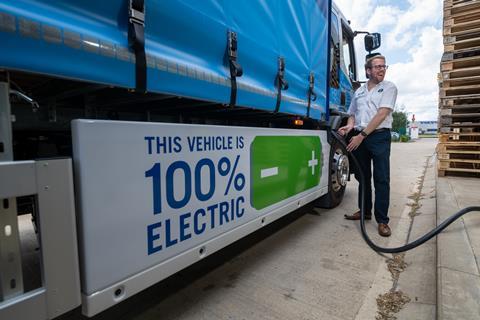
Crucially, an enabling condition of the electrification of HGVs is charging infrastructure. “I actually believe that you could just ignore the vehicles entirely,” Sands went on. “The new plug-in truck grant has been amazing. We bought three trucks, got a big discount, so we can get more trucks on the road.
“But you don’t need those grants if energy was smarter, if energy prices dropped, and people could easily get power into their depot and install some chargers. It goes back to market forces. There’s TCO parity now if you do it right and that’s the biggest carrot you can give is that these new trucks are cheaper than the old trucks, as well as being cleaner, quieter and safer.”
Looking ahead to projected energy demands to power eHGVs, Sands suggests that logistics could start to be categorised under different industry classifications which could help to ease some of the regulatory and financial strain associated with this transition.
“There’s two concepts that don’t touch logistics and should. There’s the idea of critical national infrastructure, which is a government term for something that’s important to the nation, that doesn’t talk about transport and should.
“And the other part is energy intensive industries. Some types of manufacturing have this designation of being an energy intensive industry. It’s really crucial that they have access to resilient and cost effective energy sources for their industry to work. And to me, that sounds a lot like what logistics is turning into, so that classification all of a sudden drops the cost of energy significantly.”
Another factor entwined with the infrastructure piece is property. “A lot of people don’t talk about it because it’s not very exciting but planning permission and landlords are important,” Sands added. “Most operating centres are leased, so whilst we understand that putting solar on the roof and a charger in the yard probably increases the value of that property and will make it more desirable in the future, landlords don’t seem to be getting on board with that.”
As the government looks to ramp up the transition to zero emission HGVs, there also needs to be a concerted effort to ensure the workforce is ready. In a sector where there are already HGV technician shortages, more needs to be done to upskill existing technicians and create a sustainable pipeline for new members of the workforce, either through early career interventions or mid career moves.
What happens next?
Once the consultation period is over, the government will review feedback from industry and publish a response detailing key findings. A second, more focused, consultation is likely to follow to iron out some of the trickier aspects of the transition. As appropriate, the government will draft legislation setting into motion a roadmap to the end of diesel HGV sales.
Since the legislative process takes time, it’s thought regulations won’t start coming into effect until 2027 to 2028 with initial targets for as soon as 2028 or 2029. This doesn’t mean operators should wait though. Early movers will have the greatest advantage when it comes to infrastructure installations and understanding how electrification will work for their fleets.
In the meantime, there’s expected to be a separate consultation on weights and dimensions. Again, this is another factor which could influence how policy is implemented. Sands said, “If they’re not going to change anything, we can crack on with figuring out ways around it.
“It’s going to be a problem for certain fleets and operations but on a wider scale, we’re under utilising these vehicles, empty running and not making use of different modes like pushing freight onto rail and waterways. I think we can be massively more efficient.
“I don’t think payload is as huge a problem on an industry level as some people think it is, but if the government is going to give us an extra 4 tonnes then brilliant, I’m all for it because it makes the whole system more efficient whether we’re talking about electrification or decarbonisation.”