








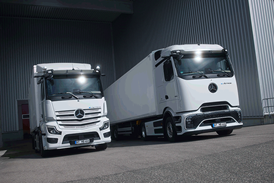

![Mercedes-Benz_eActros_600_(1)[1]](https://d2cohhpa0jt4tw.cloudfront.net/Pictures/274x183/8/1/8/17818_mercedesbenz_eactros_600_11_556244.jpg)

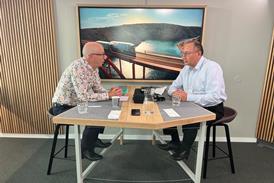


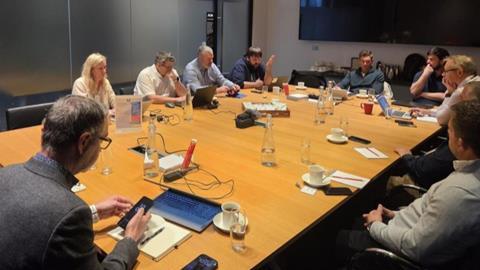

A recent industry workshop led by Welch Group has examined whether electric HGVs can deliver a viable commercial return, as part of its 12 Pillars of Change initiative.
The sessions aim to bring stakeholders from 12 key areas, including logistics, grid infrastructure, and finance, to address practical barriers to the adoption of zero emission fleets.
They are part of the company’s TwentyForty programme, which is designed to create a practical, industry-led roadmap for decarbonising HGVs in line with the UK’s 2040 zero-emission freight deadline.
Lat week’s 12 Pillars of Change session, entitled Making the Numbers Work, brought together operators, including CS Ellis Logistics, MTS Logistics (Bardon) and Darcica Logistics, as well as leasing specialists, energy providers, insurers and vehicle manufacturers, to discuss the financial case for electric trucks.
The workshop looked at the total cost of ownership of zero emission trucks compared to diesel vehicles and considered factors affecting investment decisions, including infrastructure costs, uncertainty around residual values, energy costs, and insurance considerations.
The session also heard that some operators are already running eHGVs on general haulage work, with evidence that lower running costs can offset higher upfront investment under certain conditions.
Electricity pricing was also examined, with discussions suggesting that even at current levels, electric vehicles could compete with diesel on operating costs in some scenarios.
Jamie Sands, Welch Group head of solutions, took to LinkedIn, following the session to highlight some of the findings, pointing to one operator running eHGVs on general haulage routes that had seen business grow 80% in the past year, and another planning a 20-year eHGV chassis lifecycle, by swapping the batteries and selling the old packs for depot storage. He also cited an energy expert who estimated eHGV running costs in Northern Europe to be, at most, 20p per kilowatt hour - lower than diesel running costs.
“So why isn’t the rest of the industry moving?”, Sands asked, concluding it is a confidence, rather than a technology problem.
“And right now, the evidence that would build that confidence is stuck in rooms like this. The job now is proving the case. It’s getting it out of the room,” he concluded.
His comments brought a mixed response. Kelly Hobson, Shape Tomorrow MD and founder of Sustainable Logistics LIVE, pointed out the predominance of small hauliers in the UK.
She said: “The challenges we see and hear everday are primarily SME voices without the knowledge access to capital and onsite space for power.
She added: “We have to do better to protect them as we progress and make sure they are genuinely heard at the table.”
Ian Dennis, head of EV fleet at fleet electrification and battery storage specialist Zenobe, commented: “It’s so important to get industry and operator feedback outside of projects like ZEHID so we can shape solutions appropriately.”
Colin Matthews, Causeways Energies business development director, questioned the claim that eHGVs have lower running costs of, pointing to the additional cost of Road User Charging costs, and queried the feasability of a 20-year lifecycle of electric trucks.
He said: “We can only get buses to last 15 years with a mid-life refurb and they do a tenth of the mileage that trucks do in seven years. So a 20 year old truck…really?”
The next 12 Pillars of Change workshop, entitled Power In: The Infrastructure Roadblock, will take place on 22 May and look at the issues surounding depot power and grid connections.