














![Mercedes-Benz_eActros_600_(1)[1]](https://d2cohhpa0jt4tw.cloudfront.net/Pictures/274x183/8/1/8/17818_mercedesbenz_eactros_600_11_556244.jpg)






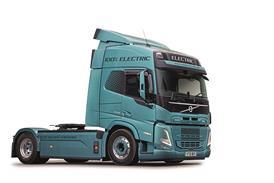
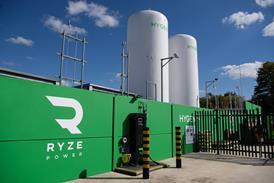
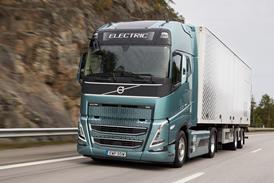
The government has announced a £63m investment package aimed at supercharging Britain’s electric vehicle infrastructure, which includes a major new £30m grant scheme to help fleet operators install charging points at depots.
Further details on the £30m depot charging grant and how fleet operators can apply for it will be published by the government on Wednesday this week (16 July.)
The £63m investment also includes a £25 million scheme for local authorities to expand access to cheaper at-home charging.
This will provide access to cheaper household rates, allowing consumers to save up to £1,500 a year compared to running a petrol or diesel car.
The cross-pavement technology will allow cables to run beneath pavements, connecting homes directly to parked vehicles.
The fund is the latest move to bolster the UK’s growing charging network which has reached a record 82,000 public chargepoints, with a further 100,000 expected to be installed as a result of the government’s Local EV Infrastructure Fund and £6bn of private investment committed to 2030.
Announcing the investment in depot charging, DfT said: “The funding announcement follows recent updates to the Zero Emission Vehicle (ZEV) Mandate to make it easier for the sector to switch to electric as part of government’s ongoing work to back British manufacturing.
“With over 1.2 million people employed in the freight and logistics sector in the UK alone, today’s announcement is the latest move to keep industry at the forefront of international competition in the face of global economic headwinds.”
Logistics UK’s deputy policy director Michelle Gardner gave a mixed response to the news. She said: “Logistics UK’s members, which move all the goods that the economy needs to operate effectively, will welcome today’s announcement of the Depot Charging Scheme, which will support operators looking to install the infrastructure needed to charge electric vehicles swiftly and effectively.
“However, challenges still exist for the logistics sector on the road to decarbonisation – the public charging infrastructure for commercial vehicles is still woefully underpowered and requires an effective plan to ensure it is scaled rapidly.
“To address wider challenges with depot charging, our sector must be prioritised for grid connections with high and opaque costs being addressed. We will be maintaining close contact with government over the coming weeks to ensure that these issues are addressed at pace.”
Michael Shaw, Aegis Energy co-founder and chief executive, commented: “We are delighted to see that the government has pledged £30m of investment into helping develop commercial transport charging facilities.
“This funding shows that the government not only supports, but is prioritising fleet transition, with just under half of the £63 million in EVs going to commercial transport. It is also promising to see the government update signage regulations on motorways and A-roads, allowing larger EV charging hubs to be signposted for the first time.”
“The tide is turning; fleet owners are increasingly championing the long-term financial and environmental benefits of decarbonising commercial transport, and this funding will help them realise those benefits. We hope that this new investment can mark a recommitment by government into the energy transition for transport.”
Sarah Sillars, interim chief executive of the Institute of the Motor Industry (IMI) said it was encouraged by the government’s commitment to invest in the UK’s EV charging infrastructure but added: “However, it seems there is a lack of understanding about the critical role of EV skills to support net zero ambitions.
“Around 26% of the UK technician workforce currently holds an EV qualification, which means it can be a postcode lottery for an electric vehicle owner or driver to find a garage that can service or repair their vehicle.
“And this is only going to get worse as the EV parc grows. Our current estimates suggest that demand is likely to outpace supply by over 29,000 technicians by 2035.”
Ian Plummer, IMI non-executive director, added: “With more than half of consumers saying upfront expense is the biggest blocker to going electric, affordability is clearly the key to unlocking mass adoption.
“Support from government to ensure no one is left behind in the electric transition, including consumers and highly skilled technicians who can work safely on electric vehicles, would be a vital boost to mass adoption, if targeted correctly.”
The £63m funding boost will also be used to modernise EV charging signage on major roads. EV charging hubs have more than doubled since the beginning of 2023 and immediate changes will allow larger EV charging hubs to be signposted from major A-roads for the first time.
Edmund King, AA president, said: “There are more public chargers than people realise, but they are often hidden in plain sight. Increasing signs for the public network is vital to help the EV transition as it will create confidence for drivers both now and in the future.
“It is great to see more support for those without off-street parking so that they can also benefit from the EV revolution.
Vicky Read, ChargeUK chief executive said: “With 82,000 public charge points already installed across the UK, this positive action on strategic road signage will help more drivers see the extensive charging network that’s rapidly being built across the country.
“This has been a priority for our industry and will boost consumer confidence in making the switch to electric vehicles.
“Our members are investing £6bn to ensure the deployment of charging infrastructure stays ahead of demand.
“Today’s announcement shows government recognising the vital role charging plays in the transition, and we look forward to working together to maintain the UK’s position as Europe’s leading EV market.”