







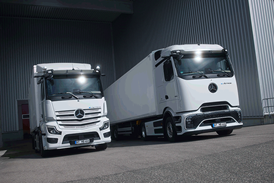
Positive news for the commercial vehicle industry this week with the new truck registration figures released by the Society of Motor Manufacturers and Traders (SMMT) showing the total market for all trucks above 6t GVW was up 13.5% on 2022. With total volumes now well over 45,000 this demonstrates some renewed confidence back in the sector. What’s more the market for electric vehicles is up over 250% - progress, we hear you shout! Well, of sorts anyway…
An annual market of 234 units is hardly a signal of an industry in the grip of a net zero transition. If anything, it’s an indicator that the industry remains in the foothills of this mountainous climb up the net zero transition mountain. If the ascent is to be accelerated, then the industry is going to need some serious help beyond the encouraging words of support from the political leaders.
At the same time the SMMT was releasing the market figures for the truck sector (there’s better news on the transition to zero emissions for the bus sector, by the way) our sister publication Motor Transport was reporting more fleet operators calling in the administrators and pulling down the shutters. This is at odds with the buoyant truck sales figures, and the number of companies calling it quits is as bad a time as we, and many other industry commentators have known it. This is not an industry in good shape and is really not in a great place to withstand the cost shocks inevitably coming with the transition to zero emission vehicles.
We can talk all we like about the total cost of ownership benefits of battery electric over fossil fuelled vehicles in the future, when we have green electricity and the trucks are emitting nothing but an electric buzz and water (just referencing hydrogen there, in case the hydro lobby start thinking we don’t care), but it’s the cost of the transition and the preparedness of the sector now, we’re concerned about.
We talk a lot about the green industrial revolution, or whatever we’re calling it this week, and the winners and losers of this particular gold rush, but as far as we’re aware, we don’t think anybody is signing up for a whole industry sitting in the loser camp! The functioning of the UK economy and society is predicated on a functioning and financially sustainable road freight transport sector. We remain worried (sorry if we’re sounding like a broken record) that the industry warning signs are being ignored and we’re heading for trouble.
The industry knows what the solutions are to handle the transition (this is an industry of problem solvers, after all) and industry knows some of those solutions are at odds with the focus on zero emissions at the tailpipe. It also knows it’s going to be expensive and against a backdrop of high interest rates, labour shortages and failing businesses this must not be ignored.
This isn’t to decry the great work being done by the industry trailblazers, from all fleet shapes and sizes. We’ll be recognising them through our collaboration with Motor Transport as part of the Power Players in April, but those organisations have to be supported and can’t be left shouldering the burden of shining the light for the new future, the PR and marketing value of the new vehicles and logistics solutions will soon start to wear thin.
At Freight Carbon Zero we’re committed to supporting the industry in its transition to a carbon zero future, but we’re also realists and we’re of the opinion the industry can’t do this transition alone. It may be optimistic to ask for genuine incentives to decarbonise, by way of tax breaks or further funding, but Government does need to create an environment where there are no more obstacles, and a level playing field which doesn’t penalise those who move first. Hopefully more will become clear soon.
PS We’re hearing positive news about HVO prices and supply availability. More to follow in next week’s newsletter.


![Mercedes-Benz_eActros_600_(1)[1]](https://d2cohhpa0jt4tw.cloudfront.net/Pictures/274x183/8/1/8/17818_mercedesbenz_eactros_600_11_556244.jpg)