







We’ve spent a bit of time over the past few weeks scratching away at the topic of non-financial reporting. We’ve been asked to speak at a couple of conferences and deliver a short “introduction to decarbonisation” training course for an organisation and figured we needed to know a bit more. Special thanks to Alan Lewis from the Smart Freight Centre and Raquel Noboa from Fifty Shades Greener for indulging us with our repetitive questions.
We’ve made the previous contention that an organisation’s carbon reports will be as important a measure as the financial balance sheet when measuring the health of a business. Increasingly, we expect investment decisions, M&A due diligence and a company’s ability to win business contracts will take this into account. We’ve no reason to revise that and with this in mind, we wanted to properly understand the current and, likely, future landscape.
The intention, as we see it, in the regulation supporting this shift is to ensure organisations can prove they are delivering on the claims they are making in their corporate statements. It sits within the ESG (environmental social governance) arena and is intended to give organisations a framework to back up their claims.
When it comes to regulation the EU has already passed the necessary directive that sets out the requirements and it’s now down to the member states to pass it into domestic law. Ireland, for example, is expected to introduce the rules from July this year. The EU rules commit large organisation (over 250 employees or Euro €50m turnover) to record and report their ESG targets. While we’re predominantly interested in the E (environmental) part of the rules, the social and governance reporting requirements will be similarly detailed – brace yourselves…
The UK has a similar set of requirements in place, though is focusing just on the environmental elements. You might have heard of ESOS (Energy Saving Opportunity Scheme) which is a compulsory reporting requirement for larger UK businesses (over 250 staff, £44m turnover or £38m assets on the balance sheet) and looks set to sharpen its teeth in 2024. Additionally, the UK kicked off a consultation around international standards for non-financial reporting last year, signalling the direction of travel – brace yourselves again…
If a UK business is trading with an EU organisation, or has a depot there, then it’s likely you will be in scope of the rules whether through the direct reporting and recording of your emissions or indirectly feeding into the requirements of your customer.
You may recall we’ve touched on Scope 1, 2 and 3 emissions reporting in the past – another web of confusion, which needs a bit of untangling – and organisations will need to become familiar with the differences therein and how your business activities will be classified. We’ll have a go at untangling the scopes for a typical logistics firm:
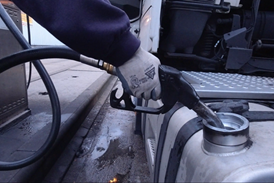
- Scope 1 are the direct emissions from your own business activities. So for a transport company running diesel or gas trucks, this will cover the emissions from the vehicles in your fleet. There’s a little bit of debate surrounding rental vehicles, as the protocols offer a choice of financial ownership and operational control models, but it would be ridiculous to expect a rental and leasing company to monitor the emissions of all the vehicles on their asset register, so best to opt for the operational control approach, which also gives consistency within a fleet of owned, leased and rented vehicles.
- Scope 2 covers the emissions from the electricity used in the business. This will increase as organisations shift to battery electric vehicles, with a corresponding decrease in Scope 1 emissions.
- Scope 3 pretty much covers everything else. So, if you’re sub-contracting transport to other organisations, that’s your scope three emissions; the truck delivering the fuel to fill the tank in the yard, scope three; the third-party workshop you use for vehicle maintenance, you’ve guessed it, scope three.
Of course, one organisation’s scope three emissions will be someone else’s scope one. Logistics contractors will be expected to contribute their emissions reports to a retailer or manufacturers as these will be the scope three emissions of their customers. This is how the whole web of future emissions reporting will be brought together. One big framework (some might call it tangled mess!) of records and reports, facilitating the shift to net zero.
While plenty of the sustainability leaders in the industry will be fully aware of these requirements, 2024 is the first year that, in our opinion, this regulation will cascade through the logistics sector. It’s a subject all of us will need to have a good working knowledge of and one we reckon we’ll need to return to for a future Decarbonisation 101 webinar – we’ll keep you posted on the date for that.


![Mercedes-Benz_eActros_600_(1)[1]](https://d2cohhpa0jt4tw.cloudfront.net/Pictures/274x183/8/1/8/17818_mercedesbenz_eactros_600_11_556244.jpg)