








This week’s commentary is penned by Jamie Sands, Group Operational Support and Systems Manager at Welch’s Transport, raising concerns about the industry’s apparent ambivalence to the climate crisis. 

shutterstock_1471288775


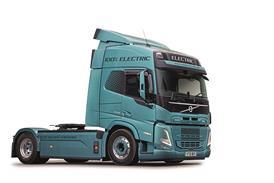
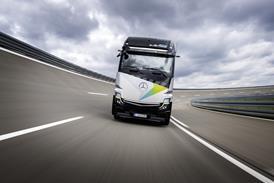
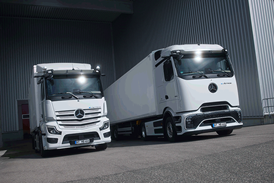
I was taking a rare scroll through Facebook when I stumbled upon some articles about the brand-new all-electric Mercedes eActros 600. It’s awesome how quickly these cutting-edge vehicles are rolling onto the scene, isn’t it? Clearly not everyone shares my enthusiasm, as I made the critical mistake of diving into the comments people were making. 

It was a barrage of negativity and misinformation, and it wasn’t just a few dissenting voices – it was a full-on chorus. Hundreds of comments, all singing the same old anti-electric song. Primarily truck drivers, with a smattering of operators and members of the public joining in. As someone deeply invested in the decarbonisation of transport, I couldn’t help but wonder how we could tackle this mindset. It took all my will power not to respond to each one and explain the errors in their ways, but even I know that nothing good can come from that. 

I’d stepped out of my little sustainability bubble and got a slap in the face from reality. That’s what I get for going on Facebook, “serves you right”, I hear you say, but it did act as a lightbulb moment. 

It’s easy to dismiss these comments as just social media noise, but we have to to recognise these voices echo real-world sentiments, a reminder of the challenges we face in transitioning to a more sustainable future. For the shift to battery electric HGVs to be successful, we must confront these perceptions head-on. 

I think that the first step towards changing these perceptions is to conduct a comprehensive industry-wide survey. This survey should not only include HGV drivers but also operators and other stakeholders. What do they really think about it all? What’s driving the scepticism? We need to understand where they’re coming from to address it effectively. This is something that the trade organisations and publications could undertake – Motor Transport, Logistics UK and the Road Haulage Association are perfectly placed to give us the data we need to focus our efforts. 

Education will obviously be key, but it needs to be strategic. It’s about telling the world why electric HGVs are a win-win – slashing emissions, reducing operational costs, and contributing to a healthier planet. We need to get that message out there in a way that sticks. 

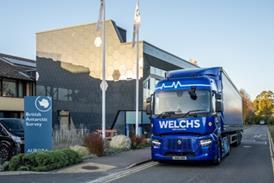
Small, local initiatives would be an ideal way to approach such a momentous change. Establishing a proof of concept, as we have at Welch’s Transport, and consistently demonstrating its success will gradually shift perspectives. We need patience, as not everyone is as well-informed as the early adopters in this transition.  

Drivers will often be the last people to be consulted about changes, if at all, and you can bet this makes them feel like their opinion isn’t important. They are also the ones who deal with problems when things go wrong, so it’s natural for them to be resistant. They develop a strong attachment to their vehicles, so introducing changes can be challenging. If we want to get them on board, we should consider leading with features like the insane torque the electric motor can produce, exceptional acceleration, and the super smooth ride, rather than the green credentials. 

We can’t do this alone. To change perceptions on a massive scale, we’ve got to join forces. That means teaming up with government bodies, industry big shots, and even the eco-warriors. By fostering partnerships, we can create a united front in promoting battery electric HGVs. These alliances can help in implementing national-scale initiatives and campaigns to change perceptions. 

Sometimes, the best way to convince people is to show, not tell. We can shine a spotlight on companies that have made the shift to electric and are reaping the rewards. These success stories are like the ‘before and after’ pictures that prove electric HGVs aren’t just a fad but the future of transport. 

Finally, let’s not forget that government policies can exert considerable influence. Advocating for policies that grease the wheels of adoption – subsidies, tax breaks, the whole nine yards – is that asking for too much?  

It is going to be a huge challenge, but one worth taking head-on. We need to delve into the scep