




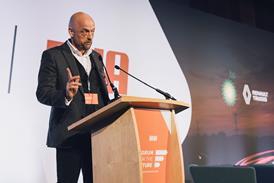


Chris Douglas who has spent the past 25 years working across numerous road freight roles in the UK, Europe, Africa and Asia, this week shares his observations from a recent Zoom training session…

‘Welcome to the road transport industry. We’re a band of brothers, us HGV drivers, I mean, not the transport managers and planners who’ll want to work you into the ground…’.

That was the opening line for Zoom call attendees at a recent HGV Bootcamp workshop, which I was asked, by a client, to join, to independently assess content and observe quality of delivery.

There were 25 candidates on the call, which was entitled ‘Truck and Trailer Types’, designed to act as a basic introduction for, what are, mostly novices trying to obtain their Cat C or Cat C+E entitlements. A few existing Cat C drivers upgrading to C+E were on that call too.

HGV Bootcamps are, in most cases, entirely government funded, free of charge for the candidate, including the cost of the medical and all support materials and eventual testing. They came about, largely, as a government response to the critical shortage of HGV drivers and the crucial role played during COVID, when our industry, alongside other essential services, did what it always does and just kept going, despite the enormous challenges. Rather than just help to give all existing drivers a pay rise, government was advised to invest in the future – in bringing in fresh new entrants to the industry. 

Candidates in the Bootcamp structure I observed, are expected to attend twenty-nine workshop sessions, of which ‘Truck and Trailer Types’ is one, each lasting two hours, followed by driver CPC, theory and practical testing. Of those twenty-nine topics available, only two (SAFED A and SAFED B) have any clear connection to sustainability and environmental performance. The focus of all others is entirely on compliance and safety. 

I’m biased, as I spend most of my working day promoting truck fleet sustainability and best practice in decarbonisation but it still comes as a disappointment, if not a huge surprise, when trainers and instructors revert to outdated (and often incorrect) terminology, attitudes and opinions - and miss the very obvious opportunity to include decarbonisation alongside compliance and safety. We must change that. We have to get decarbonisation and sustainability embedded in the minds of those at the coalface, educating and instructing our future drivers. Vehicles and fuels are changing, so our drivers need to be ready to do the same.

The opening line immediately established a ‘them’ and ‘us’ management v workforce dynamic, which was repeatedly reinforced, with throwaway comments and anecdotes about drivers getting one up on their managers. If we can’t get past that outdated rhetoric, how can we get to a sensible discussion about the future?

In what was a bewildering session, where the first vehicle type shown to a predominantly novice audience, was an extendable trombone semi-trailer used for international abnormal indivisible load movements, rather than, say, showing a curtainsider, a box body, a fridge or a flatbed, there was no mention whatsoever of how different types of vehicles and trailers can affect fuel consumption and vehicle emissions. Nothing.

Add that lack of reference to sustainability to the outdated comments and the session left me feeling like I’d travelled back in time 30 years, to when I first started in the industry.

So let’s upskill the trainers and instructors – let’s focus our efforts so their messaging is right from day one and their cohorts of new industry entrants, in particular, can look forward to a bright, challenging future, not backwards to the age and opinions of the dinosaurs.

Get involved in the decarbonisation conversation and comment below (scroll to the bottom of the page). We are keen to hear your thoughts and feedback