










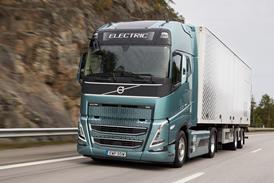
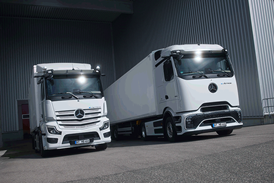

This week we have asked Benoit Laflamme, a senior business leader focused on the energy transition of transport, to share a relatively simple solution to removing an EV adoption blocker.

The transport sector is facing a massive amount of change in the coming years, we all acknowledge that. In order to make this huge change successful, it will require intense collaboration by all actors in the sector as well as a great deal of systemic thinking. We need to be in a spirit of proposing solutions while removing barriers to adoption. One of these barriers is related to vehicle age.

It is widely understood that electric vehicles will require a larger capital investment than their diesel equivalent. Residual values as a percentage of the vehicle cost are not quite as high as they are for ICE vehicles either, due to the low remarketing volumes and lack of understanding of how batteries will age. To make the economic model work, operators will therefore need to keep these vehicles on the road longer. This will be made possible by the reduction in the wear of components present in EV powertrains, therefore avoiding the need for costly and time-consuming gearbox or engine overhauls. Electric vehicles are likely to deliver a robust performance in commercial fleets for longer than we have been used to.

MicrosoftTeams-image (2)

Both historically and in the current market, vehicle age is often used to attract and retain drivers. With the driver shortage, that is likely to persist into the future, the challenge for us all will be how do we attract commercial vehicle drivers and bring them on board with this new reality of driving older vehicles? Before this becomes widely accepted, a question for us to consider would be is it a good idea to continue with the current vehicle registration identifier displaying the model year of the vehicle in the number plate? By removing the year, could we faster change the way people think of vehicle age? Cherished plates could be an idea, but they often create additional administrative burden and confusion as they are not standard. Perhaps we should instead advocate for a review of how standard number plates are assigned?

As we can often observe in the IT sector, great specialists sometimes only focus on the technical aspects of transformation projects, but totally forget about people behind the screen. We are at risk of focusing only on the technical challenges of the energy transition. The need to change human behaviours to make the transition successful cannot be understated. Drivers are an essential part in the transition and we need to eliminate barriers to adoption if we want to accelerate the movement. Some of us should move away from technical aspects and focus on ways to maximise the drivers’ willingness to drive an EV, especially one that is 4-5 years older than what they are used to driving.

With so many things to figure out including infrastructure, vehicle choice, operational adaptations, we may be forgetting a very important component – the person behind the wheel.