









![Mercedes-Benz_eActros_600_(1)[1]](https://d2cohhpa0jt4tw.cloudfront.net/Pictures/274x183/8/1/8/17818_mercedesbenz_eactros_600_11_556244.jpg)




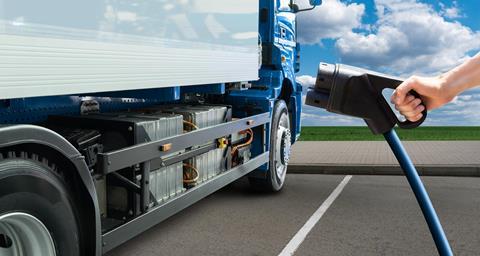
Battery vehicles could find it easier to access revenues from the GB’s Capacity Market (CM), if their vehicle to grid (V2G) export ability becomes a recognised Generating Technology Class (GTC) in the market and the change could tip the balance to make V2G technology commercial.
The government introduced the Capacity Market (CM) in 2014, initially to try to ensure that new gas-fired power stations would be built. The CM was designed to give power plants a consistent ‘availability’ revenue stream, in addition to being paid to generate power, because the government was concerned that gas-fired stations would be used infrequently because of the build-out of renewables, making them uneconomic to build. But it applies to all forms of electricity generation, and some technologies, like batteries or demand side response, not traditionally seen as generation.
What is the Capacity Market?
The CM works like this: each year government asks industry experts how much generation will be required to meet GB winter demand in four years’ time. In an annual auction, it offers Capacity Market contracts to meet that requirement. This is designed to underwrite new power plants, which can secure 15-year agreements, as well as major refurbishment (eligible for three-year agreements) and existing plant (one-year agreements). A second auction, one year ahead of the delivery winter, tops-up the capacity bought.
Under the CM contract, each power asset receives continuous payment through the winter. If the system operator finds on a particular day that it will have a shortage of power, it issues a Capacity Market Notice, telling CM contract holders they may be called on to meet market needs. If the call comes and the asset is not available, its owner has to pay a penalty. In fact, although there have been a number of Capacity Market Notices each winter, each has been cancelled before activation. A Notice is published automatically four hours ahead of the point at which a shortfall is predicted, and in each case the wholesale power market has responded to meet the need.
It was hoped that the CM would see new large gas-fired power stations built, but it was designed to be ‘technology-neutral’ and it had far more interesting results. The minimum size of asset that could seek a contract was small, and companies with emergency generators on-site quickly realised they could sign CM contracts for equipment that had carried a cost (justified by their role in an emergency). The large amount of previously hidden capacity of this type meant the CM auction was very competitive, and in early years the T-4 auction price realised was not high enough to incentivise new large power plants.
It was, however, high enough to underwrite small generating engines, individually sized at around 1MW but which could be installed in fleets of up to 20 within months, on small areas of land. There was an outcry when the CM brought forward engines equivalent to several large power stations, not least because the ‘technology neutral’ market meant that very often they were fuelled with ‘dirty diesel’. In response, new rules were introduced that retained the ‘technology neutral’ aspect of the Capacity Market but added emission limits. The market responded by moving from investing in fleets of diesel engines to gas engines and, ultimately, to batteries that can access other revenues as well as the CM.
While this evolution of generating technologies was taking place, similar evolution took place for another group of CM parties: companies that can ‘turn down’ their electricity use in response to a Capacity Market Notice, and playing a similar (but opposite) role in helping to ensure supply meets demand. This ‘demand side response’ had been able to bid in to the auction from the start of the CM, but it was a new type of response and it took several years before the concept, or the technologies that enabled customers to respond, became familiar.
Finally, the minimum size of asset (or demand response) that can participate in the CM has decreased. In addition it has been opened to so-called ‘aggregators’ who can package large numbers of companies who have upward or downward response and bid this ‘virtual asset’ into the market.
The role of EVs
As mentioned above, standalone batteries are already participating in the CM. So are EV batteries. In 2024 home energy technology company myenergi announced it had aggregated thousands of its zappi EV chargers and had them accepted into the M as demand side response (offering to interrupt or slow charging). In the same year Dublin-based smart energy company GridBeyond and Stagecoach, the largest bus operator in the UK, announced a partnership to enable Stagecoach to participate in the UK’s capacity market from October 2024.
The prospect of bidding batteries’ vehicle-to-grid capabilities into the CM has been discussed for several years and it has been proposed as a GTC in previous consultations.
In its new consultation, DESNZ noted that so-called vehicle-to-everything (V2X) technology had been highlighted in several previous consultations for its capacity to enhance energy security, both by reducing demand (by interrupting or slowing charging) or and exporting from battery to grid. It said, “With increasing numbers of EVs and the need for grid flexibility V2X remains a promising technology for the future”. Challenges that have to be overcome include upgrades to the grid to support bidirectional energy flows, standardisation across EV manufacturers and fact that V2G chargers are currently more expensive than conventional chargers.
Looking at V2X in comparison with batteries, DESNZ said in the 2024 Call for Evidence, some stakeholder supported a separate GTC. Others felt an additional GTC was unnecessary and that genuine turndown sufficiently covered the technologies. A few respondents felt it was “too early at this stage to confidently establish separate GTCs for EV charging and V2G, given the nascent nature of the technologies”.
What might it mean for V2G if it is separately recognised? It offers a guaranteed revenue stream that could help the technology pass through the difficult phase of moving from pilots to fully commercial rollout, at scale.
Of that is to happen, now may be the time for the CM to help. Over the last 11 years the evolution of the CM has seen the auction outcomes, and the price of CM contracts, vary considerably as emerging asset groups have driven the price down. Initially the price realised in the annual CM auction was less than £10 per kW per year. Now, however, GB has closed all its coal stations and squeezed diesel generators out of the market and the price has risen. This March the annual auction cleared at a price of £60 per kW per year (down from last year’s all time high clearing price of £65 per kW per year).
That raises the question of whether it will prove decisive in offering a revenue opportunity for electric vehicle (EV) batteries – and tip the ‘vehicle to grid’ option into a commercial proposition. For companies considering whether to invest in V2G, a per-kW contract for up to 15 years may tip the balance.