






![Mercedes-Benz_eActros_600_(1)[1]](https://d2cohhpa0jt4tw.cloudfront.net/Pictures/274x183/8/1/8/17818_mercedesbenz_eactros_600_11_556244.jpg)


Industry leaders overseeing the UK’s flagship zero-emission HGV trial have cited hard data, real-world performance and strong customer demand as proof that the transition to net zero is accelerating.
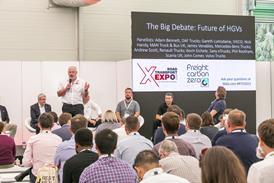
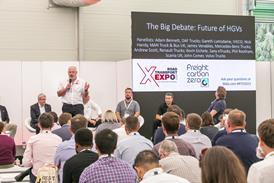
Speaking during a keynote panel discussion at the RHA Future Forum in Birmingham, senior figures from the £200m government-backed Zero Emission HGV and Infrastructure Demonstrator (ZEHiD) programme joined speakers from KPMG and DP World to claim the sector is moving beyond the pilot stage for electric and hydrogen into practical, commercial implementation — and that operators risk being left behind if they ignore the direction of travel.
Their comments come in the wake of controversial remarks made by Geoff Potter, MD of vehicle maker Gray & Adams, who had earlier told delegates that the battery-electric transition was based on “myths and political correctness”, warning that the industry was being pushed into unsustainable technologies.
But Sam Clarke, chief vehicle officer at Gridserve and lead on the largest of the ZEHiD consortiums, dismissed those claims.
“There is no such thing as a battery-only protagonist here - that doesn’t exist,” Clarke said. “We all know decarbonisation will involve a mix of technologies, but we now have real-world evidence from electric trucks operating daily in the UK. These vehicles are doing serious work - up to 285 miles in a day with top-up charging, and over 170 miles fully laden on standard routes. This isn’t theoretical. This is happening.”
Gridserve’s consortium has deployed more than 150 zero-emission HGVs across 12 depots and is constructing seven public charging sites, including new infrastructure. Clarke said operators must move past outdated assumptions and begin scenario planning now, as decarbonisation criteria will become a “prerequisite” in future logistics tenders.
“We’ve talked about this for long enough,” he said. “Now we’re doing it. Fleets that wait will find themselves losing contracts because they didn’t prepare.”
While ZEHiD supports both electric and hydrogen vehicle trials, Clarke warned that polarising the debate between BEV and hydrogen was counterproductive, and not grounded in operational reality.
That view was echoed by Kyle Arnold, director at HyHaul Mobility and lead on ZEHiD’s hydrogen-only trial. His consortium is targeting the heaviest duty cycles and tough to decarbonise cases, such as double- and triple-shifted trucks where payload, downtime and range are critical. But even there, he said, hydrogen is not always the answer.
“We work directly with operators to model total cost of ownership and duty cycles. Sometimes the answer is electric. Sometimes it’s hydrogen. It’s never one-size-fits-all,” Arnold said. “This programme is about removing capital risk so operators can test the best technology for their actual work. For many, it will be a blend.”
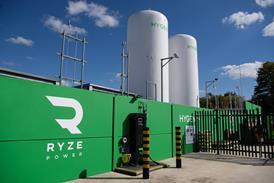
HyHaul has already secured hydrogen generation infrastructure, vehicle orders, and fuelling stations, with commercial operations due to begin in Q3 2026. Arnold said the biggest obstacle has been confidence in supply - something his consortium has now resolved.
“We are the only 100% hydrogen consortium in ZEHiD, and we’ve locked in generation assets and stations. That’s a key de-risking move for operators, and it’s now in place,” he said.

KPMG partner Ben Foulser, who leads the firm’s infrastructure and future mobility advisory, focused on the financial realities of the transition. While the car and van markets have reached or neared cost parity, he said the HGV sector still faces headwinds — but the gap is narrowing.
“The capital cost is still a challenge — some electric trucks cost 30 to 100 percent more than diesel,” Foulser said. “But we are beginning to see total cost of ownership parity in certain use cases, particularly where depot charging and predictable duty cycles are involved.”
Foulser said around 50% of trucks today are bought outright in cash - a model incompatible with more expensive zero-emission trucks, which require longer-term finance solutions. But a wave of innovation across OEMs, finance houses, energy firms and insurers is beginning to close the gap.
“We’re seeing new contract structures, more use of leasing, and cost savings emerge through low-carbon operations,” he said. “This is increasingly being driven by customers — big retailers and logistics buyers want to clean up Scope 3 emissions, and they’re baking sustainability requirements into contracts. This is no longer politically driven — it’s commercially necessary.”
Foulser also pointed to growing regulatory pressure which will force fuel suppliers to decarbonise, and could drive up the cost of diesel. In maritime, he noted the new carbon pricing proposals — with suggested rates of $380 per tonne of CO₂ — could spill over into road freight costs through logistics chain calculations.
DP World’s John Trenchard highlighted the importance of education and operator engagement, stressing that no transition would succeed without buy-in from fleet managers and drivers.
DP World is offering a Carbon Literacy Programme to freight operators and has already rolled out incentives, including £20 payments to electric vehicles using its ports — although the scheme had to be capped after being used too enthusiastically.
“We saw EV incentives being claimed 10 times a day — we had to put a limit on it,” Trenchard joked. “But seriously, we’re investing in training, data, and practical support because operators need to extract the full value of lower-carbon trucks — not just environmental, but commercial.”
Trenchard said DP World had deliberately focused trials on 19-tonne vehicles operating on shorter, circular routes — an ideal early use case for electric drivetrains.
“We’re laying the groundwork for what comes next. These vehicles go round and round, short distance, and we can prove their performance in real-world conditions.”
All four panelists emphasised the importance of collaboration and shared learning, with Clarke urging operators to read ZEHiD’s published reports — the third of which, detailing real-world performance, is due out imminently.
Arnold added that operators needed to be honest about what they do, how they do it, and what outcomes they want, in order to match the right vehicle to the right job.
“Don’t assume hydrogen is always better for long-haul, or that BEV won’t work. It depends entirely on your operation — your payload, your routes, your shift cycles. The ZEHiD programme is about helping you understand that before you spend a penny.”
For those just beginning their decarbonisation journey, Clarke said the best approach was to start small and learn fast.
“Don’t be overwhelmed. Most fleets have low-hanging fruit — vehicles doing predictable local work. We’ve seen operators plug in 22kW AC chargers to a wall socket and begin with one truck. That’s enough to start learning, gathering data, and building the business case.”
Ben Foulser also urged operators to learn from parallel sectors. “Bus operators have been going through this process for five or six years. Learn from them. Talk to peers. The knowledge is out there.”
The clear message from the panel was that the UK freight sector is no longer speculating about decarbonisation — it is doing it. The role now for government, industry bodies and innovators is to make that transition scalable, affordable, and backed by the right infrastructure and finance models.
And while debate around the pace and form of that transition will continue, the facts on the ground — and on the road — now speak louder than rhetoric.
“We’re past the point where you can say this isn’t happening,” said Clarke. “It is. And it’s not about politics; it’s about performance.”