






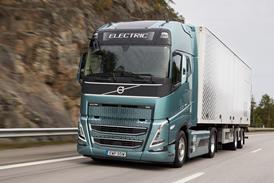
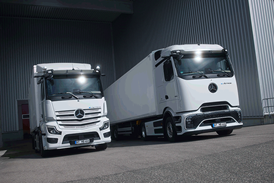

With the ban on the sale of new diesel vehicles getting ever closer, Motor Transport and Freight Carbon Zero teamed up with Hitachi to bring industry stakeholders together to think through their requirements

P1023606

When the first plans were announced to introduce a cut-off date for the sale of new diesel HGVs, it seemed like a ­distant future that none of us would have to deal with. Now, just 10 years away from a ban on the sale of new diesel trucks weighing 26 tonnes and under, that future is hurtling towards us.

Regardless of where you intend to be in your career by 2035 and 2040, preparation now will influence the ease of transition.Although the transport and logistics sector is known for its adaptability, decarbonising comes with a litany of challenges to overcome. To get an idea of what these challenges are and to explore some potential solutions, Freight Carbon Zero partnered with Hitachi ZeroCarbon to hold a think tank on electric HGV charging infrastructure. The event brought together transport operators, distribution network operators (DNOs), charge point providers and an OEM dealer group to hear multiple perspectives.

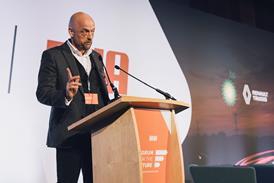
Andy Salter, MD of Motor Transport and Freight Carbon Zero publisher DVV Media International (pictured), opened the event. “On the topic of decarbonisation, there’s a danger we’re operating in an echo chamber of like-minded opinions,” he said. “It’s really important the industry embraces as many different voices as possible, shares ideas, looks at ways to collaborate and think through some of the solutions. If the plans to decarbonise don’t align with fleet operators and their customers, it will just be talk.”

P1023615

What do we know now?

While eHGVs currently make up less than 1% of the UK market, early deployments give an insight into how operators are getting on. So far, Hitachi ZeroCarbon has visibility of over 27 eHGVs in active operation, with data being gathered as part of the Electric Freightway ZEHID project, funded by the DfT and delivered in partnership with Innovate UK.

Jim Connor, Electric Freightway project manager at Hitachi ZeroCarbon, gave the think tank an overview of the initial learnings. “Most of the vehicles are coming back to the depot with a state of charge over 40%. It’s not massively surprising that people have taken a cautionary approach, but clearly there is significant additional range currently going unused.”

Tony Stuart, head of logistics operations support at Hovis, said: “As an operator, I’d like to see that figure closer to 20%. This suggests there’s a bigger mileage opportunity in the trucks that are running today. We need those operations to get closer to 20%, if it’s possible, to prove to other operators that the envelope can be stretched.”

Hitachi ZeroCarbon’s insights also showed that trucks are typically being plugged in to chargers at peak energy usage times. “Charge times don’t look too dissimilar to the energy demand in the UK, which is unfortunate,” Connor added. “We can see that most people are plugging in their vehicles when the wholesale electricity cost is more expensive.”

Smart charging was identified as a potential solution to ensure trucks are given the appropriate amount of charge at cheaper times. However, operators in the room noted the need for a reliable smart solution they could trust so they have confidence that every electric truck would have the right amount of charge ready for work the next day. Hesitancy around the operation of eHGVs was further evidenced in Hitachi ZeroCarbon’s data, which showed electric trucks are doing around a third of the mileage of diesel trucks.

Dave Rose, founder and CEO of Voltloader, which operates a fleet of only eHGVs, said: “Range, charging and charge time are solved by picking the right use cases.”

What infrastructure do we need for eHGVs?

Once the right application has been identified, fleets must then explore the best charging solution.

P1023907

Sean Clifton, fleet director – group transport at Wincanton, explained his outlook on charging options. “I have a charging hierarchy in my head that consists of four priorities,” he told the group. “First, I want to charge at my depot for the vast majority of what I do. The next place is my point of delivery or collection. If I’m going to be there for an hour, I want to know if I can get a graze charge, which might limit the amount of electricity I need back at my depot.

“The third one is trusted partners, where we might look to collaborate to share infrastructure with other organisations. I’ve always said the last place I want to go to is a public charger, until I heard the 39.9p/kWh that Milence was talking about. That started me thinking that might be something of interest that puts them into the trusted partner category.”

Shared charging in various forms seems to be emerging as a key infrastructure component for the successful deployment of eHGVs, but how can we define shared infrastructure? Connor proposed: “It might be easiest to start by saying what shared isn’t. Shared isn’t a public charging location where you can plug in without any pre-booking and without any prior relationship. Shared is also not charging your vehicle at your home depot.”

Josh Spencer, EV sales manager at DAF dealer group Ford & Slater, suggested: “There are two distinct things appearing: the sharing of physical infrastructure of charging points, and then the sharing of power within a geographical area at different times of the day.”

The former is commonly thought of as the standard shared infrastructure model, where operators allow other fleets access to their depot charging facilities. However, as Spencer noted, another approach could be to collaborate with a local haulier to ensure a new grid connection is suitable enough to service both fleet requirements or to share local grid capacity at different times of day. This can also be a cheaper way of upgrading a grid connection by splitting the associated costs.

Whether due to grid constraints, financial pressures or in the interest of operational efficiency, Spencer argued the way infrastructure is used can help to unlock the potential of eHGVs. “I’ve got operators who are putting in 50kW chargers on all of their store bays within a given trial,” he said. “Every store bay within a 35-store radius for a project is being fitted with a charger because they’ve got that connection available at every store the trial encompasses.“That reduces the amount of infrastructure they need to put in at their depot. It also reduces the amount of battery capacity required on the trucks because they keep grazing during the day, so that improves the payload of the truck, reduces the cost of the vehicle and the infrastructure that’s going in.”

For larger companies that have the capability to install charging, even if they don’t operate their own transport fleet, Spencer sees this as a responsibility to the rest of the supply chain to support decarbonisation efforts. However, Stuart countered: “We are subject to change of customers, losing business and gaining business, so we need a truck that’s going to do everything. We try not to tailor it to a specific operation because in two years time, it might be transferred to a different job. We’re always going to go for a truck that gives us the best amount of flexibility, even though it might be wrong for the job on day one, it’s right for the business for five or seven years.”Another critical aspect in the use of shared or public charging is the financial implications of installing your own infrastructure or using someone else’s.”

“Sharing is a really good way of getting high utilisation and better value from the money you spend putting in chargers,” explained Jeremy Woolley, product manager at Paua.To offer competitive pricing, some charge point operators (CPOs) are working on subscription agreements where they ask an operator to commit to a certain amount of electricity usage over a given period. If the operator uses less electricity than originally agreed, they still have to pay for the amount they committed to.

Clifton said: “I don’t like take-or-pay, because one of the things we do in logistics is try and drive efficiency and effectiveness. If you’re committing to something like that, you’re broadly committing to paying for something you may not need in the future because you’re going to work smarter and more efficiently.”

In the interest of securing a better take-or-pay rate, but not placing the responsibility of using the energy on a single fleet, Woolley said: “There could be a role for organisations, like ours, that have a diverse set of fleets to enter those take-or-pay agreements with CPOs and spread that across a number of fleets.”

P1023631

For smaller fleets that perhaps don’t have the financial resources, public charging could be their only option. And while this might be last on the list for ­operators like Wincanton, Clifton noted that SMEs might benefit the most from public sites.Close to areas that have shared charging, public charging can also be seen as a redundancy in case there are issues with an operator’s usual location. This is likely to be an important confidence boost for fleets that are hesitant about the uptime of depot or shared charging infrastructure.

How does the right amount of electricity get where it needs to be?

If depot charging or shared charging is identified as the ideal solution, then adequate power needs to be supplied to the area to facilitate this. Although there have been doubts about the UK’s ability to supply enough power, Adam Lakey, stakeholder engagement and account manager at DNO UK Power Networks, said: “The UK is not running out of power. The challenge is knowing how much, where and when it’s needed.

“If a customer has ordered an electric fleet, goes to a DNO and says, ‘I need X amount of power by next year,’ if the amount of work required to deliver that power is longer than the projected fleet delivery time, then we have a problem and that’s where the issues start to come in.”

Due to a lack of communication channels between fleets and DNOs, the DNOs don’t know where power will be required to support eHGV fleets, Lakey continued. “In a perfect world, if I take it down to a single site, what I would ideally love to understand is what the end state for that particular site looks like. What’s the amount of power you need in 2040 or 2050? Then we can work year on year from now until that point to look at predicted demand, and that includes time of day and whether there’s any energy generation or battery storage on site.”

By understanding fleet projections, DNOs can plan where investment in the network is needed to supply this power on the same timelines as eHGV deployments. Lakey said: “It means when we do an interim solution to increase capacity, we know what we’re aiming for, enabling us to build the network more efficiently. That could mean putting extra ducts underneath motorways, putting in 33kV but running 11kV for the time being so we don’t have to redig those routes in the future. It’s trying to size things and plan so we can utilise them in the future if the predictions prove to be true, but you need data to support those decisions.”

While the DNOs decide how the network is distributed, if every fleet communicated their requirements, that still wouldn’t entirely fix the issue, Lakey added. The DNOs have to be agnostic and not influence any decision an operator makes, he said. For example, if a DNO receives an application for an upgraded grid connection from two neighbouring businesses, the DNO wouldn’t be able to advise setting up a shared site to cover both fleets or to spread the cost of the infrastructure installation. The group identified a need for an independent organisation to act as an intermediary between hauliers and DNOs to allow strategic regional infrastructure developments.Lakey advised operators to start planning and communicating with their DNO sooner rather than later.

“Time is already of the essence and we’re about to go into a cycle where, from the DNO perspective, the next regulatory price control period is going to be from 2028 through to 2033, so unless you’re talking to DNOs now about what you need long term, it’s not going to be in that set of plans,” he warned. “The next one after that will cover us almost all the way until 2040, so if you’re not talking to your DNO seriously about what you need longer term in the next five years or so, there’s a real danger that it’s going to get missed in the infrastructure planning.”

For operators who don’t know where to start on their infrastructure journeys, Rose advised looking at what time of day you hope to charge and gradually increasing infrastructure as the electric fleet grows. “I think it all starts with right-sizing your charging requirement and seeking out what power is available. You often see initial installations where people might put in four fast chargers to power four trucks, but in the majority of cases they’re being charged overnight, so there’s a whole lot of bandwidth that exists that’s not being utilised.”

Rose argued on typical industrial sites there is available power that can be used overnight without needing to apply for a 1MW grid connection. By working out the number of trucks and when they will charge, operators can potentially leverage slower chargers and lower ­electricity demand periods to minimise initial infrastructure investment.

“Otherwise we are going to get to a point where we just can’t justify all this investment because we’re not utilising it, and utilisation is key to make it economic,” he added.

Summary

As Rose and many others noted, one of the first priorities is specifying vehicles and charging infrastructure within a realistic budget. Operators have the difficult challenge of finding the right balance between flexibility and tailored operational models to optimise eHGV use. Deciding on charging strategies like depot-only charging, shared charging or graze charging with supply chain partners will help to guide fleets in their transition.As with any new technology or alternative way of working, trust was cited as a key concern.

It appears existing eHGVs are not being pushed to their full potential and technology like smart charging could unlock more efficient energy usage and cheaper charging costs. The ZEHID programme promises to explore the true capability of eHGVs, so data around this is due to grow in the coming years.Perhaps one of the most important takeaways from the think tank was the need to start planning now. Whether a fleet plans to introduce an electric truck tomorrow, in five years’ time or in 15 years’ time, operators must explore the feasibility of their current premises and start communicating with the DNOs to identify what power is available in the area and what upgrades could be required in the future.

A proposed piece of the puzzle that is yet to be figured out is an independent intermediary between the DNOs and fleets that can help co-ordinate localised infrastructure projects to financially and operationally benefit neighbouring hauliers. Although it largely goes against how businesses have operated until now, hauliers are being urged to actively collaborate, be it sharing data insights, sharing physical infrastructure or just having a conversation with other industry players. The transition to electric will be smoother if we work together.