













![Mercedes-Benz_eActros_600_(1)[1]](https://d2cohhpa0jt4tw.cloudfront.net/Pictures/274x183/8/1/8/17818_mercedesbenz_eactros_600_11_556244.jpg)





A Volvo-based prototype electric lorry has been charged from 10% to 80% in just 42 minutes during trials in Switzerland, marking a step forward towards making megawatt charging commercially viable for long-haul fleets.
Swiss manufacturer Designwerk Technologies has achieved a peak charging power of 1,140 kW using its containerised Megawatt Charging System (MCS) at a test site in Oberbüren. Until now, charging power for HGVs has typically been limited to around 350 kW, leaving long-distance operations more or less out of reach.
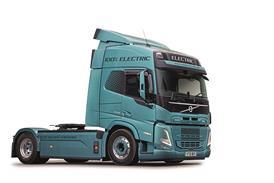
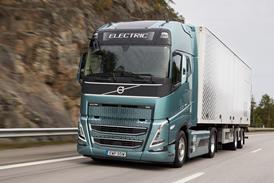
The test vehicle was a Volvo FH tractor equipped with an 800-volt platform and a 1,000 kWh battery, divided into four 250 kWh lithium-ion packs. These high-voltage components, including the battery, drivetrain, distribution and MCS charging hardware, were developed in-house by Designwerk.
According to the company, the first customer deliveries of MCS-capable lorries are planned for late 2026, Meanwhile its megawatt chargers are already available to order, with a production lead time of six to nine months.
The trial also demonstrated that high-power charging aligns with statutory driver rest periods. During the 42-minute session, 625 kWh of energy was transferred at an average charging power of 906 kW, with currents reaching 1,530 amps.
“A 40-tonner can now recharge in under an hour, essentially within the time of a driver’s break,” said Niels Ross, project manager for charging technology at Designwerk. “That is the key to making long-distance e-trucking work.”
Beyond speed, cost is a crucial factor. Designwerk confirmed the system tested in Oberbüren cost “significantly less than CHF 1 million” and, with healthy utilisation, adds less than €0.20 per kWh to the cost of a charging session. The containerised units incorporate lithium-ion NMC buffer storage, allowing operators to avoid expensive grid upgrades, smooth peak demand and make use of second-life truck batteries. This also enables the use of local renewable power, particularly solar, even when generation is intermittent.
Several megawatt chargers have already been sold, with the next three destined for an automotive logistics company in Germany. Designwerk will not operate the chargers itself but will train customers to run them, backed by service agreements for maintenance.
The company confirmed the units are fully aligned with the CharIN MCS protocol and open to interoperability testing with other OEMs.
For UK fleets, however, commercial availability is still some way off; Designwerk is not planning deployments in the UK.