







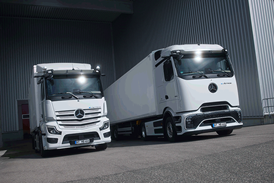

Heavy Goods Vehicles (HGVs) account for up to 20% of the UK’s transport emissions, highlighting the urgent need for decarbonisation if the industry is to meet its net zero targets. Transitioning to electrified fleets is therefore a crucial step in meeting these goals.

shutterstock_2565374925 (3)

However, a successful shift to electric HGVs (eHGVs) requires a holistic approach. Only by considering the entire EV ecosystem, while also encouraging collaboration between operators, infrastructure providers, and service partners, can we accelerate the transition to electric mobility. The Electric Freightway Project by GRIDSERVE, funded by the Department for Transport in partnership with Innovate UK, is tackling this challenge head-on.

One of the project’s early findings is the need for charging infrastructure that can support eHGVs along UK-wide logistics routes. Depot-based charging, where fleets charge vehicles at their own warehouses or vehicle yards, is still in the early stages of development, but often seen as the default choice for many operators.

While depot charging offers dependable access to energy, particularly overnight or post-route, shared charging is rapidly gaining traction. This model allows fleets to recharge while on route, helping to expand eHGV coverage, streamline route planning and optimise overall energy use. If implemented successfully, businesses can create a new revenue stream for themselves which will help to pay off the investment in infrastructure.

Shared charging – what impact will it have for electrifying fleets?

Shared charging is a collaborative model in which multiple fleet operators are able to access a community comprising of other organisations’ depot chargers, which would otherwise be private EV charging stations. This approach reduces upfront costs, accelerates electrification at scale, and minimises fleet downtime during deliveries – as well as providing additional revenue for those investing in depot chargers. Shared charging can also support load balancing and help with grid maintenance during off-peak hours.

Through its consultations, the Electric Freightway Project found that strategically located shared charging hubs can play a key role in supporting operators at high demand charging locations and encouraging the transition to electric HGVs. By pooling charging infrastructure and organising hauliers into closed user groups, these hubs become more accessible and cost-effective – ultimately helping to improve infrastructure, as investment becomes more beneficial to a wider group of people and users of the space.

Providing greater charging options for eHGV fleets, allows operators and drivers to have greater flexibility around charging schedules, while enabling depot owners to generate new streams of revenue during downtime.

What are the challenges?

There are two major challenges when it comes to implementing shared charging. The first is that installation of depot-based charging is still on the rise, with some operators yet to fully deploy the technology. Many fleets are navigating charging infrastructure for the first time, and so there is a steep learning curve to understand what is possible on their sites, how they connect to the grid and engage with distributed network operators, and how they manage the energy supply.

Each depot-based charging station is individually designed to meet the needs of the organisation using it, factoring in the size of the fleet, usual route journeys and charging behaviours. Building a shared charging model will take some time as these types of depots can only be built or progressed when the space at stations and facilities become available.

shutterstock_2350241969

The second challenge is the awareness of the benefits of sharing charging facilities with other organisations. As depot charging stations get installed, there’s a tendency for operators to prioritise control and ownership of the energy supply given it provides a sense of security for their journeys and drivers. Having infrastructure behind closed doors delivers the reassurance for fleet managers to ensure their vehicles have enough charge for their regular routes.

However, there must be a shift in mindset if we are to truly embrace the full potential of decarbonised fleets. Instead, managers must understand how shared charging can play a role in their EV business model. For example, the Electric Freightway Project has found that some depot charging sites are only used once a shift - overnight when vehicles are returned to the depot. While usage patterns depend on factors such as vehicle type, load, and delivery schedules, other sites experience intensive charging throughout the day. This uneven demand can place significant strain on energy supply and increase costs. However, with strategic planning, these impacts can be minimised, making energy management more efficient and operations more sustainable. Additionally, when their chargers aren’t being used, there is an opportunity to share resources, which would help to drive additional revenue and maximise the assets, as well as helping with grid balancing.

How would infrastructure need to be built or adapted?

Shared charging facilities can also create opportunities for those businesses that currently lack the space to install on-site infrastructure. The size of the fleet, as well as vehicle movements, need to be considered. Depots can only accommodate shared charging facilities if they have sufficient space for chargers and for vehicles to enter and exit smoothly.

A key factor to consider is how the depot will operate while managing both its own fleet and shared charging access. For example, sites may need to be designed to allow vehicles to drive through or use reverse-in bays, making chargers easier to access. Some depots might also implement one-way systems to enable eHGVs to enter and leave charging bays efficiently, reducing congestion.

Charging facilities may also need to be adapted to support multiple businesses using the same space. Data on each vehicle’s battery capacity and route requirements should inform charging schedules. For instance, if many eHGVs remain idle for extended periods, a larger number of slower chargers may be suitable. However, if vehicles operate across multiple shifts and require quick turnaround, a smaller number of high-power chargers would be more effective.

How can we turn shared charging from a concept into reality?

Fleet operators should start viewing shared charging as a strategic business opportunity. By opening access to their depot charging facilities, they can contribute to the growth of the EV ecosystem and unlock new revenue streams, ultimately improving returns on infrastructure investments. This approach is already being successfully adopted in other areas of transport outside the world of HGVs.

For example, the city bus operator, First Bus, has a well-established electric fleet, and found that its depot chargers were largely idle between 8 a.m. and 8 p.m. By identifying this underutilisation of resources, the company implemented a shared charging model, allowing selected partners to use its facilities and generating additional income as a result. If partners work together and agree rates, they can help each other in scaling electrified fleet in tandem, which can help to offset capital expenditure and improve overall operational efficiency. And there’s no reason HGV operators couldn’t achieve similar benefits.

Although shared charging is still in the early stages, it highlights the broader commercial and operational opportunities that come with electrification. As depot-based charging becomes more widespread, the industry conversation is shifting, focusing more on collaboration between operators to reduce energy costs and improve route and fleet optimisation.

Leon Clarke, head of operations and delivery, Hitachi ZeroCarbon


Supporting documents

Click link to download and view these files